- Improved iron ore and coal cargo activity supports Cape, Panamax earnings
- Supramax extends losses on weak minor bulk demand and ample vessel supply
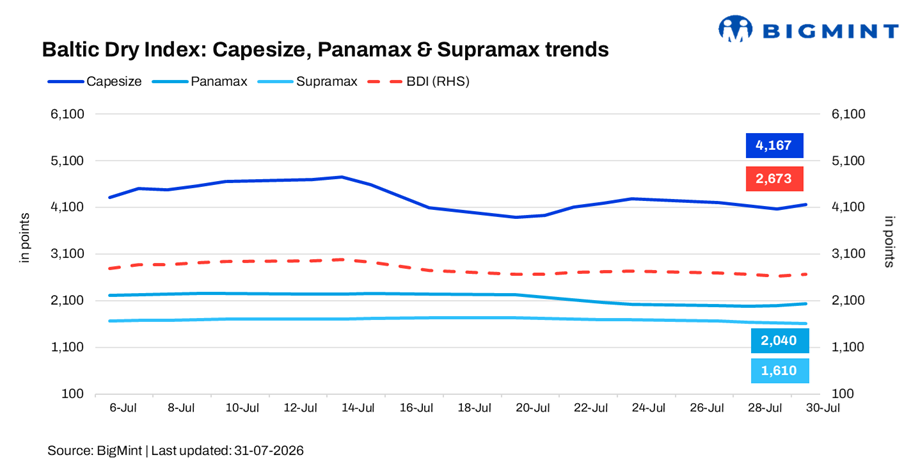
The Baltic Dry Index (BDI) rebounded 1.6% d-o-d (41 points) to 2,673 on 30 July against 2,632 on 29 July, ending a three-session losing streak. The recovery was driven by stronger Capesize and Panamax earnings, supported by improved iron ore and coal cargo activity, which more than offset continued weakness in the Supramax segment amid softer minor bulk demand and ample vessel availability.
Segment-wise performance
- Baltic Capesize Index (BCI): Gained 2.46% d-o-d (100 points) to 4,167 compared to 4,067, as firmer iron ore cargo activity and improved chartering interest supported earnings across key Capesize routes. Tighter vessel availability in parts of the Pacific and stronger owner sentiment also helped lift rates, while steady mining and steelmaking demand provided further support.
- Baltic Panamax Index (BPI): The Panamax index rose 2.26% d-o-d (45 points) to 2,040 on 30 July, from 1,995 on 29 July, reaching its highest level since 24 July. The gain was supported by stronger coal and grain cargo demand, improved fixture activity and firmer chartering interest, while relatively balanced vessel availability helped sustain the upward momentum.
- Baltic Supramax Index (BSI): The Supramax index declined 1.11% d-o-d (18 points) to 1,610 on 30 July, down from 1,628 on 29 July, marking its lowest level in three weeks. The decline was driven by subdued minor bulk demand, a seasonal summer slowdown in cargo activity and ample vessel availability, which kept chartering interest muted and put downward pressure on freight rates.
Outlook
The BDI is expected to remain rangebound in the near term, with stronger Capesize and Panamax activity providing some upside support as iron ore and coal demand holds firm. However, ample vessel availability and subdued minor bulk demand, particularly in the Supramax segment, could limit gains. Overall, freight sentiment is likely to remain mixed until a stronger pickup in cargo volumes tightens vessel availability.

Leave a Reply