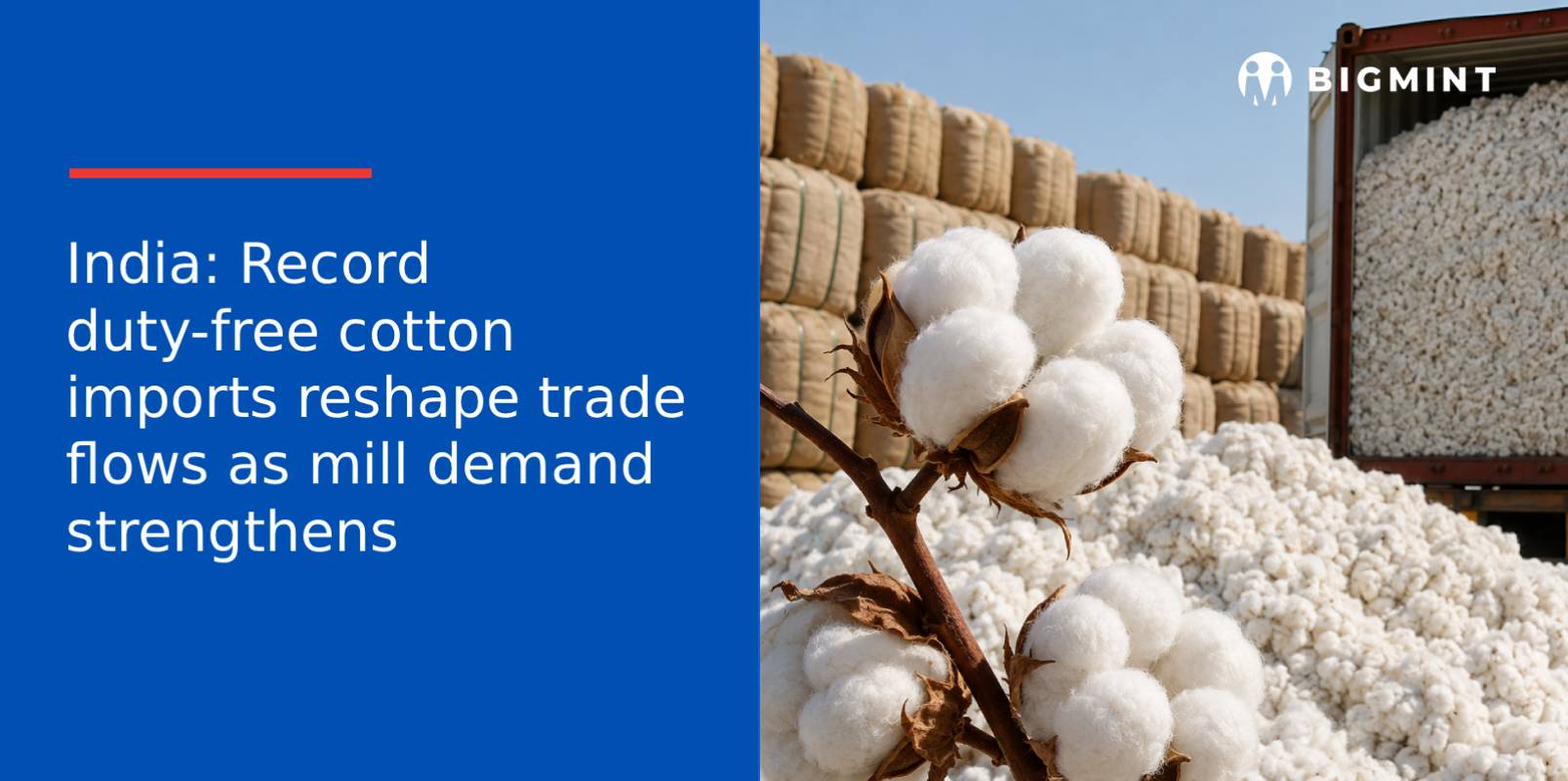
- Cotton imports are projected to reach a record 60 lakh bales in 2025-26, with 85% of the target achieved by end-June
- Higher domestic consumption is reducing exports and supporting global cotton prices
India’s suspension of the 11% cotton import duty is driving record overseas purchases, easing domestic cotton prices and improving raw material availability for textile mills. At the same time, stronger Indian demand is tightening global export availability, reducing the country’s exportable surplus and reinforcing its position as a major net importer in the global cotton market.
Duty waiver boosts imports and mill demand
The temporary removal of the 11% import duty has lowered the cost of imported cotton, softening domestic cotton and yarn prices and improving mill margins. Better raw material availability has encouraged higher operating rates across the textile sector.
Cotton imports for the 2025-26 season are now projected at a record 60 lakh bales, revised up from 47 lakh bales and around 19 lakh bales higher than the previous season. By the end of June, approximately 51 lakh bales had already arrived, accounting for nearly 85% of the revised seasonal import target with three months of the marketing year still remaining.
Consumption rises as exports decline
Domestic cotton consumption is projected at 348 lakh bales during the current season, reflecting firm demand from the textile industry and other cotton-consuming sectors. The higher domestic offtake is reducing exportable supplies, with cotton exports expected to decline to 15 lakh bales from the earlier estimate of 18 lakh bales, highlighting India’s shift from an exporter to a major net importer.
India’s record import programme is also tightening global export availability at a time when supply concerns persist in several producing regions. While increased imports have moderated domestic cotton prices, sustained Indian buying is expected to continue supporting international cotton prices.
Outlook
India’s strong import demand and firm domestic consumption are expected to keep the country at the centre of global cotton trade through the remainder of the 2025–26 season. While higher imports may continue to support domestic textile margins, lower exports and tighter global supplies are likely to keep international cotton prices well supported.
Leave a Reply