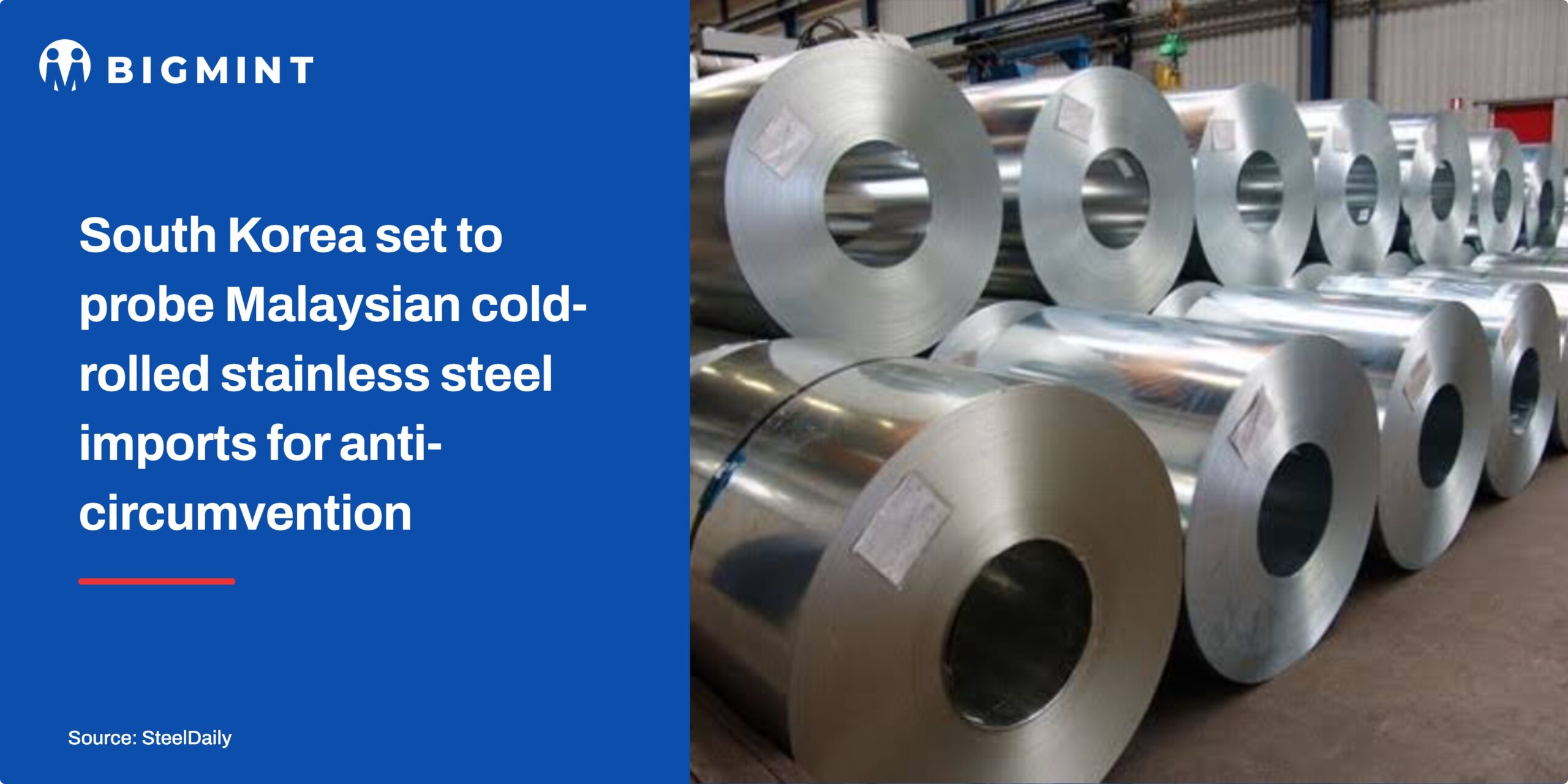
- POSCO reportedly plans to file for investigation in Q3
- Investigation could begin a few weeks after filing
South Korea’s stainless steel industry is preparing for a potential anti-circumvention investigation into Malaysian cold-rolled (CR) stainless steel imports, with POSCO reportedly aiming to submit an application to the Korea Trade Commission (KTC) during the third quarter of 2026. The exact filing timeline, however, remains uncertain, leaving importers and buyers exposed to potential trade risks.
Industry sources indicated that POSCO is working closely with the KTC to finalise the scope of the investigation and supporting evidence. While the company aims to file the application within the July-September quarter, market participants remain uncertain whether the submission will occur in August or September.
Importers face uncertainty over investigation timing
The uncertainty surrounding the filing has increased caution across the domestic stainless steel market. Malaysian CR stainless steel continues to be actively offered to Korean importers and distributors, primarily on the back of competitive pricing despite weak domestic demand.
However, industry participants noted that even if contracts are signed before the investigation is filed, shipment schedules, transportation, customs clearance and import declaration timelines could result in cargoes arriving after the investigation commencement date.
Investigation could begin within weeks
According to the Korea Trade Commission, applications for anti-circumvention investigations generally undergo a review period of around one month before authorities decide whether to initiate an investigation.
However, if submitted evidence is deemed sufficient and urgent action is considered necessary, an investigation can reportedly begin within as little as one week after filing.
Once an investigation is officially initiated and published in the government gazette, imports arriving after the commencement date could become subject to anti-dumping duties if the products are subsequently determined to have circumvented existing trade measures.
Focus on third-country processing
South Korea currently imposes anti-dumping duties on certain stainless steel flat products imported from China, Indonesia, and Taiwan.
Under revised anti-circumvention regulations introduced this year, investigations can now cover not only minor product modifications in the original exporting country but also processing or assembly activities carried out in third countries.
As a result, Malaysian CR stainless steel manufactured using raw materials sourced from countries already subject to anti-dumping duties may also fall within the scope of the investigation.
If circumvention is confirmed, Malaysian products would not receive a separate anti-dumping duty rate. Instead, authorities would apply the existing anti-dumping duty rate applicable to the country from which the raw materials originated.
Payment risks remain despite return options
Industry participants also cautioned importers to carefully review payment terms when purchasing Malaysian stainless steel products.
While some suppliers may offer product return (ship-back) arrangements if anti-circumvention duties are imposed, such provisions do not automatically guarantee reimbursement of payments already made. Additional costs, including return freight, storage charges and demurrage, could also become sources of commercial disputes.
Outlook
Market participants expect the investigation to focus on raw material sourcing, the extent of processing undertaken in Malaysia, value addition and changes in export volumes to South Korea following earlier anti-dumping measures.
Until the filing timeline becomes clear, Korean buyers are expected to remain cautious, balancing the attractive pricing of Malaysian stainless steel against potential anti-dumping duties and broader commercial risks associated with ongoing trade policy uncertainty.
Note: This article is published as part of a content exchange agreement between SteelDaily and BigMint.
Leave a Reply