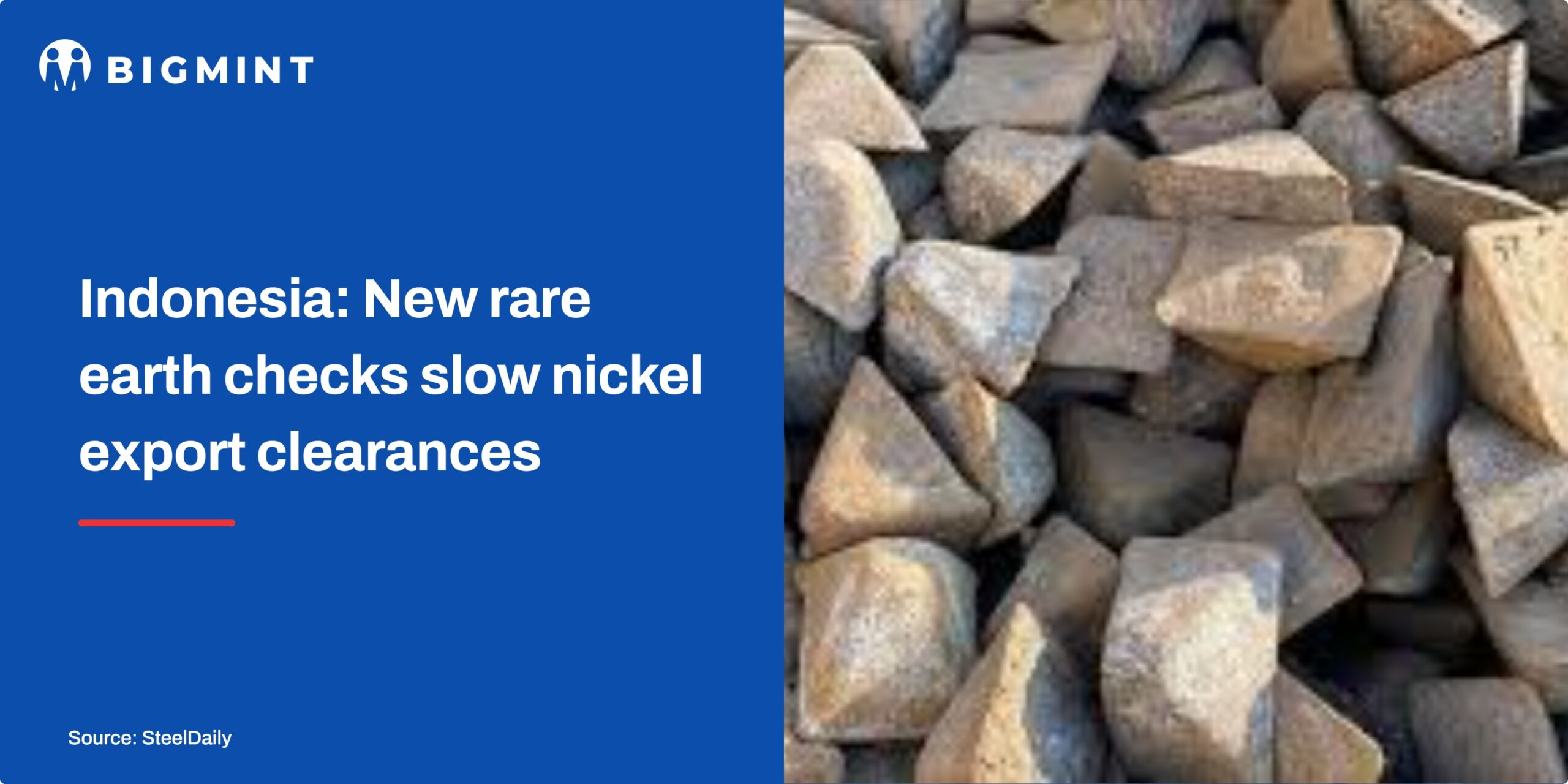
- Multiple smelters’ NPI, intermediate product shipments postponed
- Limited testing capacities for rare earth content slow dispatches
Exports of Indonesian nickel products have faced temporary disruptions after authorities introduced additional inspections to verify rare earth content in mineral exports, delaying customs clearance for nickel pig iron (NPI), ferro nickel, and nickel intermediate products.
The Indonesian government began implementing enhanced verification of Laporan Surveyor (LS) reports from major smelting complexes on 22 July as part of efforts to strengthen oversight of strategic mineral exports and protect national resources.
The inspections cover a range of processed mineral products, including alumina, smelting slag, ferro nickel, NPI, and nickel intermediates. During the verification process, state-owned export management company PT Danantara Sumberdaya Indonesia (DSI) has been reviewing export documentation and inspection results, resulting in delays in customs clearance for certain shipments.
Regulatory gaps create export bottlenecks
Market participants noted that Indonesia currently lacks clearly defined standards for permissible rare earth content in exported mineral products. In addition, limited domestic testing capabilities and certification systems have made it difficult for some producers to obtain government-approved LS reports.
As a result, customs clearance for several export cargoes has been delayed, with shipment schedules for NPI and nickel intermediate products reportedly postponed at multiple Indonesian smelting complexes. The volume of affected cargoes and the expected duration of the delays have not yet been disclosed.
Government moves to resolve disruptions
In response to the disruptions, Indonesia’s Presidential Chief of Staff chaired a coordination meeting on 27 July involving government ministries, judicial agencies, state-owned enterprises and industry representatives to address regulatory gaps surrounding exports of minerals containing rare earth by-products.
Officials acknowledged that normal mineral exports should not be disrupted in the absence of clear regulatory thresholds for rare earth content. The government is now working to establish standardised inspection procedures and customs clearance guidelines through consultations among relevant agencies.
Outlook
Industry sources emphasised that the current situation does not represent an export ban on Indonesian nickel products. Instead, it reflects temporary shipment delays arising from additional rare earth verification requirements. Once inspection standards and certification procedures are clarified, export flows are expected to normalise.
Note: This article is published as part of a content exchange agreement between SteelDaily and BigMint.
Leave a Reply