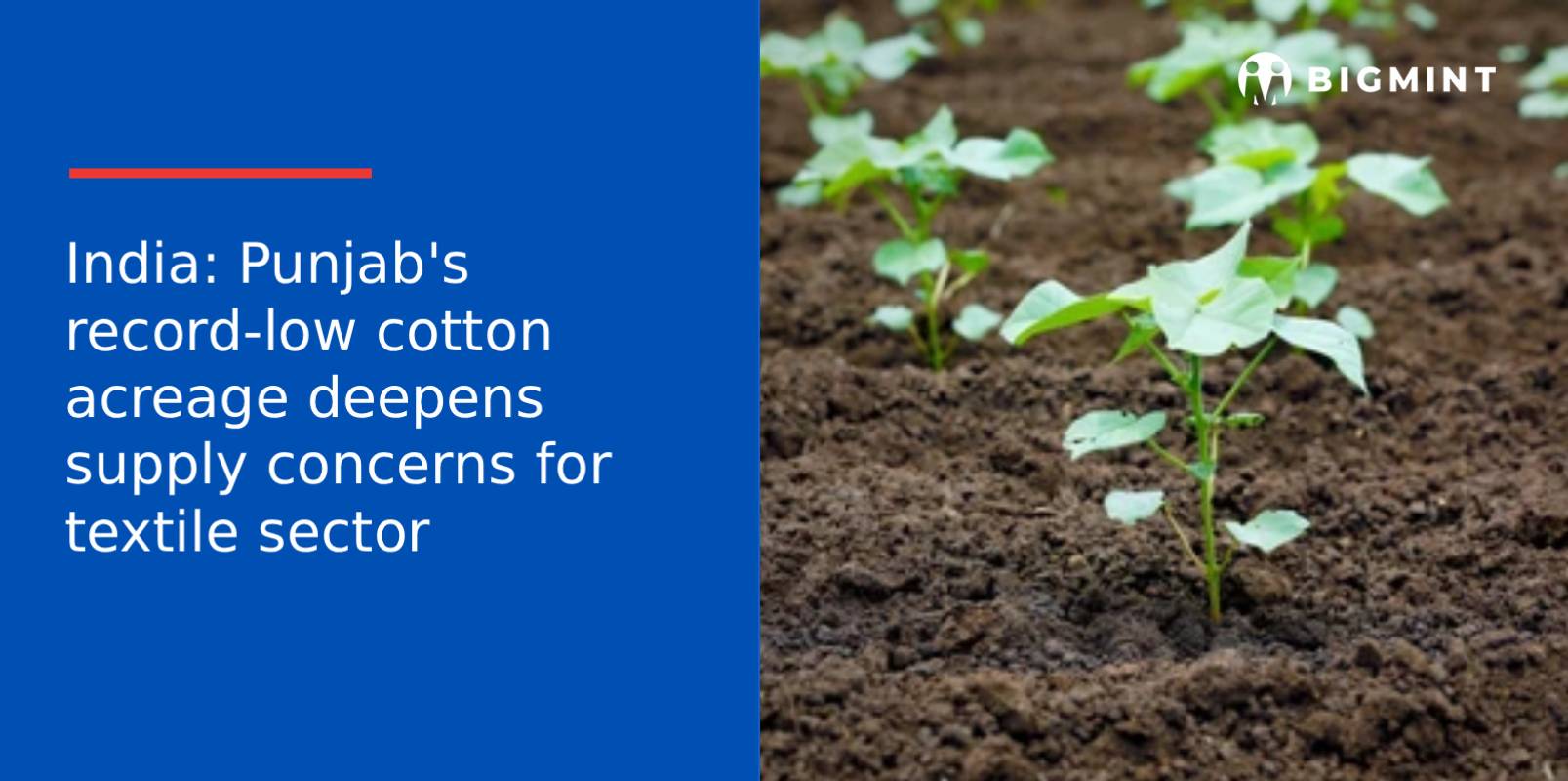
- Cotton area falls to a historic low of 80,000 hectares in 2026-27
- Lower regional output may increase dependence on other states and imports
Punjab’s cotton acreage has declined to a record low of around 80,000 hectares in the 2026-27 kharif season, compared with nearly 119,000 hectares last year, falling significantly short of the state’s target of 125,000 hectares. Data presented by the Union Ministry of Textiles underscores a persistent decline in cotton cultivation, reflecting structural challenges rather than a seasonal setback.
Farmers continue to exit cotton
Repeated infestations of whitefly and pink bollworm, erratic weather conditions, rising input and labour costs, and inconsistent farm profitability have continued to erode farmer confidence. As a result, growers are increasingly shifting to paddy and other comparatively stable crops despite the state’s ongoing crop diversification efforts. Seed subsidies and awareness campaigns have so far failed to arrest the downward trend, indicating that deeper economic and agronomic issues remain unresolved.
Textile industry faces supply risks
The decline in Punjab’s cotton production is expected to tighten raw material availability for ginning units and spinning mills across North India. Market participants indicate that reduced regional output could intensify procurement from Gujarat, Maharashtra and Telangana while increasing reliance on imports whenever domestic supplies tighten. The trend comes after India witnessed higher raw cotton imports during 2025-26 to bridge the gap between domestic production and mill demand.
Looking ahead, Punjab’s cotton acreage is likely to remain under pressure unless structural issues are addressed through improved pest management, climate-resilient high-yielding seed varieties, better extension services, stable market prices and stronger farmer incentives. Without sustained policy support and improved profitability, the state’s shrinking cotton base may continue to challenge India’s textile supply chain and increase procurement competition across major producing regions.
Leave a Reply