- Reduced paddy cultivation in Karnataka tightens supplies
- Boiled rice varieties record a nearly 20% price hike
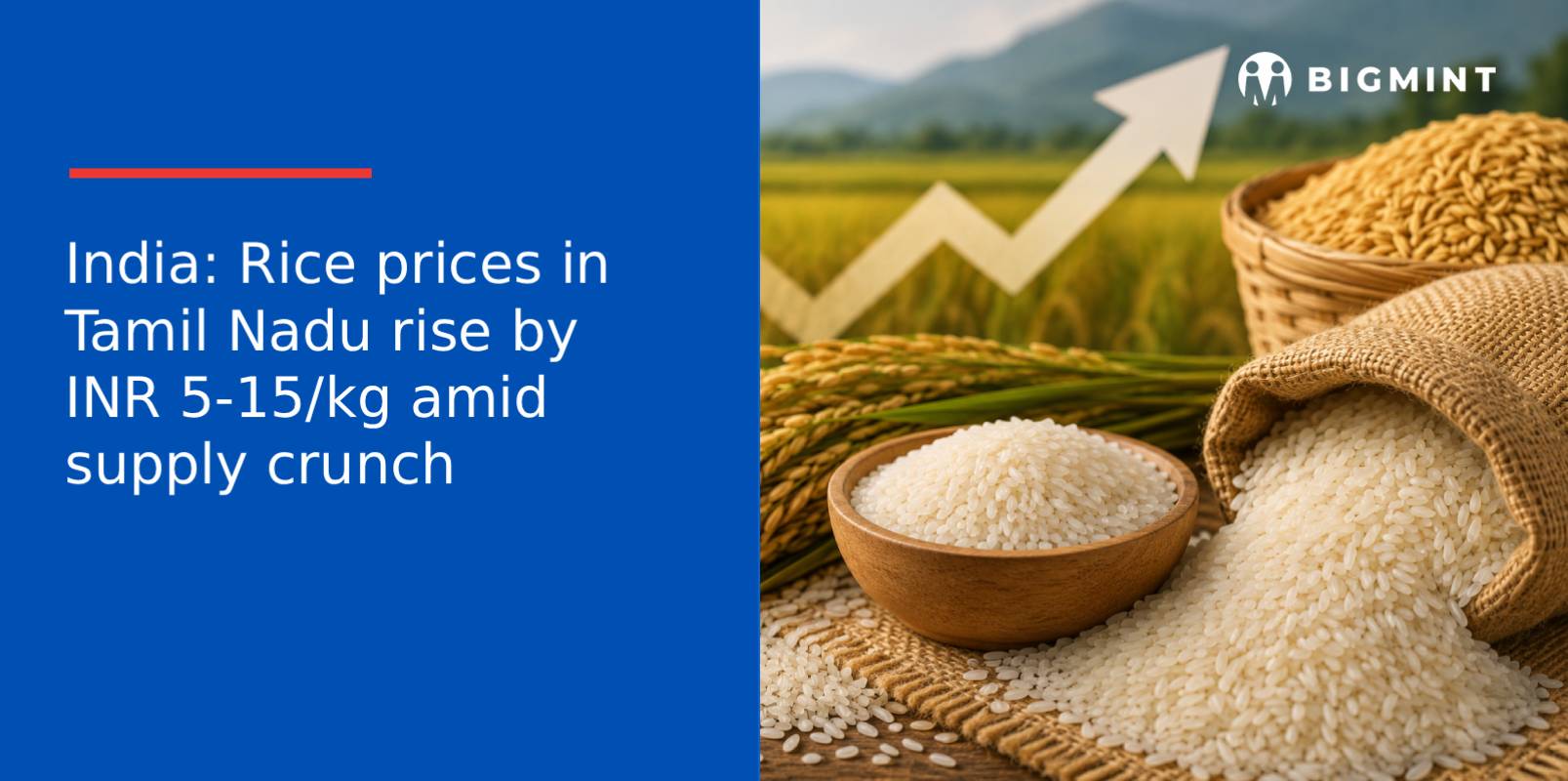
Retail rice prices across Tamil Nadu have increased by INR 5-15 per kg over the past few weeks as shortages of premium paddy varieties from neighboring states have tightened supplies and reduced milling activity. The price increase has primarily affected fine rice varieties, including Bapatla Ponni and Karnataka Ponni, which are widely consumed across the state.
Supply crunch pushes up boiled rice prices
According to market participants, boiled rice varieties such as Deluxe Rice and RNR Rice have witnessed the steepest increase. Prices for these varieties have risen from INR 1,100-1,250 per 25-kg bag to around INR 1,500 per bag, marking an increase of nearly 20%. At the retail level, the starting price of boiled rice has also increased from around INR 50-60/kg.
In contrast, premium rice varieties including HMT, Kollam and Amman Sona have remained largely stable, with no significant price increase reported so far.
Traders attributed the supply shortage to lower paddy availability from Karnataka. During the 2025 sowing season, the Karnataka government advised farmers in parts of the state to avoid paddy cultivation while maintenance work was carried out at the Tungabhadra reservoir. The reduced acreage has lowered paddy availability in the current season, contributing to tighter supplies and higher rice prices.
The supply crunch has primarily affected boiled rice varieties, while regular rice supplies remain comparatively stable. Market participants noted that increased procurement costs are gradually being passed on through the supply chain, resulting in higher wholesale and retail prices across Tamil Nadu.
Outlook
Rice prices in Tamil Nadu may continue to be influenced by paddy availability and supply conditions. Improved paddy arrivals from Karnataka and neighbouring states during the upcoming harvest season will be crucial to easing supply tightness and stabilising prices, particularly for boiled rice varieties.
Leave a Reply