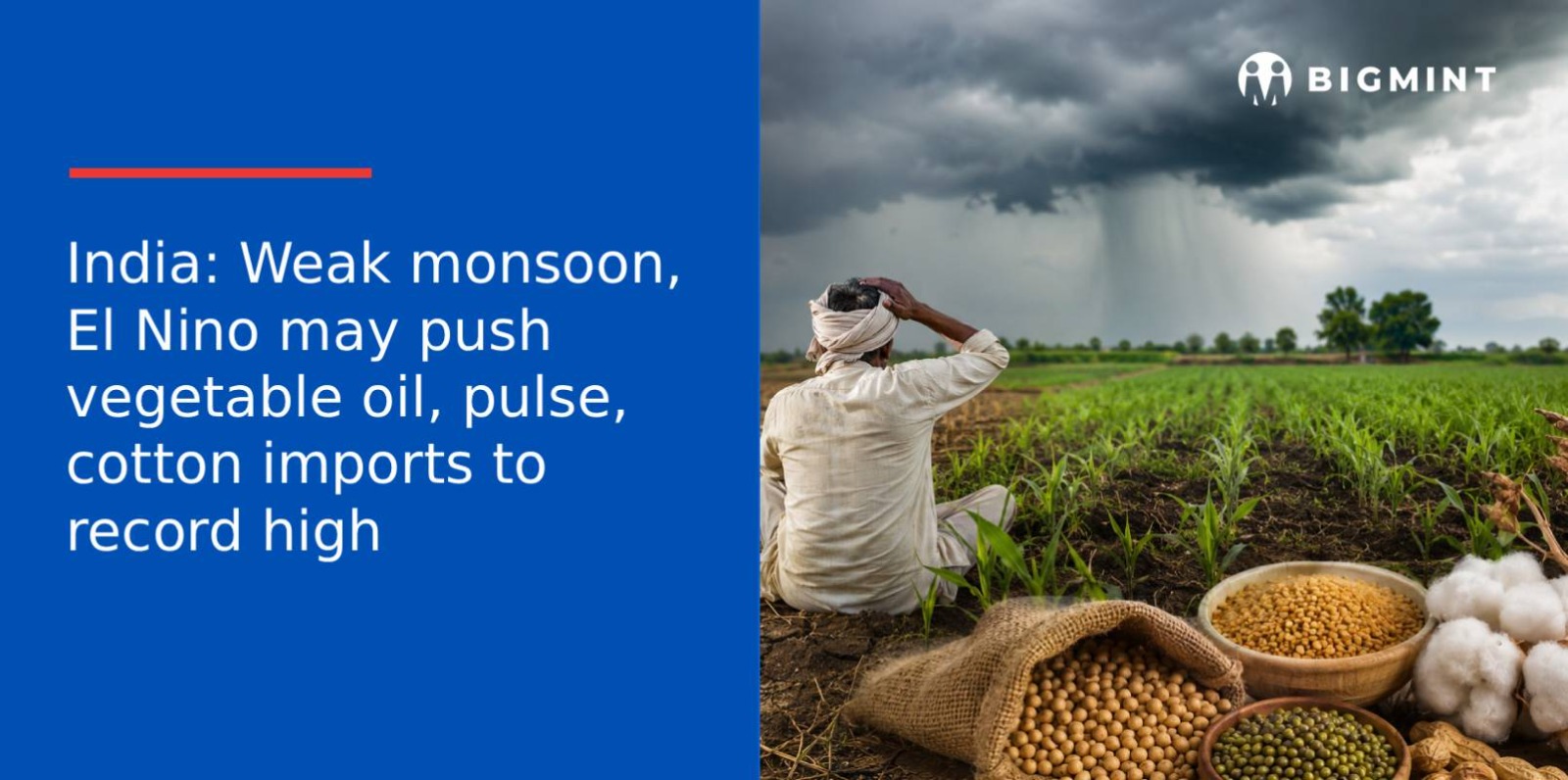
- Kharif sowing falls 16% y-o-y as rainfall deficit delays planting
- Higher temperatures could also affect rabi crops such as wheat
India’s delayed southwest monsoon and the growing likelihood of a strong El Nino are raising concerns over kharif crop production, particularly for pulses, oilseeds, and cotton. Cumulative monsoon rainfall was 23.8% below normal as of 19 July, with June recording a 38% deficit and July remaining 9.9% below the long-period average. The weak start to the season has slowed sowing, increasing the risk of lower output and higher import dependence in FY’27.
Kharif sowing declines sharply
According to the Department of Agriculture and Farmers’ Welfare, total kharif sowing as of 10 July was down 16.03% y-o-y. Pulses recorded the steepest decline in acreage at 23.32%, followed by coarse grains at 22.47% and oilseeds at 21.01%. Cotton sowing declined 15.34%, while rice acreage was down 8.64%. Within pulses, arhar, urad and moth bean registered the largest declines, while groundnut, soybean and sesamum led the fall in oilseed acreage. Industry participants noted that sowing activity could improve if rainfall revives before the end of July, particularly for pulses and cotton.
Production risks increase
The US National Oceanic and Atmospheric Administration (NOAA) estimates an 81% probability of El Niño strengthening into a very strong event during October-December. Besides suppressing monsoon rainfall, higher temperatures could also affect rabi crops such as wheat, rapeseed-mustard, chickpea, and lentil. Prolonged dry weather may further increase pink bollworm infestation in cotton-growing regions, adding to yield risks.
Imports likely to remain elevated
Lower domestic production could further increase India’s reliance on imports. In FY’26, vegetable oil imports reached a record 16.94 million tonnes (mnt), while pulse imports stood at 5.96 mnt. Raw cotton imports also climbed to a record 1.07 mnt. Despite these concerns, government stocks remain comfortable, with ample rice, wheat, and pulse inventories expected to support domestic supplies. Additional imports of arhar from East Africa and masoor from Canada and Australia are also likely during the coming months.
Outlook
The progress of the monsoon through the remainder of July and the evolution of El Nino will determine India’s crop prospects. If rainfall deficits persist, production losses in pulses, oilseeds and cotton could support domestic prices, increase imports and prompt further government measures, including lower import duties on edible oils and pulses, to maintain supply and contain food inflation.
Leave a Reply