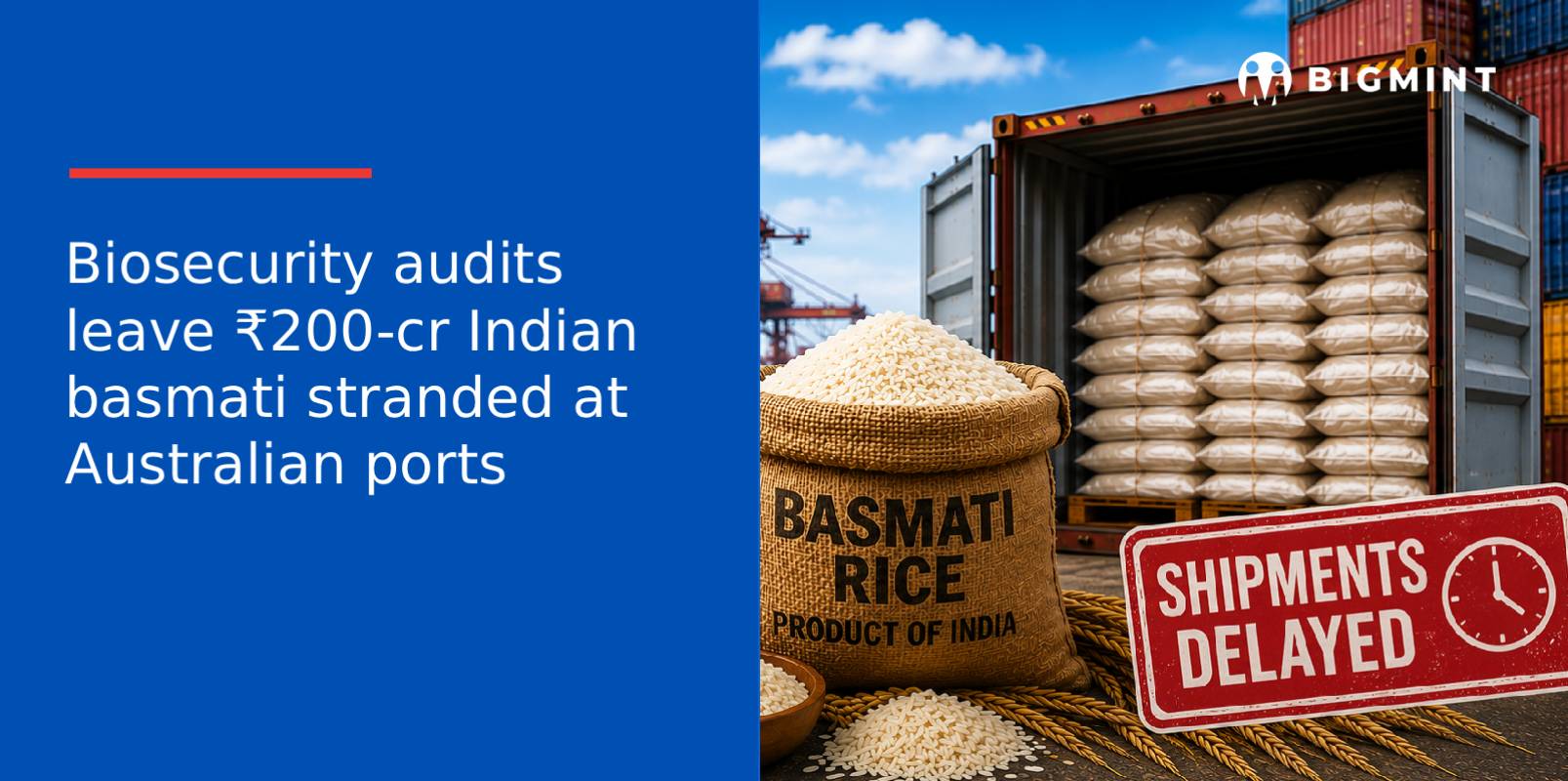
- Australia’s biosecurity audits strand ₹200 cr worth of Indian basmati at ports.
- Suspension of 44 fumigation agencies disrupts Indian basmati export certification.
Australia’s biosecurity audits have disrupted Indian basmati rice exports, leaving around 20,000 tonnes of premium rice worth ₹200 cr stranded at Australian ports after hundreds of containers were held. The audits, initiated around three months ago, identified compliance gaps in India’s fumigation certification process.
Australia suspended 44 Indian fumigation service providers, including five from Haryana and three from Punjab, representing nearly 60% of the agencies authorised to certify shipments to Australia. The suspension targets fumigation agencies, not Indian basmati imports, and Australian authorities have clarified that the action is unrelated to the quality or safety of Indian rice.
The audit also found procedural inconsistencies, including cases where consignments were reportedly packed before the recorded fumigation date. Under Australia’s Biosecurity Act 2015, imports must comply with strict requirements covering fumigation procedures, certification, packaging, traceability and supply chain integrity. Australia has also strengthened compliance through continuous monitoring and surprise audits.
Exporters face higher costs
Punjab and Haryana, India’s key suppliers of premium grain to Australia, are expected to be the worst affected. India exports nearly 1 lakh tonnes of premium grain worth around ₹1,100 cr to Australia annually. Although smaller than North America, Europe and the Middle East, Australia remains an important premium market, especially as Middle East trade faces shipping disruptions.
Exporters said they had used government-approved fumigation agencies and were affected by the subsequent suspension of these service providers. More than 100 containers are estimated to be impacted, with shipments facing delays, mandatory re-fumigation and additional compliance checks. Re-fumigation costs are estimated at $700–1,200 per container. Exporters have urged APEDA to engage with Australian authorities and seek one-time relief for consignments shipped before the suspension to prevent retrospective losses.
Outlook
While Australia’s measures do not restrict Indian basmati imports, the resolution of ongoing compliance issues and discussions between APEDA and Australian authorities will determine the pace of shipment clearances and the restoration of export certification capacity. Until then, exporters are likely to remain focused on meeting Australia’s biosecurity requirements while navigating higher compliance costs, logistical delays and seeking relief for consignments already in transit.
Leave a Reply