- Weak finished steel demand weighs on sponge iron trading activity.
- Previous day’s bookings limit fresh buying interest today.
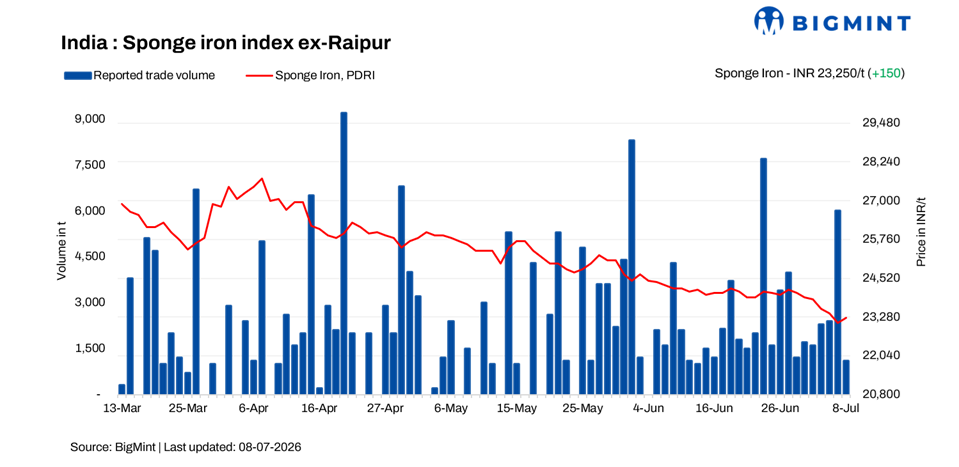
The Indian sponge iron market witnessed a price increase of INR 50-200/t across most regions today, supported by the positive sentiment that emerged late in the previous trading session. The improved mood carried forward into today’s market, encouraging sellers to raise offers. BigMint assessed Raipur PDRI at INR 23,250/t, up by INR 150/t from the previous assessment. However, buying interest remained limited as many buyers had already secured material yesterday, resulting in lower-than-expected trading activity.
Across regions, sponge iron producers continue to face margin pressure. This has encouraged sellers to maintain firm prices, and even a slight improvement in sentiment has strengthened their confidence. Despite the upward price movement, transactions at higher levels remained largely need-based, as buyers were reluctant to build fresh inventories amid weak demand.
The finished steel market also failed to provide sufficient support to improve trading momentum, keeping overall consumption restricted to immediate requirements. In the raw material segment, pellet prices in Raipur were assessed at INR 9,200/t, with prices also moving upward. The rise in pellet prices has supported seller sentiment, although demand remains sluggish.
Trade Movement
Trading activity across the sponge iron market remained subdued, with enquiries limited to need-based purchases. According to BigMint, around 13,000 t of PDRI trade deals were concluded today, slightly lower than the previous day’s volume. The decline in traded volumes indicates buyer hesitation at elevated price levels despite the prevailing positive market sentiment.
Rationale
Prices have been derived based on transactions, offers, bids, and indicative price data sets. Transactions are considered as T1 and given a weightage of 50%, whereas other data sets are considered as T2 and given a weightage of the balance 50%.
Click here for detailed methodology



Leave a Reply