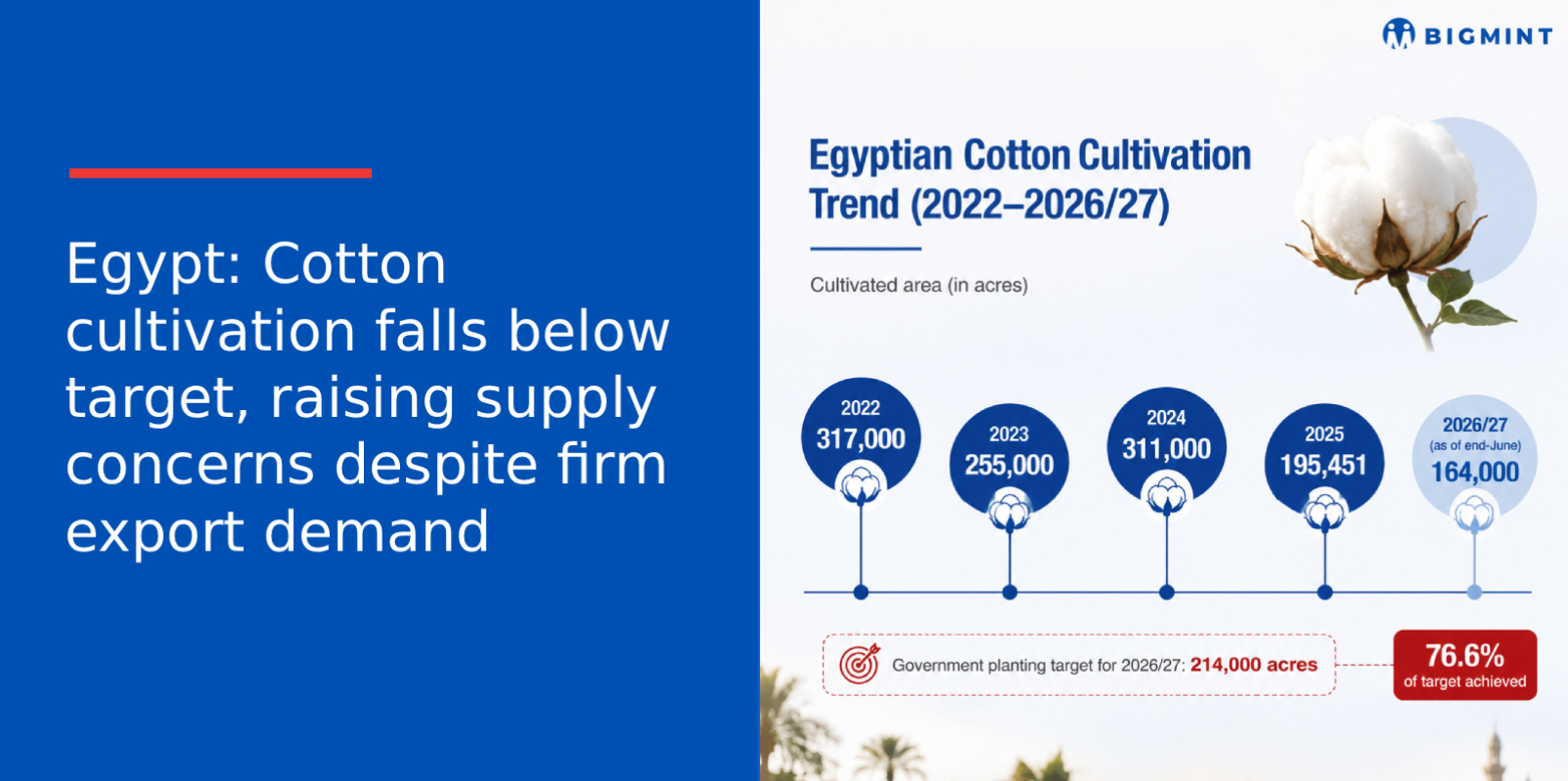
- Planting achieves only 77% of the government’s 214,000-acre target
- Lower acreage could tighten extra-long staple cotton supplies in 2026-27
Egypt’s cotton cultivation for the 2026-27 season has reached approximately 164,000 acres, according to the Ministry of Agriculture and Land Reclamation, well below the government’s planting target of 214,000 acres. Based on reports from agricultural directorates across 16 governorates, the planted area represents 76.6% of the seasonal target, with the ministry conducting a final field survey before releasing official acreage figures. The lower-than-expected sowing underscores the continued challenges facing Egypt’s cotton sector despite ongoing reforms aimed at improving grower returns and strengthening the country’s premium cotton industry.
Acreage continues its downward trend
The latest estimate extends a volatile cultivation pattern over the past five years. Cotton acreage stood at 317,000 acres in 2022, declined to 255,000 acres in 2023, recovered to 311,000 acres in 2024, and fell sharply to 195,451 acres in 2025. The provisional 164,000 acres figure for 2026-27 marks another decline, reflecting competition from alternative crops and changing farm economics. While the final cultivated area could be revised after verification, the current estimate points to a tighter production outlook for the upcoming marketing season.
India’s premium textile sector could feel the impact
Although lower acreage may limit lint availability, Egypt is expected to maintain strong demand for its extra-long staple (ELS) cotton from Asian textile manufacturers. India remains one of the largest destinations for Egyptian ELS cotton, accounting for nearly 25% of Egypt’s cotton exports in 2024-25, with the fibre widely used to produce premium yarns, fine fabrics, and high-end home textiles.
The acreage decline comes as India’s cotton imports are expected to increase due to lower domestic production. According to the Cotton Association of India (CAI), imports were projected at around 3 million bales in MY 2024-25 to bridge the gap between domestic supply and mill demand.
Any further reduction in Egyptian ELS cotton availability could tighten global supplies, support international premiums, and increase procurement costs for Indian spinning mills catering to export-oriented textile markets.
Outlook
The ministry’s final acreage assessment and crop performance during the growing season will determine Egypt’s production potential and export availability. With global demand for premium long-staple cotton remaining firm, a smaller crop could provide price support to the international ELS cotton market during the 2026-27 season.
Leave a Reply