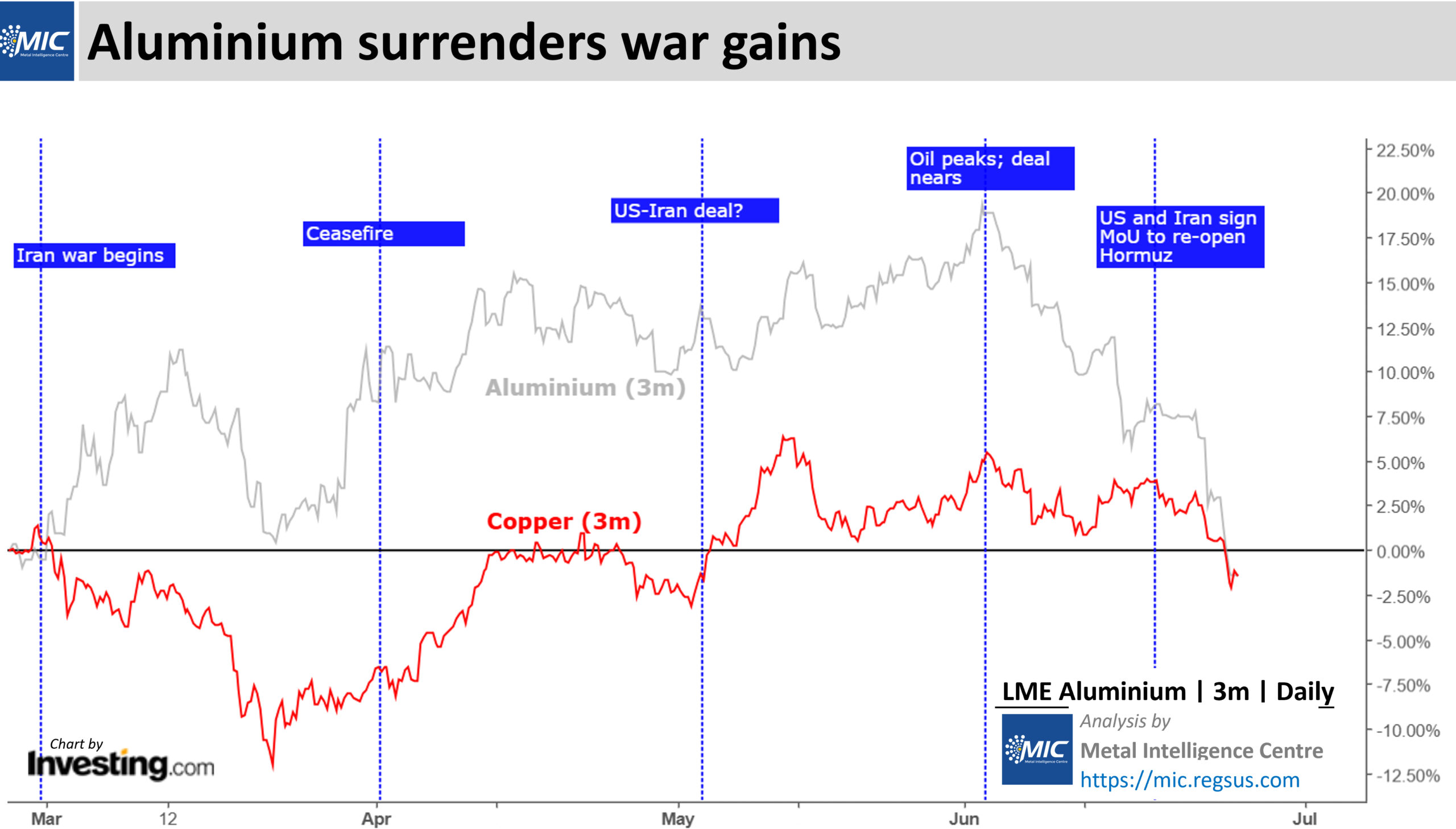
- Aluminium corrects below pre-Iran war levels
- Oil price correction eases aluminium concerns
Metal Intelligence Centre: Prior to the West Asia conflict, the two metals aluminium and copper largely moved in tandem. However, once the war began, underlying fundamental differences triggered a sharp and immediate divergence. This gap persisted throughout the conflict, prompting market participants to question whether it would eventually close and, if so, when and how.
Aluminium was quick to provide the answer.
In early June, as oil prices peaked and peace negotiations gained momentum, aluminium corrected sharply. Following the signing of the US-Iran MoU to reopen the Hormuz Strait, the metal surrendered all of its post-war gains and is currently trading below its pre-war level of $3,100-3,150/t.
A key driver behind this move was the unwinding of the war-induced shortage premium. Among commodities, oil and aluminium were the most affected due to the Gulf region’s critical role in both production and transportation. As oil prices also retreated to pre-war levels, around $70/barrel, it became evident that aluminium’s correction reflected diminishing supply tightness.
With the reopening of Hormuz, inventories that were previously stranded are expected to re-enter the market. At the same time, smelters damaged during the conflict are gradually regaining operational momentum, further boosting supply.
Note: This article has been published as part of a content partnership between MIC and BigMint.
Leave a Reply