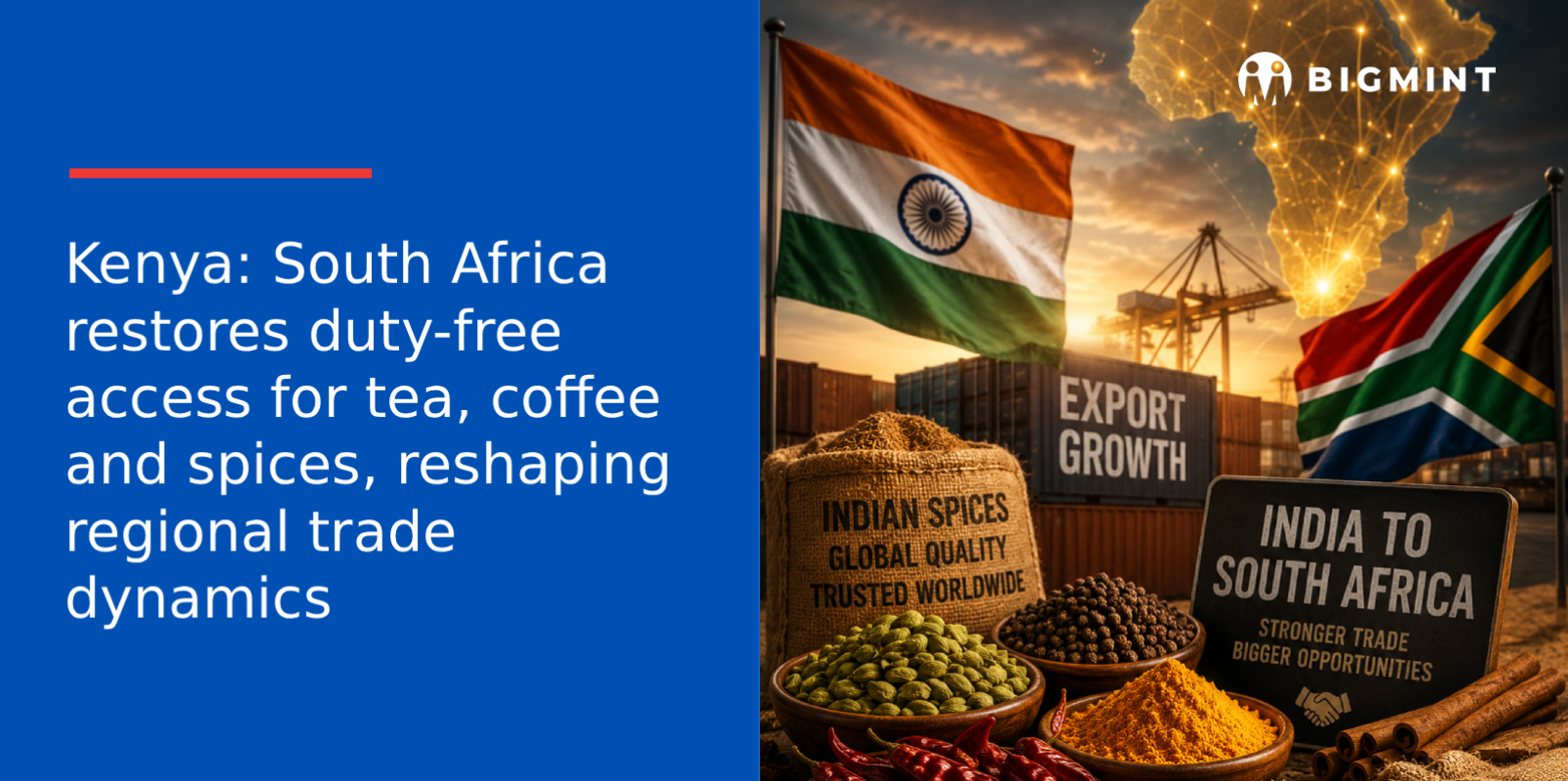
- Duty-free access restores Kenya’s price competitiveness in South Africa
- Decision strengthens intra-African agricultural trade under AfCFTA and SACU
Indian exporters could face stronger competition in Southern African markets
South Africa has restored preferential market access for Kenyan tea, coffee and spices by lifting the suspended import duties imposed in November 2025, marking a significant policy reversal for regional agricultural trade. Announced during the Kenya-South Africa Business Forum, the decision reinstates tariff concessions under the Southern African Customs Union (SACU) framework and is expected to improve Kenya’s export competitiveness while supporting broader African Continental Free Trade Area (AfCFTA) integration. The move also reflects efforts by both governments to deepen bilateral trade and address the long-standing trade imbalance that has largely favoured South Africa.
Kenyan exports regain momentum
The removal of duties is expected to restore the price competitiveness of Kenyan agricultural exports, particularly tea, coffee and spices, in one of Africa’s largest consumer markets. During the suspension, Kenyan products lost some of their cost advantage, allowing competing suppliers to strengthen their position. Market participants expect exporters to gradually recover lost market share as buyers resume procurement under the restored tariff regime.
The announcement was accompanied by six bilateral agreements covering shipping, maritime cooperation, technical education, arts and culture, sports and gender equality. Stronger logistics and institutional cooperation could further reduce trade costs and improve the movement of agricultural commodities between the two countries, supporting long-term export growth.
Implications for India
The policy change is expected to modestly intensify competition for Indian exporters, particularly in tea and spices. Kenya already enjoys a strong presence in African tea markets due to its high-quality black tea, geographical proximity and competitive freight costs. With duty-free access restored, Kenyan exporters gain an additional pricing advantage in South Africa, especially in bulk procurement and private-label segments.
While India’s diversified export destinations are likely to cushion any immediate impact, exporters targeting Southern Africa may need to focus on quality differentiation, value-added products and stronger customer engagement to maintain market share. The development also highlights the growing importance of preferential trade agreements in shaping agricultural trade flows across Africa.
Short-term outlook
The restoration of duty-free access is expected to boost Kenyan export volumes and strengthen intra-African agricultural trade in the coming months. Although the direct impact on India’s overall exports is expected to remain limited, the decision reinforces Africa’s growing strategic importance for global tea, coffee and spice exporters and underscores the need for Indian suppliers to expand their regional trade partnerships and strengthen competitiveness.
Leave a Reply