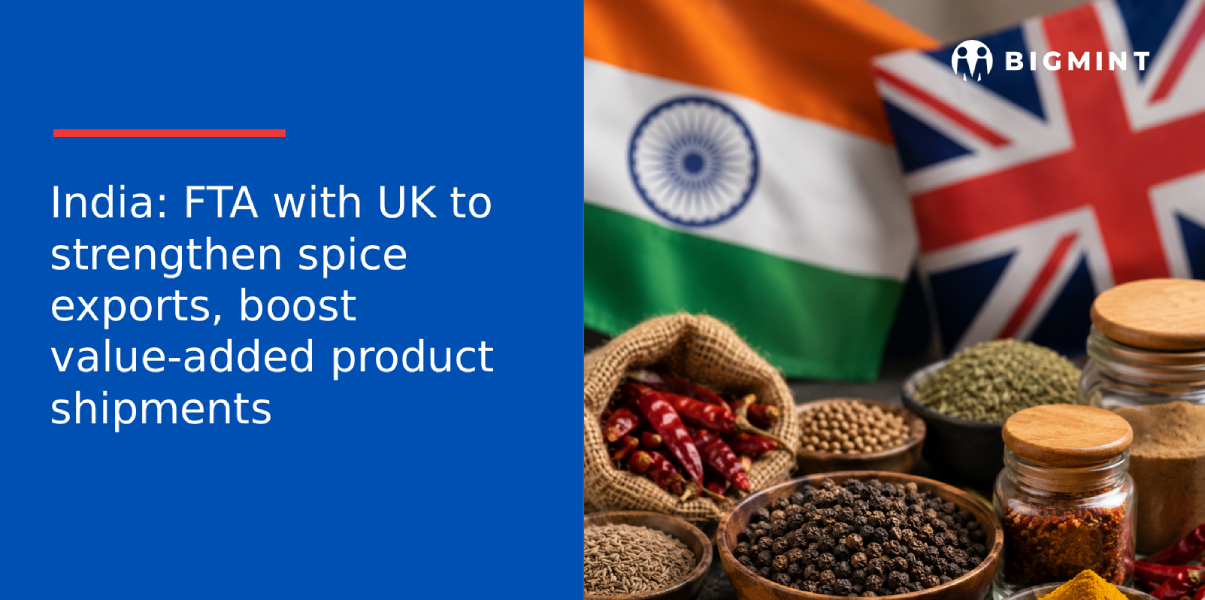
- Duty-free access expected to improve competitiveness of Indian spices in UK
- Pepper, cardamom and processed spice products likely to be key beneficiaries
The India-UK Comprehensive Economic and Trade Agreement (CETA), set to come into force on 15 July 2026, is expected to create new growth opportunities for India’s spice sector by improving market access and reducing tariff barriers for agricultural products. The agreement is likely to enhance the competitiveness of Indian spices in the UK, particularly against suppliers from Vietnam, Indonesia and China.
India exported a record 1.799 million tonnes of spices and spice products worth $4.72 billion in FY 2024-25, reaffirming its position as the world’s largest spice exporter. The UK remains an important destination for Indian agri-food exports, with India’s exports of coffee, tea and spices to the UK valued at around $162 million in 2024. Indian spices already enjoy strong demand from the UK’s ethnic food, retail and foodservice segments.
Value-added products offer greater upside
While black pepper and cardamom are expected to benefit immediately from improved market access, the larger opportunity lies in value-added products such as spice blends, curry powders, seasonings, oleoresins and organic spices. Industry participants believe the agreement could accelerate India’s transition from bulk spice exports towards branded and processed products, which offer higher margins and stronger customer retention.
Quality compliance remains critical
The UK market continues to maintain stringent food safety and residue standards. Exporters will need to strengthen traceability, testing and quality compliance to fully capitalize on the agreement. Improved access alone may not translate into higher volumes unless suppliers consistently meet regulatory requirements.
In the near term, the FTA is unlikely to significantly influence domestic spice prices, as the UK accounts for only a small portion of India’s overall spice exports. However, stronger demand for premium-grade pepper, cardamom and processed spice products could gradually support export premiums and encourage further investment in value addition over the medium term.
Leave a Reply