- Carrier surcharge hikes, Red Sea disruptions tighten fundamentals
- Longer voyages, re-routings reduce effective vessel capacity
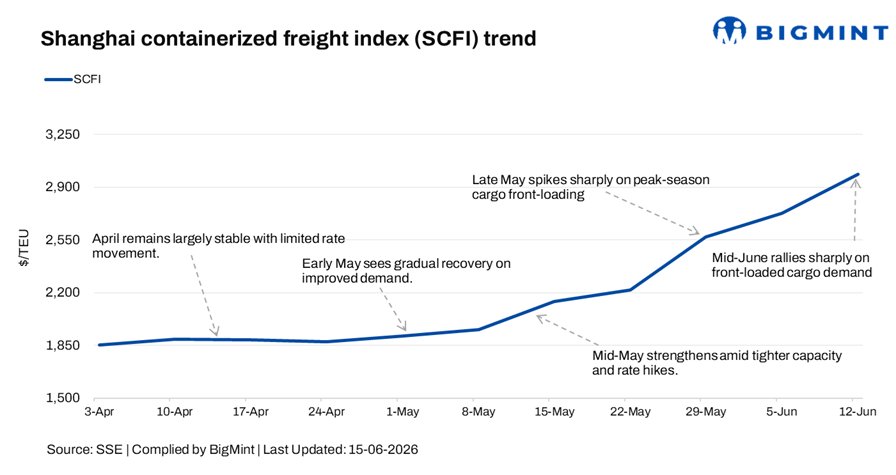
The Shanghai Containerized Freight Index (SCFI) rose 9.5% w-o-w to $2,985.2/twenty-foot equivalent unit (TEU) on 12 June 2026 as against $2,726.5/TEU on 5 June. The sharp rise reflects strengthening freight fundamentals across both Asia-Europe and Trans-Pacific trades.
Market sentiment remained bullish, supported by early peak-season demand, cargo front-loading ahead of potential US tariff changes, and pre-bunker adjustment bookings. Carrier-led freight all kinds (FAK) increases and peak season surcharges (PSS) hikes, along with improved vessel utilisation across major East-West routes, further strengthened freight rates.
Asia-Europe freight sentiment remained bullish, driven by early peak season demand, carrier surcharge implementation, and Red Sea-related disruptions. Advance booking activity picked up amid escalating freight costs and prolonged voyage durations.
Trans-Pacific rates strengthened on cargo front-loading ahead of potential US tariff changes and seasonal inventory replenishment. Strong booking activity and tightening vessel space supported further freight gains across key US-bound routes.
Additional support came from elevated bunker prices and geopolitical tensions in the Middle East, which have increased operating costs and reinforced upward pressure on freight rates. Continued Red Sea diversions and longer voyage routings have also reduced effective vessel capacity, helping sustain the recent rate rally.

Outlook
BigMint expects the SCFI to remain elevated in the coming weeks as peak-season cargo flows, carrier surcharge programmes, and front-loaded shipments continue to support demand. Further FAK and PSS announcements, coupled with ongoing Red Sea disruptions and rising fuel costs, are likely to keep freight rates firm.
However, market participants will closely monitor geopolitical developments and trade policy changes, which could introduce volatility to container markets during the second half of 2026.

Leave a Reply