- Farm economics and productivity drive regional realignment
- Supply diversification may alter trade and procurement patterns
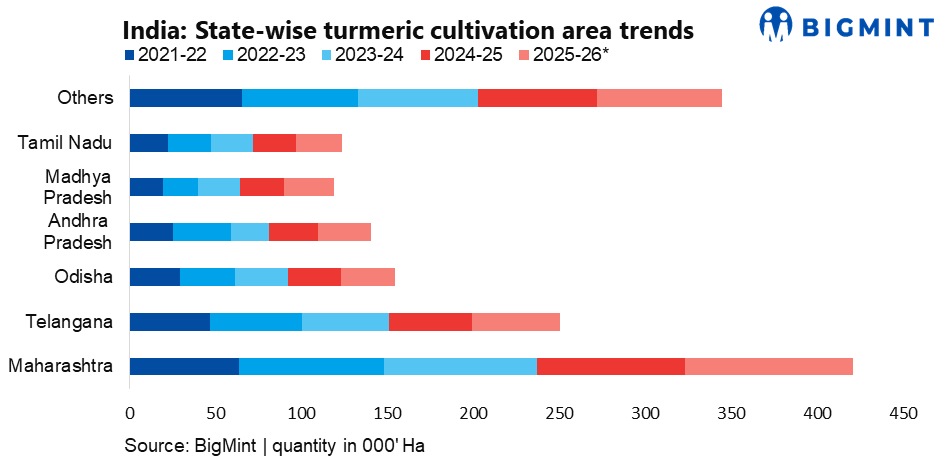
India’s turmeric cultivation landscape is undergoing a gradual geographical shift, with production increasingly concentrating in Maharashtra and parts of central India, while traditional growing regions in southern India witness acreage adjustments. The change reflects evolving farm economics, yield performance, and climatic considerations that are reshaping production decisions.
Maharashtra remained India’s largest turmeric-producing state in 2023-24, accounting for nearly 29% of the country’s cultivated area and producing about 327,000 tonnes. In contrast, Andhra Pradesh’s turmeric acreage declined to around 22,368 hectares in 2023-24 from 33,416 hectares a year earlier, highlighting a significant reduction in farmer participation.
Profitability drives acreage migration
Market participants attribute the shift to better productivity and relatively stable returns in Maharashtra’s Vidarbha and Marathwada regions, alongside growing cultivation in Madhya Pradesh. The latter expanded turmeric acreage to about 24,250 hectares in 2023-24 from 20,530 hectares two years earlier, indicating increasing farmer interest.
Meanwhile, growers in parts of Andhra Pradesh and Tamil Nadu have faced rising labour costs, higher input expenses, and inconsistent returns, prompting some farmers to diversify into alternative crops. Industry sources suggest that improved water availability and lower production risks in emerging regions have further supported acreage expansion.
Implications for trade
The changing production map is expected to influence procurement and logistics strategies. Traders are increasingly sourcing from newer production clusters, while exporters continue to monitor curcumin content and quality consistency across regions.
A broader cultivation base could improve supply resilience and reduce dependence on a few traditional belts. In the near term, monsoon progress and acreage trends in Maharashtra and central India will remain critical indicators for turmeric availability and price direction.
Leave a Reply