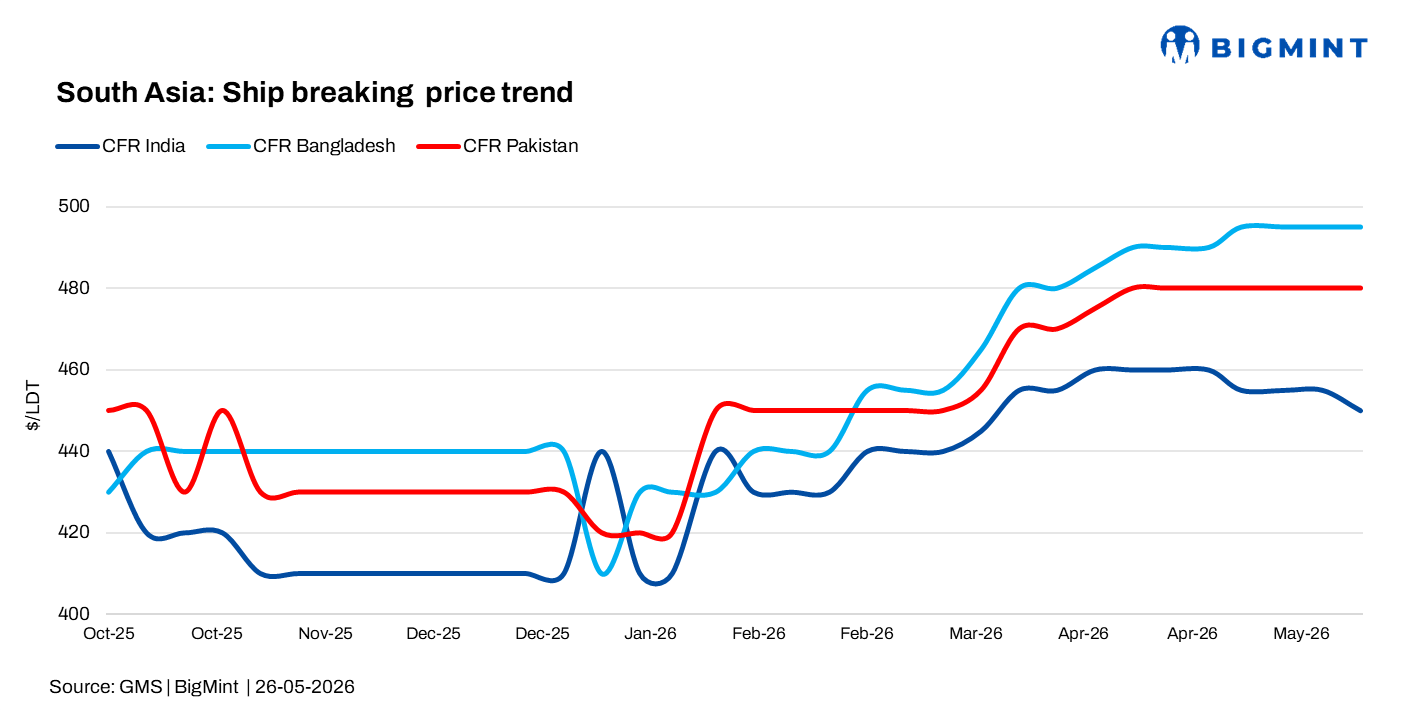
- Firm Gadani plate prices support Pakistan market
- Limited vessel availability restricts regional recycling activity
Sub-continent ship recycling markets remained cautious in Week 21 amid narrowing pre-monsoon activity, limited vessel availability, and volatile currency movements. While Pakistan and Bangladesh maintained relatively stable sentiment, weaker rupee conditions and softer plate prices continued pressuring the Indian market.

India: Weak rupee and softer plate prices weigh on sentiment
India’s ship recycling market remained under pressure in Week 21 as USD/INR surged despite easing Brent prices. Market participants noted that the rupee continued reflecting longer-term import cost concerns, while RBI intervention remained limited.
Meanwhile, local steel plate prices at Alang softened to INR 38,800-39,500/t ($400-408/t), keeping India the most competitively priced sub-continent recycling destination. However, limited vessel availability and the narrowing pre-monsoon window continued restricting fresh tonnage flow.
Bangladesh: Stable currency and smoother LC operations support sentiment
Bangladesh’s ship recycling market remained stable in Week 21, supported by a steady USD/BDT exchange rate and smoother LC processing in Chattogram. Domestic steel plate prices softened to BDT 66,700-67,500/t ($543-549/t) amid easing Brent prices and mill-level corrections.
Higher transport and utility costs, although inflation remained lower than Pakistan and Turkiye due to relative Taka stability. Meanwhile, compliance checks remained strict, while the narrowing pre-monsoon window and limited vessel availability continued supporting cautious market sentiment.

Pakistan: Stable PKR and firm Gadani pricing support market
Pakistan’s ship recycling market remained relatively firm in Week 21, supported by firm local steel plate prices and a relatively stable rupee despite fresh record lows in the Indian Rupee and Turkish Lira. Market participants attributed the stability to higher interest rates, steady remittance inflows, and continued reserve management by the State Bank of Pakistan.
Local steel plate prices at Gadani remained firm at around PKR 195,000/t ($700/t), maintaining Pakistan’s strongest pricing position in the sub-continent market. Meanwhile, three HKC-certified yards remained operational, with additional certifications under process.
Despite easing Brent prices, limited vessel availability and the narrowing pre-monsoon window continued restricting fresh tonnage flow into Gadani.

Leave a Reply