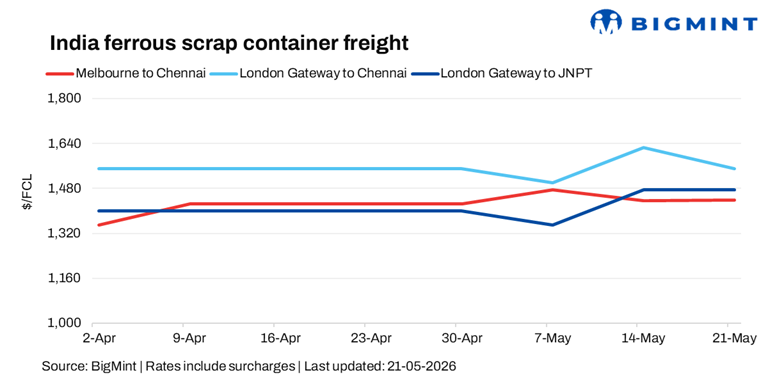
- Competitive domestic prices limit import activity
- Hike in bunker prices, geopolitical disruptions support freights
India-bound ferrous scrap container freights showed mixed trends w-o-w across regions. Weak finished steel demand across continued to keep global scrap market sentiment subdued, with buyers remaining cautious and highly price-sensitive.
In India, market sentiment stayed weak as mills increasingly preferred domestic scrap and DRI over imports due to competitive pricing, elevated container freights, rupee depreciation, and compressed steel margins, limiting fresh booking activity.
An Australian based shipbroker informed BigMint, “Ferrous scrap container freights from Australia to India remained under pressure, with limited booking activity observed on the route. Market participants indicated that nearly 99% of container bookings are currently moving towards the Far East due to better price realisations and comparatively stronger demand from Asian buyers.”
The widening price gap between Indian and Far East markets, along with subdued buying interest in India, continued to divert cargo flows towards destinations offering better margins and faster cargo movement.
Route-wise update

Factors influencing ferrous scrap container freights
- CFI gains amid tight vessel availability: The Containerized Freight Index surged by 186.45 points w-o-w to 2,140.66 points on 15 May, supported by rising bunker fuel prices, tighter vessel availability on key trade routes, and continued geopolitical disruptions impacting global shipping movements.
- Bunker prices rise amid supply concerns: Bunker prices increased w-o-w by $4/t to $829/t on 21 May, supported by tensions in the Middle East and fears of potential disruptions to global oil supply and shipping routes.
- Geopolitical tensions impact scrap trade flows: The Middle East conflict has emerged as a major external factor influencing global scrap markets, primarily through higher oil and bunker fuel prices. Rising freight costs across deep-sea trade routes have increased the landed cost of imported scrap for key buyers such as India, Turkiye, and Southeast Asia, thereby supporting scrap prices despite subdued mill demand.
Outlook
Ferrous scrap vessel freights are expected to stay stable to slightly firm, supported by steady demand and balanced vessel supply, with bunker costs providing some support while weak steel demand may limit gains.

Leave a Reply