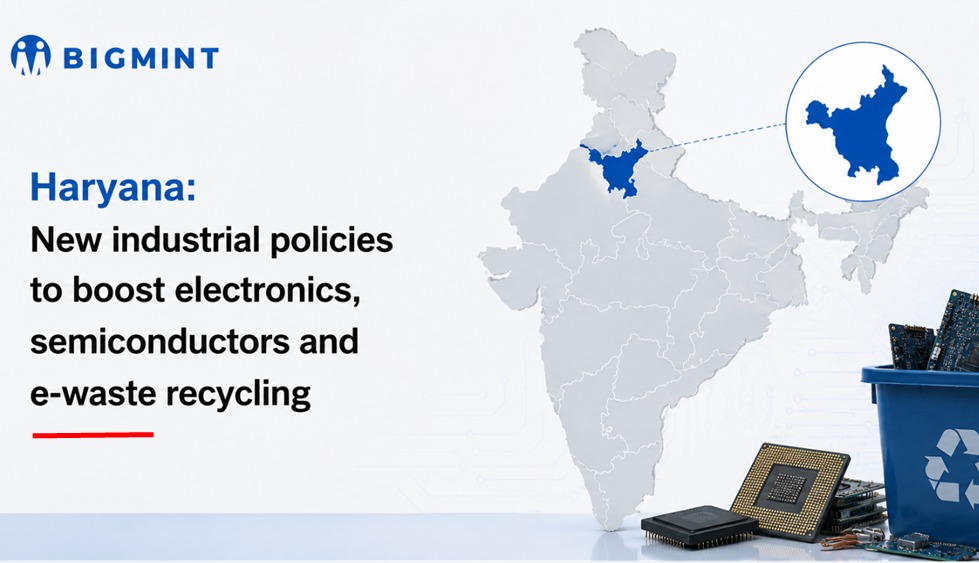
- Policy to support electronics manufacturing, semiconductor ecosystem
- 500-acre IMT Sohna electronics manufacturing cluster proposed
Haryana’s cabinet has approved two new industrial policies aimed at strengthening the state’s electronics manufacturing, semiconductor ecosystem, and e-waste recycling capabilities, with incentives of up to INR 200 crore per unit for eligible investments. The move forms part of the state’s broader industrial strategy to attract nearly INR 5 lakh crore in investments and generate around 1 million jobs over the next five years.
The newly approved Electronics System Design and Manufacturing (ESDM) Policy 2026 seeks to attract investments in semiconductor fabrication, electronic components, telecom equipment, and consumer electronics manufacturing. A key feature of the policy is the proposed 500-acre electronics manufacturing cluster at IMT Sohna, aimed at leveraging Haryana’s proximity to the National Capital Region (NCR) and existing industrial base.
Capital support of 20-30% to improve project viability
To attract investments, Haryana has proposed capital incentives of 20-30% of project cost, capped at INR 200 crore per unit, alongside operational support for eligible enterprises. The policy is expected to support manufacturing capacity creation and strengthen electronics supply chains.
E-waste policy focuses on organised recycling ecosystem
Alongside this, the Electronics Waste Recycling Policy 2026 seeks to formalise collection, dismantling, segregation, and recycling infrastructure for electronic waste. The framework is expected to improve compliance with Extended Producer Responsibility (EPR) norms and support investments in organised recycling facilities.
For the metals and recycling sector, stronger e-waste processing infrastructure could improve recovery of copper, aluminium, steel, and precious metals from discarded electronics, supporting secondary raw material availability across the NCR industrial belt.
Outlook
The twin policies are expected to strengthen Haryana’s position as a technology-driven manufacturing and recycling hub while supporting India’s broader transition toward a circular industrial economy.
Leave a Reply