- Indonesia to tighten control over SDA export revenues via BUMN centralization
- Transition phase may disrupt export procedures and shipment timelines
The Indonesian government is set to introduce a new regulatory framework aimed at centralising natural resource (SDA) exports under State-Owned Enterprises (BUMN). The transition will be implemented progressively throughout 2026, significantly reducing the role of private exporters in overseas trade activities. These commodities include Palm coconut, Coal and Ferro alloys.
During the transition phase from June to August 2026, private companies may continue supporting limited export functions, particularly documentation handling at the initial and final stages of shipment. However, the core customs clearance process will gradually be shifted to BUMN-controlled entities.
Effective 1 September 2026, the regulation is expected to be fully implemented, under which private firms will no longer be permitted to export natural resource commodities directly to international buyers. All export-related activities – including contract execution, customs documentation, shipment processing, and payment settlements – will be exclusively managed through BUMN channels.
Export operations to be structured in three stages
Under the proposed framework, BUMN entities will oversee the complete export chain across three operational stages.
In the pre-clearance stage, responsibilities will include securing business permits, finalizing sales contracts with overseas buyers, determining payment mechanisms, arranging cargo packaging, and booking vessel space.
The clearance stage will involve customs processing, payment of export duties and levies where applicable, cargo movement into port zones, and vessel loading operations.
In the post-clearance stage, BUMN entities will manage the submission of shipping documents to banks to facilitate payment remittances from overseas buyers to Indonesia.
India’s share in Indonesia’s coal exports
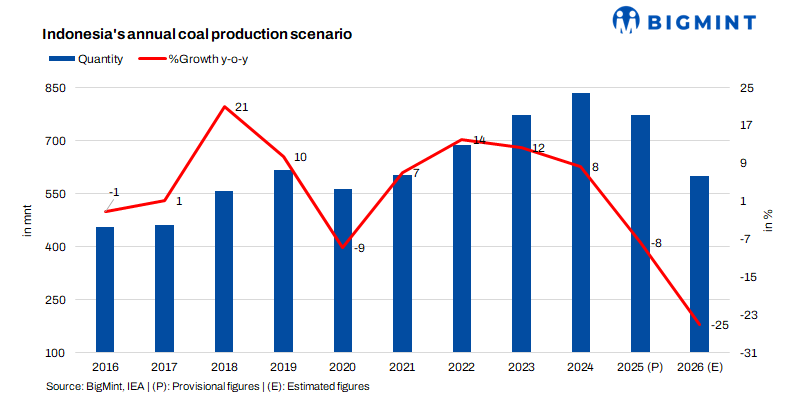
The country produced 790 million tonnes of coal in 2025, down 5.5% from a year earlier, while exports declined 7.9% to about 514 million tonnes, according to government data compiled by the Indonesian Coal Mining Association. India’s total coal imports are likely to remain around 150-160 million tonnes annually, with roughly 95-100 million tonnes coming from Indonesia because it remains the most competitive supplier of low-CV coal.

Outlook
The policy is expected to strengthen government oversight and improve control over export revenues from Indonesia’s natural resource sector. However, the transition may initially create operational adjustments for private exporters, traders, and overseas buyers due to changes in documentation flow, contracting structures, and payment procedures. Market participants are likely to closely monitor implementation clarity, administrative efficiency, and the impact on export lead times during the transition period.

Leave a Reply