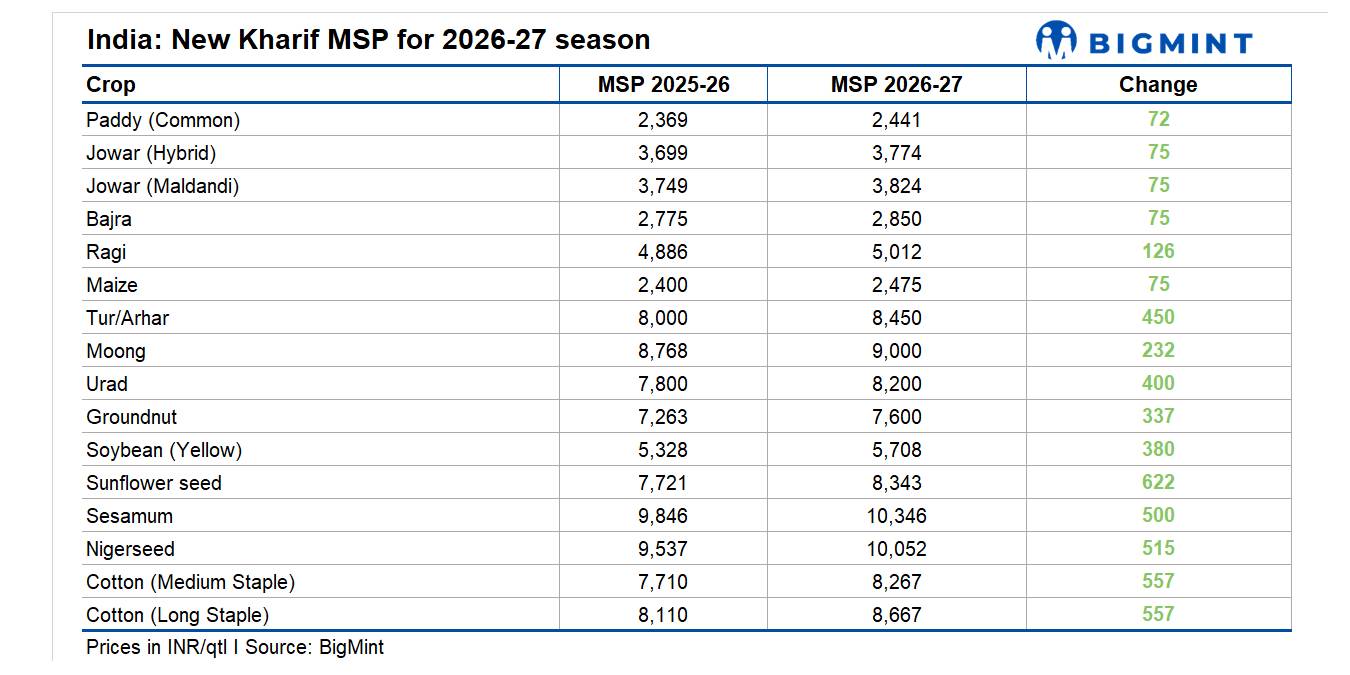
- Sunflower seed MSP increased by Rs 622/quintal, highest among Kharif crops
- Cotton, sesamum and nigerseed also receive significant upward revisions
India’s Cabinet Committee on Economic Affairs (CCEA) on Tuesday approved higher minimum support prices (MSP) for 14 Kharif crops for the 2026-27 marketing season, signalling continued policy support for farmers ahead of the monsoon sowing season. The government raised paddy MSP by Rs 72/quintal to Rs 2,441/quintal, while sunflower seed registered the sharpest increase of Rs 622/quintal to Rs 8,343/quintal.
Among major crops, cotton MSP increased by Rs 557/quintal, sesamum by Rs 500/quintal and nigerseed by Rs 515/quintal. Soybean MSP was revised upward by Rs 380/quintal to Rs 5,708/quintal, reflecting the government’s focus on boosting domestic oilseed production amid India’s dependence on edible oil imports.
Pulses and oilseeds remain in focus
The MSP hike for pulses also remained substantial, with tur MSP increased by Rs 450/quintal and urad by Rs 400/quintal. The government said MSPs continue to maintain at least a 50% margin over all-India weighted average cost of production, in line with its policy objective to improve farmer remuneration.
Market participants said the sharper increase in oilseed and pulse MSPs could encourage acreage diversification away from paddy in some regions, particularly if monsoon conditions remain favourable. Traders added that improved returns for cotton and sunflower may support higher sowing intentions during the upcoming planting cycle.
Market outlook
The MSP revision is expected to strengthen procurement confidence and rural sentiment, although actual acreage movement will depend on rainfall distribution, reservoir levels, mandi prices and input costs during the season.
Leave a Reply