- Applies across all transport modes with restrictions
- Aims to strengthen industrial growth and self-sufficiency
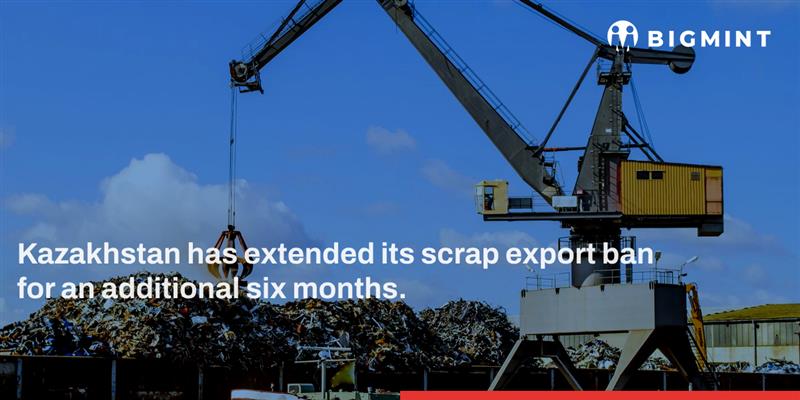
Kazakhstan has extended its export ban on ferrous and non-ferrous scrap for another six months, from 1 May to October 2026, continuing its long-standing policy of retaining raw materials within the domestic market. The previous ban, in place from November 2025 to April 2026, has now been renewed. The restrictions cover ferrous scrap (code 7204), railway components such as rails and sleepers (code 7302), steel pipes and hollow sections (codes 7304-7306), along with non-ferrous scrap including copper, aluminium, lead, and used batteries. The measure applies across all modes of transport, with limited exceptions for repair-related shipments under strict regulatory conditions.
First introduced in 2018 and extended multiple times since, the policy is aimed at safeguarding domestic raw material availability, supporting the metallurgical sector, and strengthening industrial self-sufficiency. By restricting exports, Kazakhstan seeks to boost local steel production, enhance secondary metal processing, and align with broader goals of industrial growth, energy efficiency, and resource security.
Leave a Reply