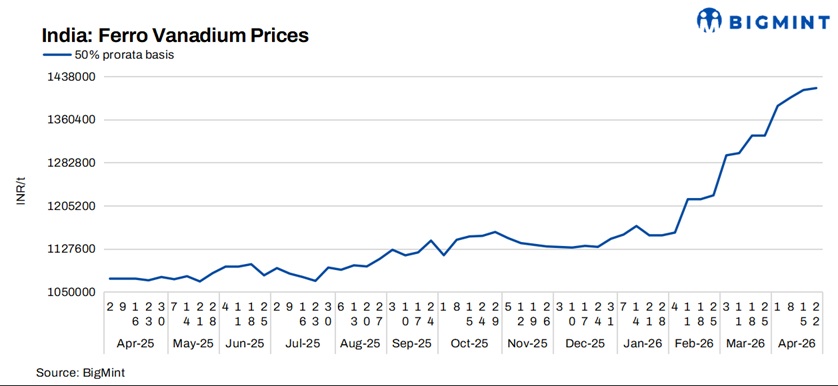
- Cost push strengthens ferro vanadium price sentiment
- Limited procurement activity weighs on market
Indian ferro vanadium prices remained mostly stable, rising slightly by INR 3,500/t ($37/t) to INR 1,417,000/t ($15,105/t) ex-works Raipur on 22 April 2026. Ferro vanadium prices edged higher, supported by rising upstream costs and firm producer pricing, despite subdued demand and cautious downstream market participation.
Factors impacting prices
Rising costs drive market sentiment higher
Recent uptick in ferro vanadium prices were primarily driven by stronger upstream pricing, as major vanadium pentoxide producers from China and integrated manufacturers announced higher long-term contract rates. This has led to effective cost pass-through into the ferro vanadium segment, strengthening sellers’ confidence and pushing offer levels upward.
On the supply side, availability of low-priced vanadium pentoxide continues to tighten, while elevated aluminum powder costs are further inflating production expenses. Producers are therefore reluctant to offload material at discounted levels, maintaining firm pricing strategies amid rising input cost pressures.
Demand weakness caps further upside momentum
Despite stronger cost support, downstream demand remains subdued, limiting the extent of price increases. Special steel mills have largely concluded their monthly procurement cycles, resulting in reduced spot buying activity. Traders are adopting a cautious stance, closely monitoring market direction rather than engaging in aggressive purchases. Producers acknowledge that while pricing power has improved due to cost pressures, actual transaction volumes at elevated levels remain limited.
This imbalance between firm supply-side dynamics and slow demand absorption continues to define the market, keeping price gains modest and sentiment cautiously optimistic.
Outlook
Ferro vanadium prices are expected to remain firm in the near term, supported by elevated raw material costs, though gains may be tempered by subdued downstream demand and limited acceptance of higher prices.

Leave a Reply