- Al Taweelah outage and IRALCO strike tighten aluminium supply
- Hormuz disruptions keep energy markets volatile despite ceasefire
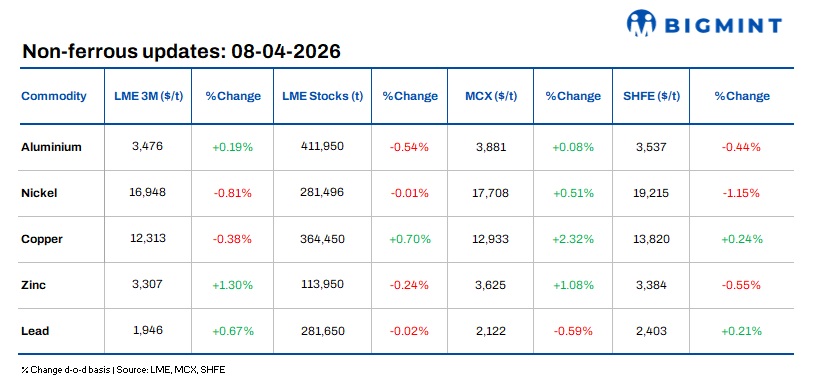
Base metals on the London Metal Exchange (LME) traded mixed d-o-d as of 7 April, with selective gains across the complex. Aluminium edged up 0.19% to $3,476/t, while zinc recorded the strongest increase of 1.30% to $3,307/t. Lead also rose 0.67% to $1,946/t. In contrast, nickel declined 0.81% to $16,948/t and copper slipped 0.38% to $12,313/t.

Emirates Global Aluminium (EGA) expects up to 12 months to fully restore production at its Al Taweelah smelter (around 1.6 mnt capacity) following severe infrastructure damage and a shutdown on 28 March. The restart will involve phased recovery of reduction cells, a technically complex and time-intensive process.
While alumina refining and recycling may resume earlier, the prolonged disruption to primary smelting is likely to tighten global supply. The outage comes amid low inventories and Hormuz-related logistics disruptions, contributing to a >10% rise in LME aluminium prices.
EGA is coordinating with customers on delayed shipments, with the outage removing a key supply buffer in the global aluminium market.
Rising aluminium prices pressure Taiwan tech margins
Taiwan’s technology manufacturers are facing margin pressures amid a sharp rise in aluminium prices, with LME aluminium reaching a four-year high of ~$3,500/t due to supply disruptions and geopolitical tensions.
The impact is pronounced across AI server and electronics supply chains, where aluminium alloys are critical for cooling systems and structural components, limiting substitution flexibility.
Further pressure from around 50% US tariffs and tightening EU carbon regulations is prompting firms to shift toward low-carbon aluminium sourcing from regions such as Australia and Canada to manage costs and enhance supply chain resilience
The disruption had led to a buildup of around 200 tankers, carrying an estimated 130 Mn barrels of crude and 46 Mn barrels of refined fuels in the Gulf.
With Hormuz handling near 20% of global oil shipments, gradual normalisation is expected to ease near-term supply-side pressures in global energy markets.
A temporary ceasefire in the Iran conflict has provided near-term relief to global energy markets, easing supply disruptions linked to the Strait of Hormuz blockade. However, uncertainty remains elevated due to damaged infrastructure, shipping risks, and fragile truce conditions, limiting a full recovery in oil and gas flows.
Oil prices reacted sharply, with Brent falling around 13% to around $95/bbl, while the potential release of around 130 Mn barrels of stranded crude may ease immediate supply tightness.
Despite this, structural constraints persist, with global supply still 3-5 Mn b/d below pre-war levels, as logistical bottlenecks and geopolitical risks continue to weigh on market stability.
Iran rejects Hormuz reopening for temporary ceasefire
Iran has refused to reopen the Strait of Hormuz in exchange for a temporary ceasefire, signalling a firm stance amid ongoing tensions.
Officials indicated that any reopening would require long-term commitments, not short-term arrangements.
The move raises concerns over prolonged disruption to around 20% of global oil flows, keeping supply risks and geopolitical premiums elevated across oil and freight markets.
India set to receive first Iranian oil cargo in seven years amid disruptions
India is set to receive its first Iranian crude cargo in seven years, following a temporary easing of US sanctions and ongoing Middle East supply disruptions. Ship-tracking data indicates at least one cargo arrival this week, marking a shift in sourcing strategy.
The move comes amid Strait of Hormuz disruptions, which have constrained global crude flows, prompting Indian refiners to diversify supply sources.
The resumption of Iranian imports highlights greater flexibility in India’s crude procurement strategy amid tightening markets and geopolitical uncertainty.
The Iran Aluminium Company (IRALCO)-the country’s largest aluminium producer located in Arak-was reportedly targeted in US-Israel airstrikes amid escalating geopolitical tensions. The attack also included the Amirkabir petrochemical complex in Mahshahr, highlighting a widening focus on strategic industrial infrastructure.
While no casualties were reported, the strike on IRALCO, a key hub in Iran’s aluminium value chain, has raised concerns over potential disruptions to regional aluminium supply. The move underscores increasing vulnerability of primary metal production assets amid ongoing conflict-driven escalation.
Leave a Reply