- Raw material prices rise, weaker yen drives up procurement costs
- Steelmakers focus on contract prices first, spot rates to follow
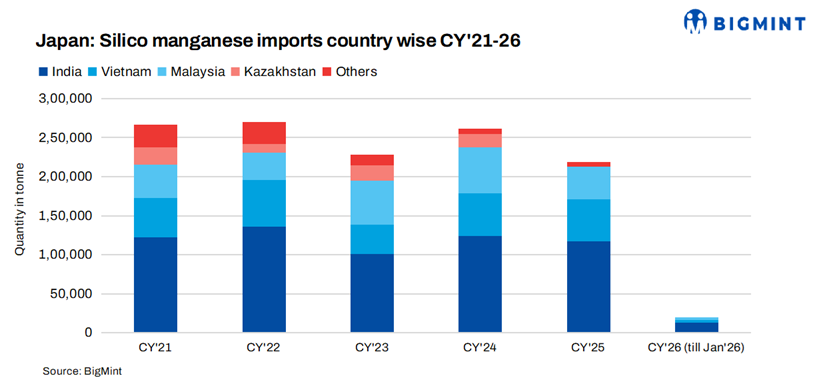
Japan Metal Daily: Japanese blast furnace steelmakers have intensified efforts to pass on rising production costs to steel prices, as the yen-denominated cost of key raw materials such as iron ore and coking coal increased sharply in the January-March quarter, supported by a weaker yen. In addition, prices of other inputs, including ferroalloys like silico manganese, as well as nickel, chromium, zinc, and tin used in specialty and coated steels, have also firmed up, further pushing manufacturing costs higher. According to industry participants, raw material costs alone have increased by at least JPY 10,000/t ($63), while the overall rise in production costs, including labour, logistics, and consumables, may have reached several thousand yen more compared with the end of the first half of last fiscal.
Steelmakers are therefore moving to revise contract-linked prices first, as these are typically determined through formulas tied to raw material costs and exchange rates. Current negotiations between mills and buyers for contracts covering the latter half of FY’25 and the early months of FY’26 are expected to result in price increases. Market participants believe these increases could gradually spill over into the spot market as producers attempt to restore margins.
On the spot side, however, price adjustments depend more on supply-demand dynamics and individual sales strategies. Despite relatively weak domestic steel demand, inventories of major sheet steel products remain controlled at around 4 million tonnes, limiting excessive price pressure. At the same time, distributors are also attempting to pass on higher costs, with many market players indicating that lowering prices has not significantly improved sales volumes. As a result, sentiment in the market is slowly shifting towards a cost-push price increase scenario.
Developments among electric arc furnace (EAF) producers and overseas suppliers are also expected to influence the domestic market. Rising scrap prices have already prompted some EAF producers to raise prices for products such as H-beams, while profitability pressures may push them to extend hikes to other steel products in the coming months. Meanwhile, overseas mills, particularly in South Korea and Taiwan, have started increasing export prices to Japan after facing deteriorating margins due to the weaker yen. With Chinese offers also becoming less competitive due to currency effects, low-priced imports are gradually disappearing from the market. If domestic producers align their pricing strategies, market participants believe the Japanese steel market could witness a gradual price recovery in the coming months.
Note: This article has been published under a content exchange agreement with Japan Metal Daily.
Leave a Reply