- Trade target of $20 billion over five years
- Recycling policy reform key to mineral security
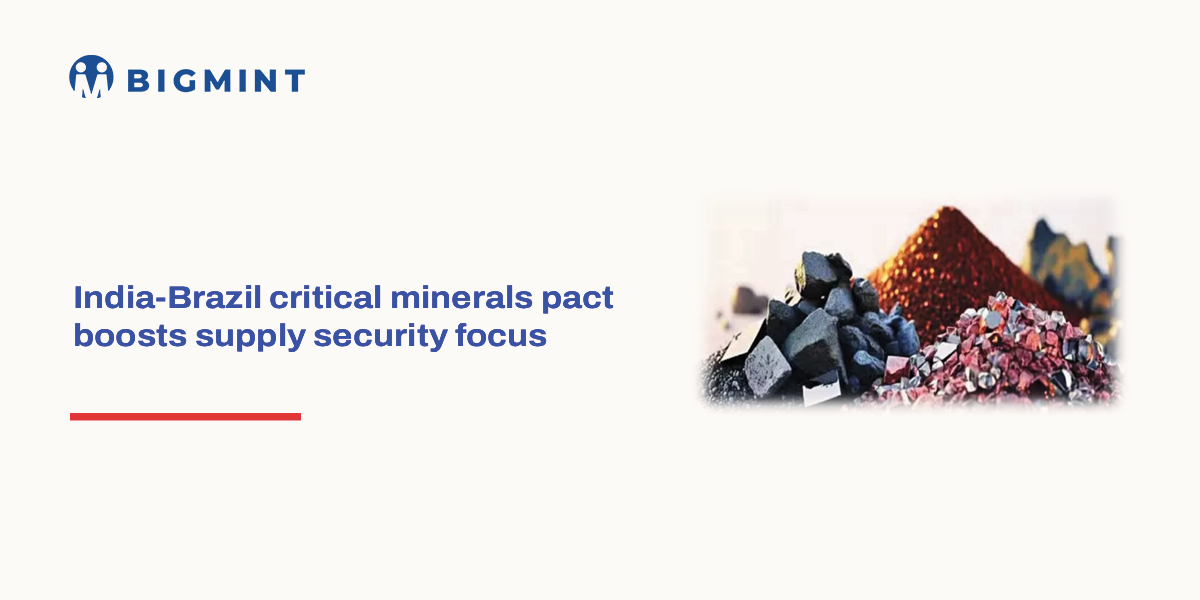
India and Brazil signed a cooperation agreement on critical minerals and rare earths on 21 February 2026, placing supply-chain resilience at the centre of bilateral engagement. The pact, concluded during President Luiz Inácio Lula da Silva’s visit to New Delhi, forms part of more than 10 agreements and seeks to lift bilateral trade from $15.2 billion in 2025 to over $20 billion within five years, with a longer-term ambition of $30 billion by 2030.
Strategic import diversification
The agreement comes amid heightened concern over concentrated rare earths supply. China currently accounts for an estimated 60-70% of global mining output and 85-90% of processing capacity, creating structural exposure for downstream industries including EVs, battery manufacturing, renewables, defence and electronics.
Brazil, with only around 30% of its rare earth reserves explored, offers upstream diversification potential. For India, which remains heavily import-dependent for critical mineral inputs across EV and energy storage value chains, the pact signals a deliberate pivot toward resource security and long-term feedstock stability.
Recycling reform emerges as structural lever
While overseas partnerships strengthen primary supply access, India’s secondary raw material ecosystem remains under-optimised. Significant recoverable volumes exist in e-waste and spent lithium-ion batteries, yet formal recyclers cite GST anomalies on scrap, EPR implementation gaps, and limited fiscal incentives as constraints to capacity expansion.
Industry participants note that without policy alignment, urban mining cannot meaningfully offset import reliance.
Policy alignment
Coupling global sourcing agreements with domestic circularity reforms could materially reduce exposure to external volatility. Aligning tax structures, incentivising formal collection, and tightening compliance on informal processing would help convert domestic material stocks into strategic feedstock.
Outlook
The India-Brazil pact strengthens upstream security, but sustained mineral resilience will depend on accelerating formal recycling reforms and integrating circular supply chains into industrial policy.
Leave a Reply