- CR-busheling shortage triggers sharp upside across regions
- Late-January auction hikes filter into spot market
Foundry scrap prices in India jumped sharply w-o-w on 10 February 2026, driven by tight availability of CR-busheling and plate-cutting scrap and the spillover impact of higher auction prices concluded in the last week of January. Unlike the previous week’s measured firmness, the market saw an aggressive upside across most regions, reflecting supply-side stress rather than a demand-led rally. Buying remained largely need-based, but sellers held firm amid low inventories.
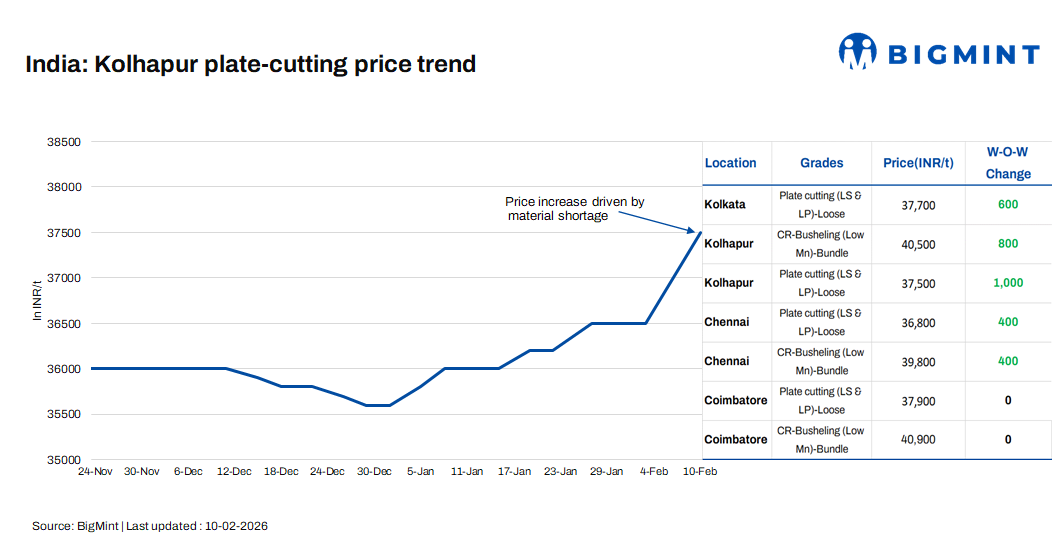
In western India, Kolhapur emerged as a key price driver. Plate-cutting scrap (LS & LP, loose) rose sharply by INR 1,000/t w-o-w to around INR 37,500/t, while CR-busheling (low Mn, bundled) jumped by INR 800/t to INR 40,500/t. Market participants said inflows thinned notably after January-end auctions cleared at higher levels, tightening spot availability. The price curve shows a steep recovery from December lows, signalling a clear shift in sentiment as material shortages outweigh cautious buying.
In eastern India, Kolkata plate-cutting prices climbed by INR 600/t to INR 37,700/t. Traders cited continued supply tightness and improved realizations in recent collections, with limited willingness among suppliers to negotiate amid rising replacement costs.
Southern markets also strengthened. Chennai plate-cutting prices increased by INR 400/t to INR 36,800/t, while CR-busheling rose by a similar margin to INR 39,800/t, supported by steady restocking from automotive foundries. In contrast, Coimbatore prices remained unchanged at elevated levels, with plate-cutting at INR 37,900/t and CR-busheling at INR 40,900/t, as last week’s premium pricing curtailed further upside.
Outlook:
Foundry scrap prices are expected to stay firm in the near term, with further upside possible if CR-busheling availability remains constrained. However, resistance may emerge if casting offtake fails to absorb higher raw material costs.
Leave a Reply