- Higher levy lifts upfront cash outflows, but tax burden stays same
- Short-term cash flow pressure likely for IF steelmakers, traders
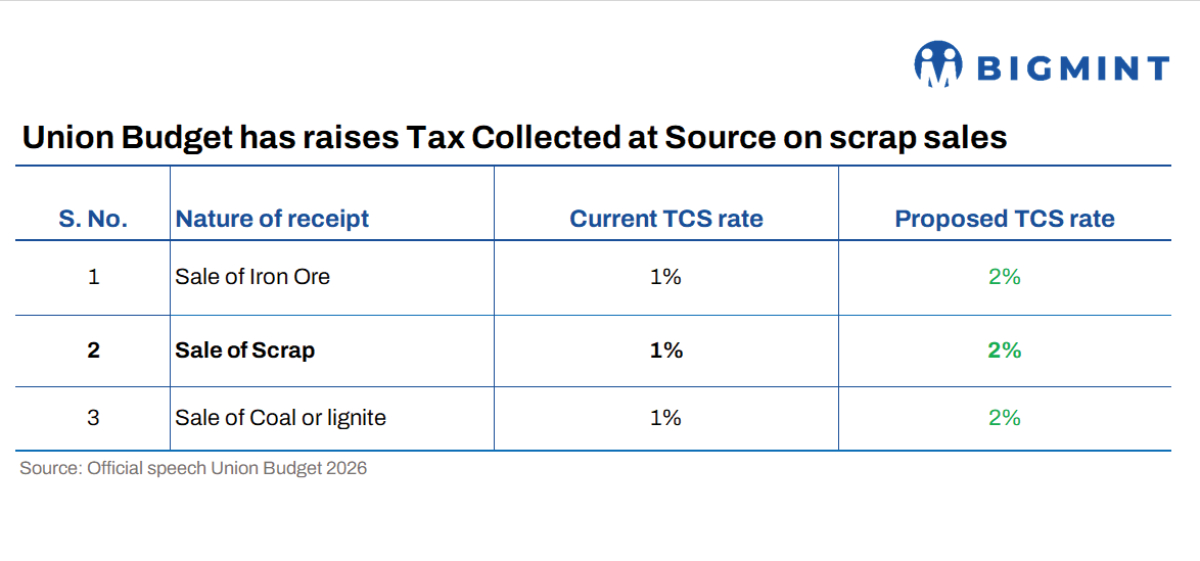
India’s Union Budget 2026 has proposed raising the tax collected at source (TCS) on scrap sales to 2% from 1%. While the higher levy does not increase the effective tax burden — as TCS remains adjustable against final income tax liability — it materially raises upfront cash outflows, particularly for working-capital-intensive segments.
The immediate impact is expected to be felt most acutely by small scrap traders and induction furnace (IF) steel producers, where procurement cycles are short and liquidity buffers remain thin. Market participants indicate that the higher cash blockage could prompt more cautious buying behaviour in the near term, especially in price-sensitive ferrous scrap grades used by secondary steelmakers.
From a policy perspective, the move aligns with the government’s broader intent to enhance PAN-linked traceability, curb under-reporting, and reduce cash-based transactions in scrap trading. Scrap remains a core feedstock for India’s secondary steel sector, yet its trade has historically operated with lower levels of reporting discipline compared to primary raw materials. The higher TCS is expected to improve data visibility across the value chain, strengthening regulatory oversight.
In the short term, buyers may attempt to renegotiate scrap prices to offset liquidity pressure, potentially adding volatility to domestic scrap markets. An IF mill operator noted that “while the tax is recoverable, the immediate cash impact could slow procurement, especially during periods of weak finished steel demand.”
Structurally, the change is likely to accelerate consolidation. Organised recyclers, compliant traders, and larger EAF and IF steel producers with stronger balance sheets and tax compliance systems are better positioned to absorb higher TCS-related cash flows. Over time, this could shift volumes away from unorganised participants.
Outlook
Near-term trade momentum may soften as liquidity adjusts, but improved transparency and formalisation should enhance price discovery and market efficiency over the medium term, reinforcing India’s circular economy and scrap-led steelmaking objectives.
Leave a Reply