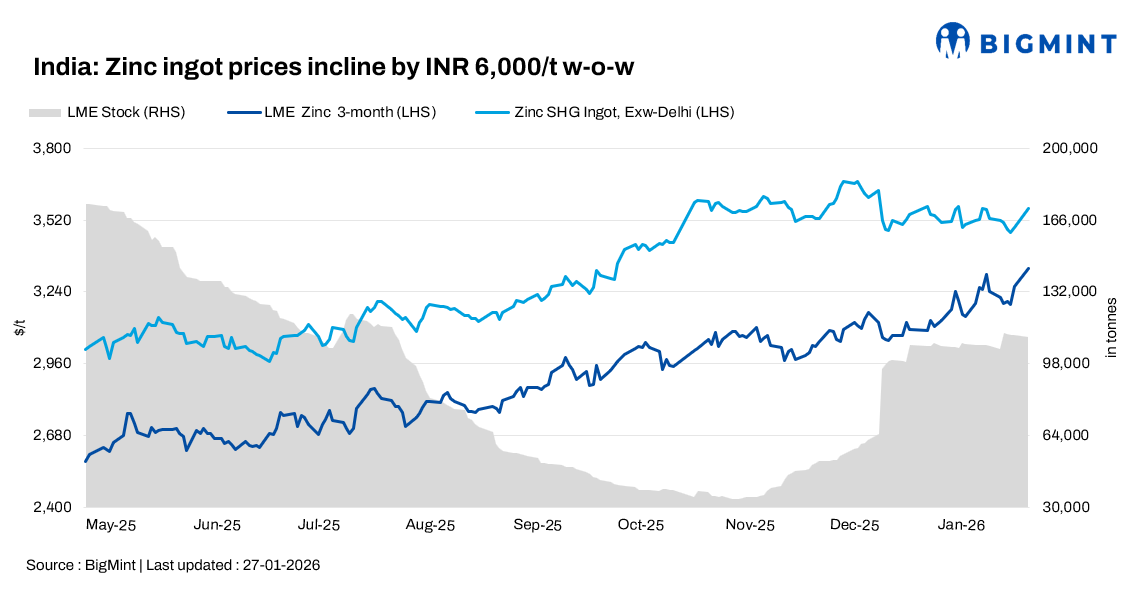
- Prices surge in north India
- Australian-origin zinc premiums rise
India’s zinc ingot (99.995%) prices rose sharply by INR 6,000/tonne (t) w-o-w to INR 326,000/t ex-Delhi on 27 January, as per BigMint’s assessment. The increase was driven by tighter availability of imported material, elevated import premiums, and firm domestic offers, although overall trading activity remained selective and need-based.
On 26 January 2026, Hindustan Zinc Limited (HZL) increased its zinc ingot prices by INR 4,200/t ($46/t) to INR 329,800/t ($3,597/t) ex-Chanderiya, tracking higher global benchmarks and improved physical market sentiment.
Traders reported that special high-grade (SHG) zinc ingots were offered at around INR 325,000/t ex-Mumbai, up INR 6,000/t w-o-w. Australian-origin zinc continued to command strong premiums of around $250/t over London Metal Exchange (LME) prices on a CFR JNPT basis, reflecting limited arrivals and tight availability at Indian ports.
In north India, Australian-origin zinc was quoted as high as INR 342,000/t ex-Delhi, marking a steep increase of INR 8,000/t w-o-w. Market participants also heard zinc PMI deals near INR 292,000/t, while Korea- and Iran-origin zinc was quoted around INR 332,000/t ex-Delhi, highlighting a wide price spread across different origins.
India: Coated flat steel prices edge up
Indian coated flat steel prices rose slightly on weekly basis as trading activity improved, according to BigMint. GP coil prices increased by INR 1,000/t to INR 66,800/t exy-Mumbai, while Galvalume and PPGI rose by INR 1,400/t and INR 600/t, respectively. Better participation was seen in north and south India, though west remained sluggish. Mills stayed firm on January price hikes, supporting sentiment.
LME ban unlikely to impact Korea Zinc supplies
On the global front, Korea Zinc stated that the London Metal Exchange’s temporary ban on zinc deliveries into LME warehouses from 14 April 2026 will not disrupt its exports or sales. The suspension applies only to warehouse warranting and follows delays in internal control system upgrades. Korea Zinc noted that most of its production is supplied directly to end users rather than routed through LME warehouses. The company is implementing corrective measures and expects to complete them by Q1 2026, while its LME registration for zinc and lead remains intact, ensuring continuity of business operations.
Outlook
Domestic zinc prices are likely to remain firm in the near term, supported by elevated import premiums, tight availability of Australian-origin material, and supportive global cues. However, cautious downstream demand and selective buying may cap further upside, with import flows and LME developments remaining key variables to watch.
Leave a Reply