- Several copper blocks insufficiently sized for smelter requirement
- Large potential mineralised zones remain unexplored due to current norms
India’s mines ministry is considering offering larger copper blocks and composite licences in future auctions, after the country’s top copper producer flagged concerns.
Copper figured in India’s first list of 30 critical ministers for energy transition but is not listed officially in Part D of Schedule I of the Mines and Minerals (Development and Regulation) Act (MMDR), which covers 24 critical and strategic minerals the Central Government has exclusive auctioning rights to.
At a recent ministry event, a spokesperson from Hindalco Industries, part of the Aditya Birla conglomerate, told ministry officials that many copper blocks being auctioned were between 1-3 square km – insufficient compared to a medium or large mine that a smelter would need. Hindalco’s 500,000-tonne (t) capacity smelter in Dahej, Gujarat, produces refined copper cathodes and rods from imported copper concentrates. Hindalco does not currently operate any captive copper ore mines in India.
The company also urged the government to offer composite licenses that would allow further exploration by the bidder, more than the typical 250-300 metre depth of current exploration before blocks are auctioned, said Shubham Roy, head of technical and exploration for copper and critical minerals at Hindalco.
“In deep-seated base metal deposits – such as HCL and HZL mines – mineralisation extends to depths of 700 to 800 metres,” said Roy at a recent deliberation between Ministry officials and industry representatives. “This means large potential mineralised zones, of about 500 metres, remain unexplored.”
Piyush Goyal, Secretary, Ministry of Mines, responded positively to both suggestions, stating that Geological Survey of India (GSI) would assess whether larger copper blocks could be created for auction.
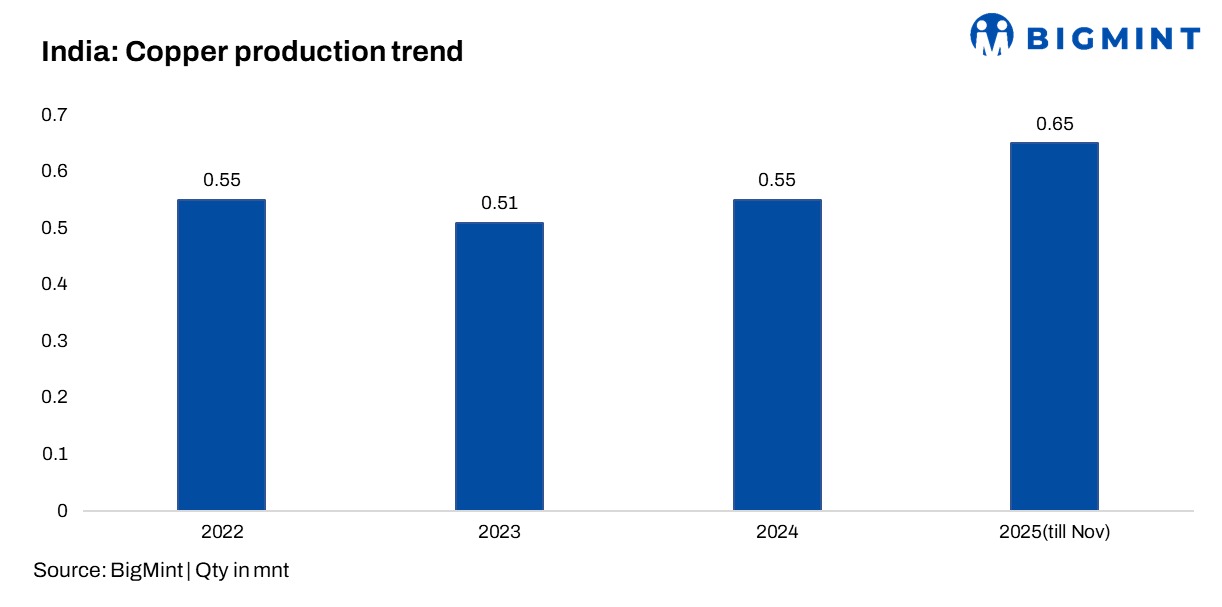
India is seeking to boost domestic production of copper and other critical minerals to reduce reliance on imports, particularly from China, as demand surges for electric vehicles and renewable energy infrastructure.
Leave a Reply