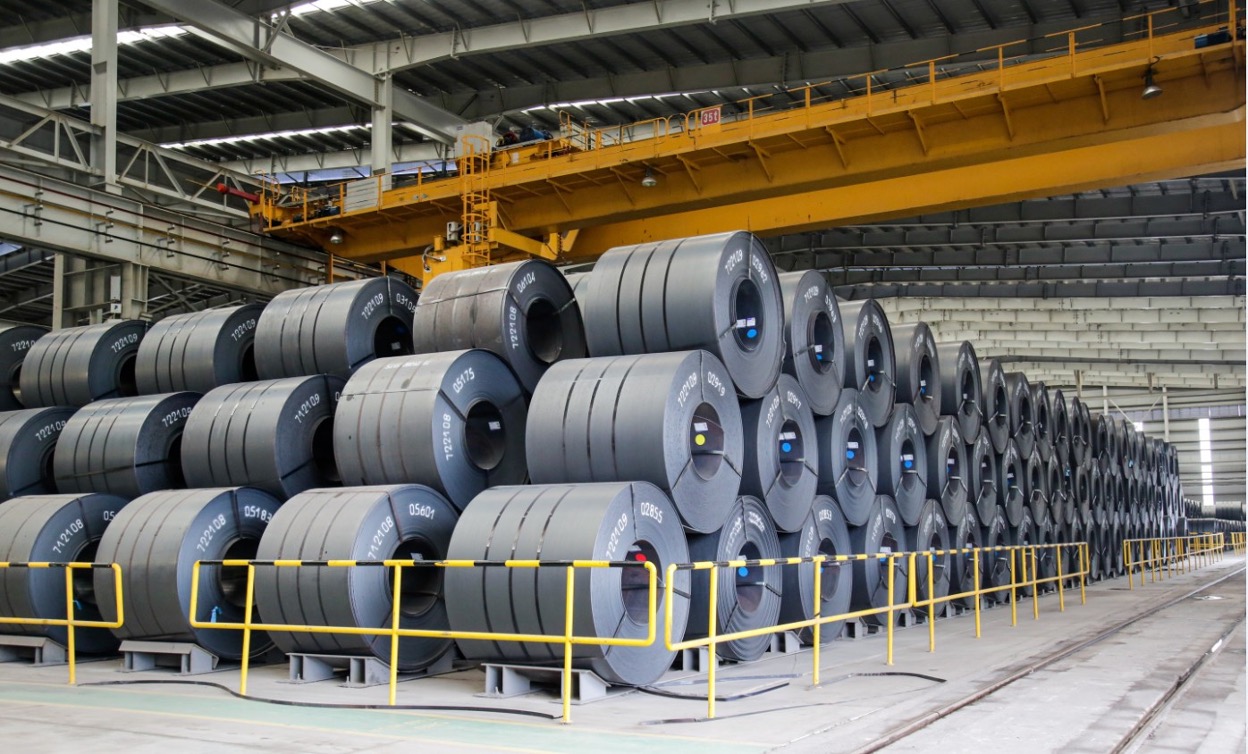
- Tosyali urges EU quota removal to support green steel transition
- Turkish metal export unit prices rise to yearly high in Dec’25
SteelOrbis: Fuat Tosyali, chairman of Turkiye’s Tosyali Holding, spoke at the World Economic Forum in Switzerland on the current state of the Turkish economy and global steel trends. He specifically called on the European Union to lift steel import quotas currently applied to sustainably producing nations such as Turkey and Algeria.
Tosyali pointed out that while EU measures were primarily intended to curb imports from Asia — specifically China — they were inadvertently penalising upstream producers. He emphasised that Turkey is well positioned to supply the EU’s downstream industries with the low-emission steel products required for a green transition.
Critique of EU steel policy
Tosyali criticised current European Union strategies, arguing that the introduction of new quotas and restrictive measures on steel imports is inadvertently harming the EU’s own domestic industry. He suggested that for the EU to achieve a truly sustainable steel sector, it must move towards liberalisation. Specifically, he recommended easing restrictions on upstream producers from key regions such as Turkiye and Algeria to ensure a more efficient supply chain.
Performance, global growth
In terms of operational success, Tosyali highlighted Turkiye’s robust performance in production and exports. He noted that Tosyali Holding achieved record-breaking figures last year, even as the global market faced significant production restrictions. Looking ahead, he expressed confidence that this upward trajectory will continue, positioning the company to climb even higher in the global industry rankings.
China’s dominance, global market imbalance
Tosyali highlighted that China currently produces approximately half of the world’s steel. This massive output, paired with persistent overcapacity and subsidised supply in the face of sluggish demand, is significantly destabilising the global steel industry. Projections suggest that this imbalance is worsening, with global excess capacity estimated to climb to 720 million tonnes (mnt) by 2027.
Turkish metal industry ends 2025 with upward momentum
The Istanbul Ferrous and Non-Ferrous Metals Exporters’ Association (IDDMIB) has released the December 2025 results for the TR-METALENDEKS Turkey Metal Industry Export Index. After a significant downturn in November, the index successfully entered a recovery phase to close out the year on a high note. This year-end rebound was characterised by simultaneous growth in both export volume and value, with export unit prices hitting their peak for the entire 2025 calendar year.
Recovery in export volumes
Following a sharp 13% m-o-m decline in November, the Turkish metal industry’s export volume index showed resilience in December. The index climbed 3.5% m-o-m, reaching a total of 126 points. This recovery signals a stabilising market as the industry transitions into the new year.
Export volumes and annual performance
In December, export volumes reached 231,246 tonnes (t), a 3.5% m-o-m increase from the previous month. This late-year surge ensured the industry maintained a solid annual performance, closing 2025 with a monthly average exceeding 220,000 t.
Surge in export value and unit prices
The combination of volume growth and rising unit prices significantly boosted financial returns. Export value climbed 5.6% in December to reach $1.12 billion, pushing the value index from 155.7 to 164.4 points. Over the past year, the value index has grown by 9.6%, a trend primarily fuelled by the appreciation of unit prices.
Price trends and global economic outlook
Supply shortages persisting since September have applied upward pressure on metal prices over the final quarter of 2025. However, the Istanbul Ferrous and Non-Ferrous Metals Exporters Association (IDDMIB) warns that this rally may be temporary. Given the weak global economic projections for 2026-2029, the industry expects prices to eventually stabilise into a sideways trend.
Strategic vision for 2026 and beyond
Çetin Tecdelioğlu, Chairman of IDDMIB, highlighted that reaching the year’s highest unit export prices is a milestone for the industry’s value-added production goals. While acknowledging the potential for global stagnation between 2026 and 2029, Tecdelioğlu views the period as a strategic “repositioning” phase.
“In 2026, we will resolutely continue to take steps that will place the competitiveness of the Turkish metal industry on a stronger and more sustainable footing,” Tecdelioğlu stated, emphasising a focus on market diversity and strengthening downstream sector value.
Note: This article has been written in accordance with a content exchange agreement between SteelOrbis and BigMint.
Leave a Reply