- Joint Working Group on critical minerals to be established
- Meeting follows increased tensions between China, Japan
India and Japan have agreed to deepen cooperation on artificial intelligence and critical minerals following high-level strategic talks between the two countries’ foreign ministers.
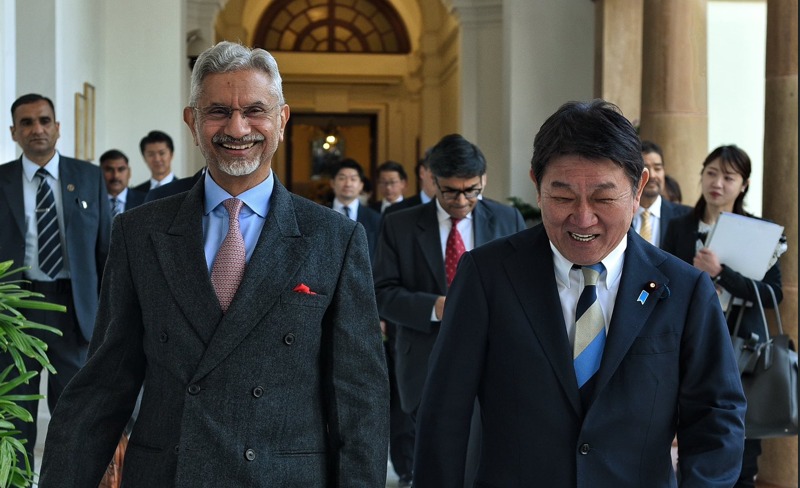
The announcement came after the 18th Strategic Dialogue between India’s External Affairs Minister S Jaishankar and his Japanese counterpart Toshimitsu Motegi. The meeting, held on 16 January, concluded with two key initiatives, a new AI dialogue to advance collaboration on artificial intelligence and a Joint Working Group on critical minerals under an economic security framework, focusing on rare earths and other strategic materials, said a Ministry spokesperson.
The meeting takes place against the backdrop of increased tension in the South China Sea. Reacting to Japan’s concerns over Taiwan, Beijing has taken a host of economic actions, freezing tourism and trade ties, banning Japanese seafood imports, and imposing restrictions on “dual-use” items to Japan.
The talks follow Prime Minister Narendra Modi’s meeting with Japanese PM Sanae Takaichi in Johannesburg on the sidelines of the G20 Leaders’ Summit in South Africa last November. India and Japan are part of the Quadrilateral Security Dialogue (Quad) alongside Australia and the United States. However, a summit has not taken place in 2025 due to US trade sanctions on India.
Motegi visited India from 15-17 January and also met with Prime Minister Modi during his trip. Discussions covered a wide range of strategic areas, including supply chain resilience, investment, trade, technology, innovation, defence, and cultural exchanges. Japan is reportedly eager to hold a second round of economic security talks and establish a business-to-business private sector dialogue on these issues.
Japan’s critical minerals push
Notably, on the same day, 16 January, Japan and Italy announced that they would deepen their collaboration on enhancing economic security, including strengthening critical minerals supply chains. This followed a meeting between Italian Prime Minister Georgia Meloni and Japan’s Prime Minister Sanae Takaichi.
Both announcements come as Japan accelerates attempts to reduce its reliance on China for critical minerals supply and increase domestic availability. To illustrate, on 12 January, the Japanese scientific drilling vessel Chikyu departed from Shimizu Port to begin a month-long mission to extract “rare earth mud” from the Pacific seabed. This attempt to mine the seabed around the Minami-Torishima island, located 1,900 km south-east of Tokyo, will mark the world’s first attempt to continuously extract rare-earth sludge from the ocean floor, stated media reports.
Leave a Reply