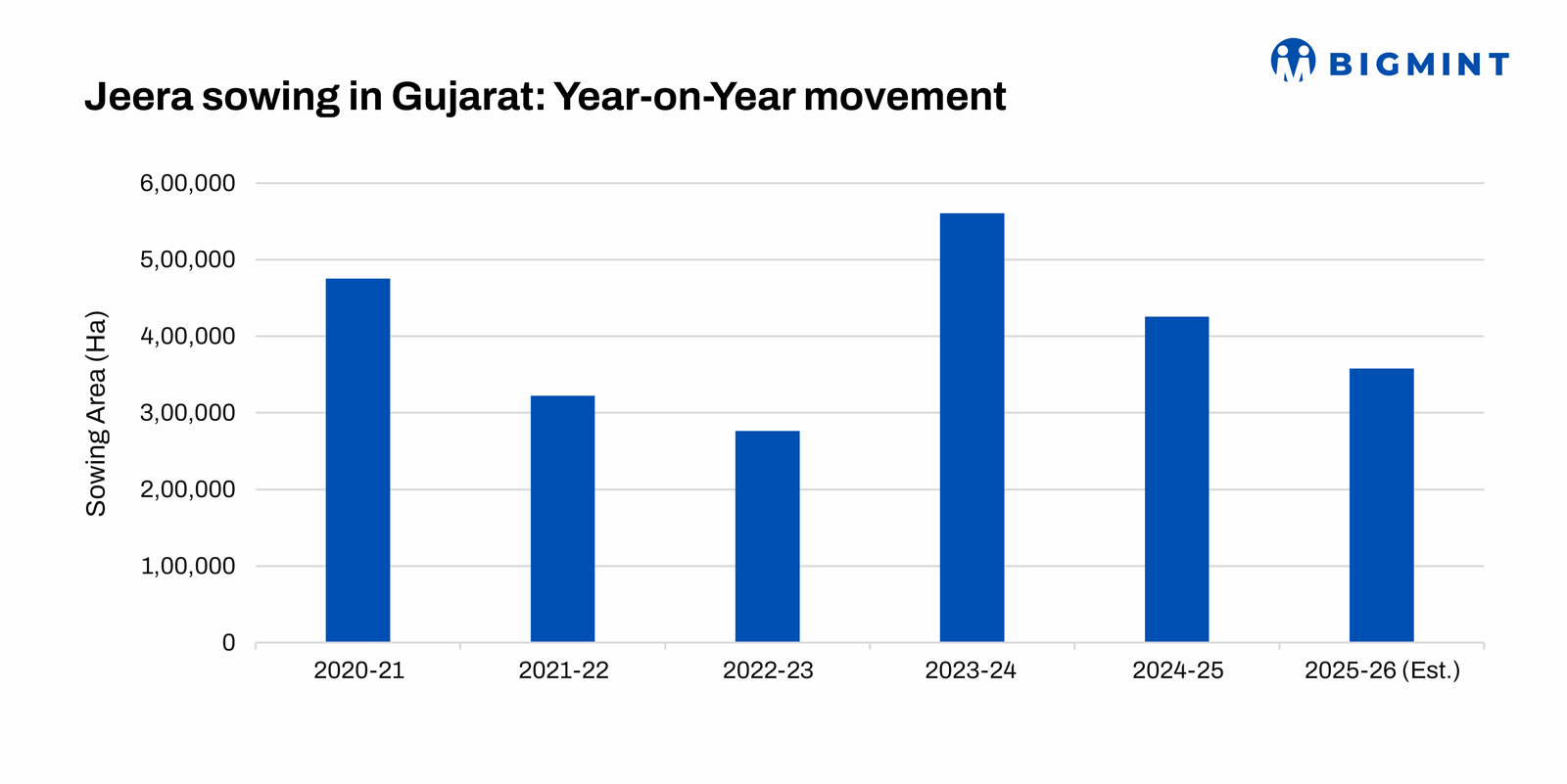
- Jeera sowing ongoing but running behind normal pace
- Partial recovery possible, yet full acreage revival unlikely
Rabi sowing in Gujarat is progressing slower-than-normal this season, remaining well below the three-year average as farmers continue to grapple with the after-effects of unseasonal October rains, weak price signals, and cautious risk appetite. While wheat and gram acreage declines have drawn attention, the more critical development for agri-trade participants is the slowdown in cumin (jeera) sowing — a key cash crop for Gujarat and the backbone of India’s spice exports. Importantly, rabi sowing is not yet completed, and cumin planting is still ongoing, leaving some room for acreage adjustment in the coming weeks.
Typically, overall rabi sowing in Gujarat and Rajasthan runs from late October to mid-December, while cumin has a narrower but slightly later window from mid-November to late December, occasionally extending into early January under favourable weather and soil conditions. This seasonal flexibility explains why acreage data at this stage remains provisional. Current estimates indicate cumin area in Gujarat is around 15% lower than the recent three-year average, reflecting delayed field preparation, excess soil moisture earlier in the season, and subdued farmer confidence following a prolonged period of weak prices and high carry-over stocks.
High inventories, muted export demand
The slowdown in cumin sowing is fundamentally price-driven. Over the past year, jeera markets have struggled with heavy inventories and soft export demand, particularly from traditional buyers in West Asia and Europe. With spot prices failing to offer clear profitability and futures remaining range-bound, many farmers have either reduced cumin acreage or shifted to relatively safer rabi alternatives such as wheat, mustard, or fodder crops. Given cumin’s susceptibility to disease, yield volatility, and higher input costs, growers have shown limited willingness to take additional risk without stronger price incentives.
That said, the sowing window is still open. If weather conditions stabilise decisively — especially with dry, cool nights and improved soil workability — some farmers may still bring incremental area under cumin during the latter half of December. Any short-term improvement in prices or export enquiry could also encourage marginal acreage additions. However, market feedback suggests that any such recovery would likely be partial rather than structural, insufficient to restore cumin area to last year’s levels.
For traders, exporters, and processors, this creates a period of continued uncertainty. Acreage clarity will only emerge once the sowing window closes towards late December or early January. Until then, cumin markets are likely to remain sensitive to weather updates, daily sowing progress, and export demand signals. A smaller planted area raises the risk of tighter availability later in the season if yields are normal, potentially lending support to prices in the first half of 2026. Conversely, if export demand remains muted, even reduced output may not translate into a sustained price rally.
In summary, Gujarat’s delayed rabi sowing keeps cumin supply expectations fluid. While some acreage recovery is still possible, the broader signal remains cautious: farmer sentiment is restrained, risk tolerance is low, and cumin’s area this season is likely to settle below normal — a key variable the jeera market will continue to watch closely over the coming weeks.
Leave a Reply