- South Africa policy expectations support market
- New energy demand supports ferro chrome prices
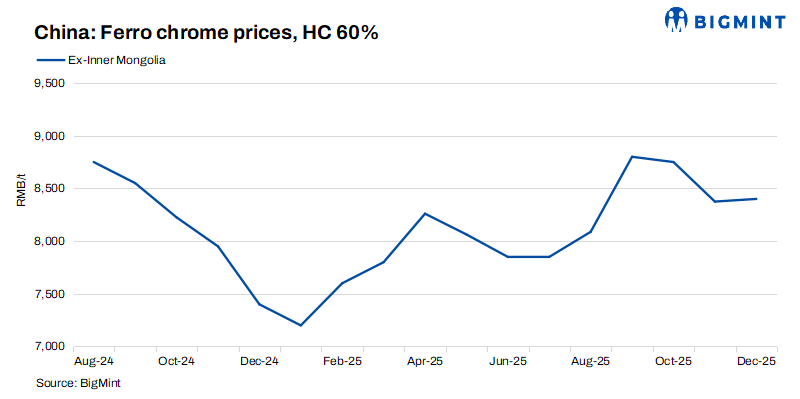
China’s high-carbon ferro chrome prices inched up by RMB 200/t ($28/t) w-o-w at RMB 8,190-8,600/t ($1,163-1,221 /t) exw, including taxes as of 16 December.
Meanwhile, medium-carbon ferro chrome prices inched up by RMB 100/t ($14/t) w-o-w at RMB 12,400-12,600/t ($1,761-1,789/t) exw, including taxes
Ferro chrome prices inched up over the week due to cost pressures from chromium ore, coke price fluctuations, and expectations of tighter South African export policies, while demand remained mixed due to cautious procurement. Overall market sentiment stayed stable, with a wait-and-see approach prevailing.
Market updates
Raw material market trends
Chromium ore prices have remained under pressure; however, expectations of adjustments to South Africa’s export policies have raised concerns over supply tightening, providing cost support to ferro chrome. Meanwhile, fluctuations in coke prices continue to weigh on smelting margins, and enterprises are more willing to support prices.
Domestic environmental inspections have reduced operating rates at small and medium-sized producers. Raw material inventories remain low, with transactions largely driven by rigid demand. Meanwhile, traders are anticipating a potential price uptick.
Downstream market trends
While stainless steel producers maintained high operating rates, supporting high-carbon ferro chrome demand, weak off-season consumption curbed procurement enthusiasm. Demand recovery in the special steel sector increased ferro chrome inquiries in China, but purchasing remained cautious, with clear downward price pressure.
Demand growth in the new energy sector provided support to low-carbon ferro chrome prices, although overall buying activity remained measured. Market sentiment was largely shaped by terminal prices, leading to a prevailing wait-and-see stance.
Outlook
Ferro chrome prices are expected to remain range bound in the near term, supported by cost pressures and supply constraints but capped by cautious downstream demand.
(With inputs from CBC)
Leave a Reply