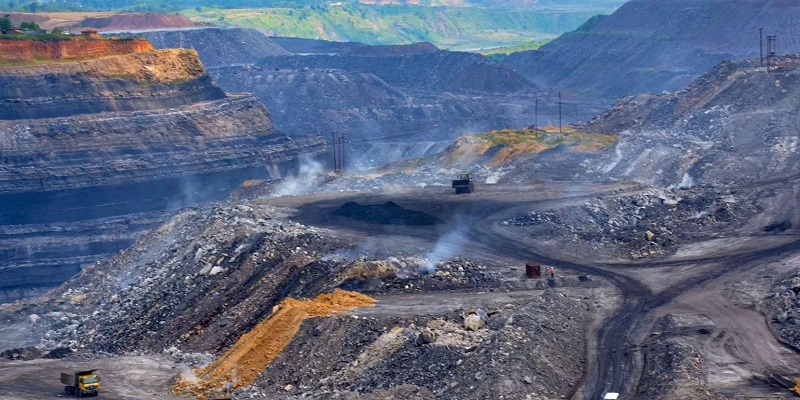
- India is gearing toward long-term coal expansion for energy security
- Strategy needed to plug gap between development needs and climate goals
In the span of a single week, India’s energy sector has sent seemingly contradictory signals about its future. On one hand, a senior government official publicly stated there are “no immediate plans” to add coal capacity beyond 2035. On the other, a major news report revealed high-level discussions to potentially expand coal-fired power for another two decades, targeting 2047.
This apparent contradiction is not a sign of confusion, but a reflection of India’s complex energy calculus. It underscores a strategic pivot where coal is being reframed not as a legacy fuel to be phased out, but as a deliberate, long-term pillar of national energy security and economic ambition.
The 2047 vision: Coal for a ‘Developed India’
The bolder vision, reported by Bloomberg, is under active discussion between the Power Ministry and NITI Aayog. It proposes an unprecedented expansion that would see India’s coal-fired power capacity soar to 420 gigawatts (GW) by 2047 the year targeted for the nation’s transition to a “developed” status.
This represents an 87% increase from current levels and marks a major shift from previous projections that saw net additions peaking by 2035. The rationale, according to sources, is grounded in pragmatism and geopolitics. With ample domestic reserves to last a century, coal offers a reliable, homegrown answer to soaring electricity demand. In contrast, the rapid expansion of renewables and battery storage while central to India’s 500 GW by 2030 target is seen as fraught with supply chain risks, given China’s dominance in solar panels and batteries.
Official 2035 target: A stepping stone
The more immediate and official pathway was outlined by Power Secretary Pankaj Agarwal, who affirmed a target of 307 GW of coal capacity by 2035. This figure is not a ceiling but a milestone. The current landscape shows this build-out is already in full swing. Just this week, the second unit of the 1,980 MW Ghatampur Thermal Power Project in Uttar Pradesh began commercial operations. Upon completion, it will power approximately 12 million households, demonstrating coal’s ongoing role in meeting base-load demand and supporting economic growth in key states.
Greening the coal fleet: Efficiency and innovation
Concurrent with this expansion is a push to make the coal fleet cleaner and more flexible. New plants like Ghatampur employ supercritical technology and emissions control systems to improve efficiency and meet environmental standards.
Perhaps the most innovative greening effort is the meteoric rise of biomass co-firing. In Punjab and Haryana, the use of paddy straw-based pellets in coal plants has exploded by a factor of 2,392 and 59, respectively, over just three years. This initiative tackles the dual challenge of reducing toxic seasonal stubble burning and partially decarbonizing thermal power. While a formal impact assessment is pending, it represents a pragmatic, circular-economy solution that is gaining national scale, with over 2 million metric tons used across 65 plants.
Unresolved tension
This dual-edged strategy creates a fundamental tension. Committing to coal for another generation poses significant challenges for India’s international climate commitments and could crowd out investment in the very renewable and storage technologies needed to ultimately replace it. The policy signals a bet that technological solutions like carbon capture or further efficiency gains will emerge to bridge this gap.
The coming months will be critical as the government finalizes its numbers. One thing is clear: India is making a conscious, high-stakes choice to leverage its domestic coal resources to fuel its development ambitions, ensuring that the black diamond will remain at the heart of its energy story for decades to come.
Leave a Reply