- GSI executes 17 exploration projects in current fiscal
- Ore beneficiation key to unlocking critical mineral potential
The Amba Dongar deposit of rare earth elements (REE) in Gujarat is one of the largest proven deposits in the country, said Vijay V Mugal, Additional Director General and department head of the Geological Survey of India’s (GSI) western region. The GSI has established approximately 350 million tonnes (mnt) of REE resources in Amba Dongar along with significant niobium and vanadium resources, Mugal added.
The Amba Dongar ore deposit has potential to meet the requirement of REE in India, producing much less radioactive waste compared to that produced in the present practice of recovering REE from beach sands, according to the Atomic Energy Department’s Bhabha Atomic Research Centre.
The GSI has also identified other REE/ REM (rare earth magnets) deposits around the Siwana Ring Complex and Degana (in Rajasthan), which are under continued exploration, Mugal said at a Central Geological Programming Board (CGPB) meeting in Jaipur to discuss non-ferrous and strategic minerals (base metals, tin, tungsten and bauxite) in early October.
In all, the GSI has executed 17 exploration projects in the current financial year. “Resources of key base metals like copper, lead, and zinc are concentrated in states such as Rajasthan, Jharkhand, Madhya Pradesh, Andhra Pradesh, Karnataka, Bihar, and Maharashtra.
However, current production levels are inadequate, necessitating the discovery of new deposits and investigation of depth extensions of existing occurrences,” Mugal told the participants of the meeting, underscoring the need for concept-based, integrated exploration strategies using modern mineral systems.
“The lack of beneficiation technology remains a constraint on exploitation (of critical minerals). Once this challenge is addressed, India can become self-reliant in REE/REM production,” he explained. Attention was also drawn to secondary REE sources, particularly regolith-hosted deposits in eastern and north-eastern India, where climatic conditions are favourable.
‘Beneficiation technology’ refers to the processing of deposits to upgrade the critical mineral that has been mined, and to produce market-grade REE concentrates. The CGPB meeting in October was attended by GSI heads of at least 10 states.
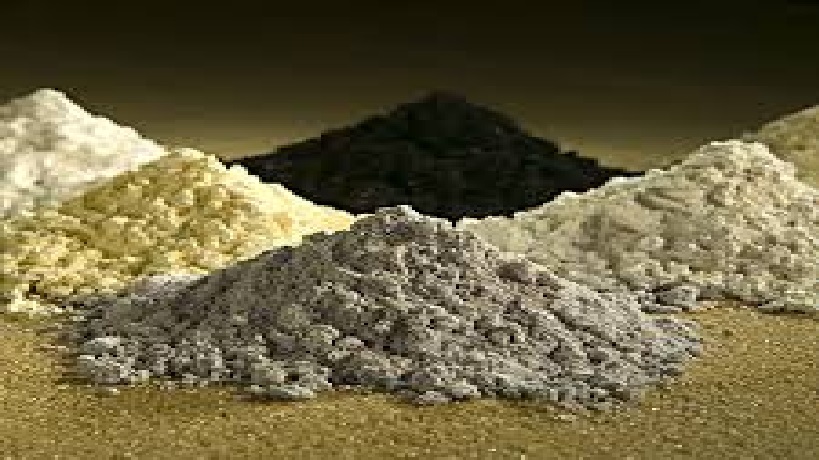
‘Rare earth elements’ are a set of 17 minerals, comprising 15 lanthanides and two additional minerals. These lanthanides almost always occur together, mixed in tiny proportions or in complex minerals like monazite, bastnaesite, etc. As they are similar in chemistry, size and valence (+3), rare earths are hard to mine individually. They need to be mined as rare earths, before individual REEs can be repeated and refined through an expensive and multi-stage process that very few countries have mastered.
REE processing and metal extraction are capital-intensive, energy demanding, and environmentally challenging, as they generate toxic by-products.
Leave a Reply