- Copper prices near record high on global shortages
- Aluminium demand grows despite industry cost pressures
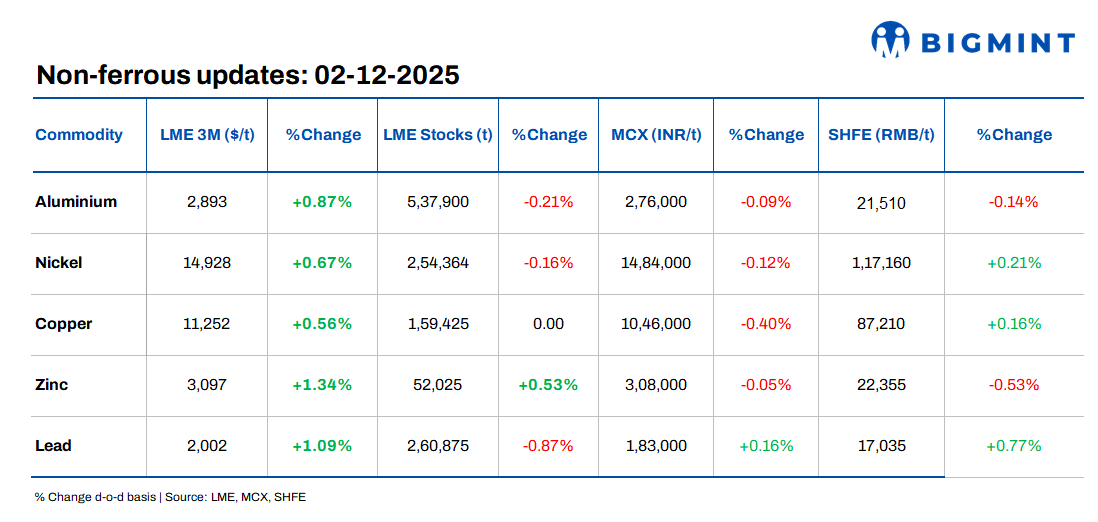
Benchmark copper prices on the LME rose about 0.6% to $11,252 on 1 Dec, as supply-side concerns supported prices after a 2.3% rise in the previous session. Aluminium prices rose by about 0.9% to $2,893/t, while zinc was the biggest gainer, increasing by 1.34% to $3,097/tonne (t).
Meanwhile, inventories at LME-registered warehouses witnessed negative movements, with lead recording the highest decline of 0.87%.
Domestic market overview
In India’s non-ferrous metals markets, BigMint assessed copper armature scrap at INR 895,000/t ex-Delhi, up by INR 6,000/t d-o-d. Aluminium Tense scrap prices were assessed at INR 188,000/t ex-Delhi, and at INR 184,500/t ex-Chennai, both are stable d-o-d.

Other updates
Copper holds near record high on tightening global supply
Copper hovered close to record levels as mounting supply concerns and a rush to ship material to the US intensified market tightness. Prices briefly touched $11,334/t on the LME after last week’s Shanghai conference signaled deepening supply stress from unplanned mine disruptions, tougher smelter-miner negotiations, and sharply higher annual premiums.
Traders are accelerating shipments to the US ahead of potential import tariffs, worsening shortages in other regions. Expectations of duties from 2027 have kept US prices elevated, with more than 500,000 t likely to arrive in early 2026. Strong long-term demand from electrification and energy transition trends has also fueled bullish sentiment, pushing LME copper nearly 30% higher this year.
Rising input costs threaten manufacturing goals amid growing aluminium demand
A new study warns that surging input costs are undermining the country’s manufacturing ambitions just as demand for aluminium continues to climb. The report highlights that higher energy and raw material expenses are eroding industry competitiveness, posing risks to production growth and long-term investment plans unless cost pressures ease or supportive policy measures step in.
Leave a Reply