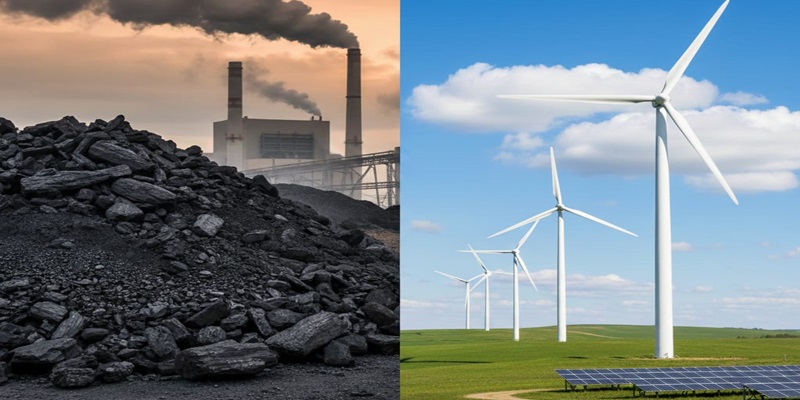
- Coal’s relevance is diminishing but it’s still in the reckoning
- EU energy transition remains dependent on interim coal support
Europe is navigating a complex and symbolic energy winter, one that reveals a power system in the throes of a profound transformation. The continent, once heavily reliant on predictable flows of fossil fuels, is now learning to dance to the rhythm of the weather. The story of this transition is being written in real-time in power generation data, which tells a tale of coal’s stubborn, yet diminishing, role, squeezed between a resurgent gas market and the relentless ascent of renewables.
Two-pronged assault on coal
Recent data from Germany, Europe’s industrial powerhouse, serves as a potent microcosm of this continent-wide shift. At first glance, the figures present a paradox: while the nation’s overall power generation has increased compared to the same period last year, output from its coal-fired power plants has collapsed, plummeting by a staggering 31%. This is not a story of decreased energy demand, but rather a fundamental reordering of the continent’s energy mix.
The primary force behind coal’s retreat is a two-pronged assault from both cleaner and more flexible energy sources. The first and most significant prong has been a record-breaking stretch of wind power. This winter, gales sweeping across the North Sea and continental plains have provided a massive, zero-carbon injection into the grid. Year-on-year data for November shows wind power output surging by 23%, a testament to both favourable weather conditions and the continued expansion of installed wind capacity. This renewable bounty directly displaces the most expensive and polluting generators in the merit order – typically, lignite and hard coal plants.
The second prong comes from natural gas. After the price shocks of the previous year, gas prices have settled at a lower, albeit still volatile, level. This has made gas-fired generation more economically viable relative to coal. Gas plants, which are more flexible and efficient than their coal-burning counterparts, have stepped in to fill the gaps left by intermittent renewables. This dynamic underscores a critical evolution: gas is increasingly seen not as a primary baseload power source, but as the essential “transition fuel” – a flexible partner to renewables that can quickly ramp up and down, a role for which coal is notoriously ill-suited.
Coal – the fallback option
However, to declare coal obsolete would be a grave misreading of the situation. The same data set reveals a crucial nuance: coal generation actually rose by 31% m-o-m. This statistic is the key to understanding coal’s current, tenuous position in Europe’s energy architecture. It is no longer the backbone of the system, but it has become its emergency reserve.
Coal’s final bastion is its role as a critical flexible resource to meet peak winter demand during the dreaded dunkelflaute – a German term describing a period of cold, dark, and calm weather where wind and solar output plummet simultaneously. When heating demand soars and renewables falter, these idled coal plants are fired back up to prevent blackouts. They provide a security blanket, an insurance policy against the inherent variability of a weather-dependent grid.
Therefore, the continent’s energy security now hinges on a delicate and rapidly evolving triad. The long-term goal remains the relentless expansion of renewables, supported by massive investments in grid infrastructure and energy storage. The medium-term bridge is provided by gas, whose stability is entirely dependent on diversified LNG supplies and well-stocked storage facilities. And in the short-term, during moments of acute crisis, coal remains the fallback – a costly and dirty option, but one that for now, Europe cannot entirely do without.
This winter is proving to be a critical test case. It demonstrates that the green transition is not a linear, smooth process but a turbulent one, full of compromises and unexpected challenges. Coal’s grip is undeniably loosening, its future increasingly bleak. Yet, its lingering presence on the grid is a powerful reminder that building a resilient, post-carbon energy system is one of the most complex industrial undertakings of the modern era. The dance continues, but the music is changing, and coal’s partners are steadily leading it toward the exit.
Leave a Reply