- Asian thermal coal rally cools as Chinese buying eases
- Market stable but high-CV coal faces downward correction pressure
The powerful bull run that propelled Asian seaborne thermal coal prices upward for weeks is showing clear signs of fatigue, transitioning from a frenzied peak to a more stable, yet fragile, equilibrium. The market is now caught between resilient Chinese demand and emerging physical surpluses.
The peak and the pivot:
The rally was spectacular. From late October to mid-November, a buying frenzy from China pulled prices dramatically higher. Key benchmarks saw significant gains:
- The mid-grade Indonesian 4,200 GAR coal firmed into the low $50s per tonne.
- The high-grade Australian 5,500 NAR jumped over 5% to $86 per tonne.
However, trader calls this week reveal a distinct shift. The mid-grade Indonesian 4,200 GAR coal has come off by $3-4 per tonne FOB, as the temporary “logistics issue” in Chinese domestic coal movement that fuelled the spike has been resolved.
Underlying market fragility and diverging forecasts:
- This cooling trend exposes the market’s underlying fragility, previously masked by concentrated Chinese buying.
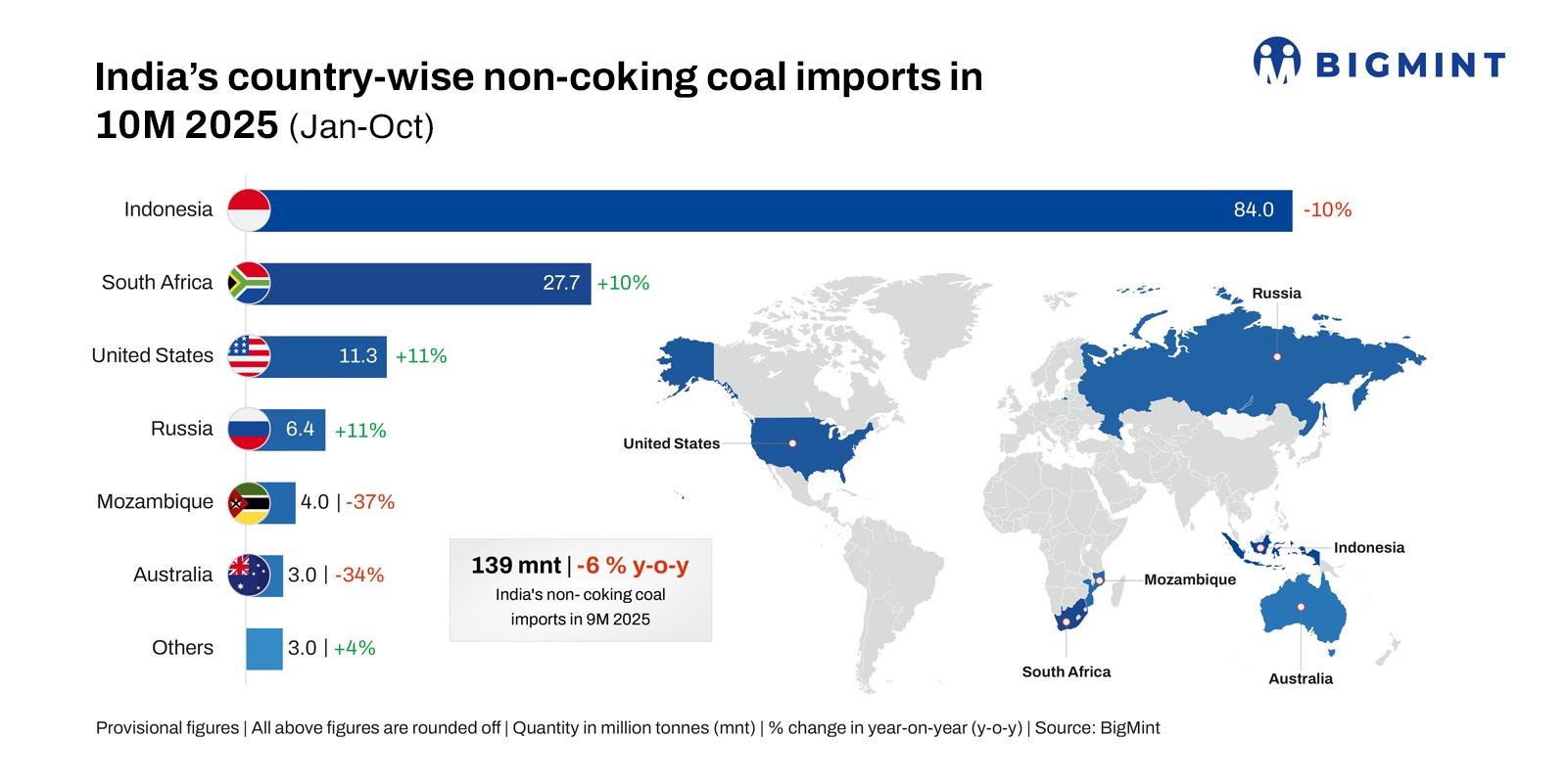
Chinese domestic portside prices for 5,500 NAR coal (Qinhuangdao) are holding at CNY 830/t, with two more cold snaps expected before month-end, providing support for low-to-mid calorific value coal. However, analysts are turning neutral/negative on high-CV coal (e.g., Australian 6,000 NAR), anticipating a downward correction influenced by the weaker Atlantic basin. - India, the world’s second-largest importer, is not stepping in to support prices. With power plants holding 42% more stock than last year and coal-fired generation down 14% year-on-year, its intake of Indonesian mid-CV coal is falling.
- While Chinese domestic coal output from its top four regions fell 3% year-on-year in October, creating a need for imports, other suppliers are filling the gap. Russian coal transportation to export terminals surged 16% year-on-year in October, with significant increases to ports like Vanino and Taman.
Furthermore, South Africa’s RBCT port inventories rose 6% year-on-year, indicating ample available supply of its typical 5,500-6,000 NAR coal grades waiting for buyers.
Outlook:
The bull run has hit a definitive pause. The data suggests the market is finding a new, lower equilibrium. While a complete collapse is unlikely due to forecasted strong Chinese power demand (Q4 generation expected to rise 10% year-on-year), the price surge to mid-November appears to have been a peak. The market is now bifurcating: low-to-mid CV coal (like Indonesian 4,200 GAR) remains supported by Asian winter demand, while high-CV coal (like Australian 6,000 NAR) faces downward pressure. The coming weeks will test whether this is a healthy correction or the start of a broader downturn as the Northern Hemisphere winter unfolds.
Leave a Reply