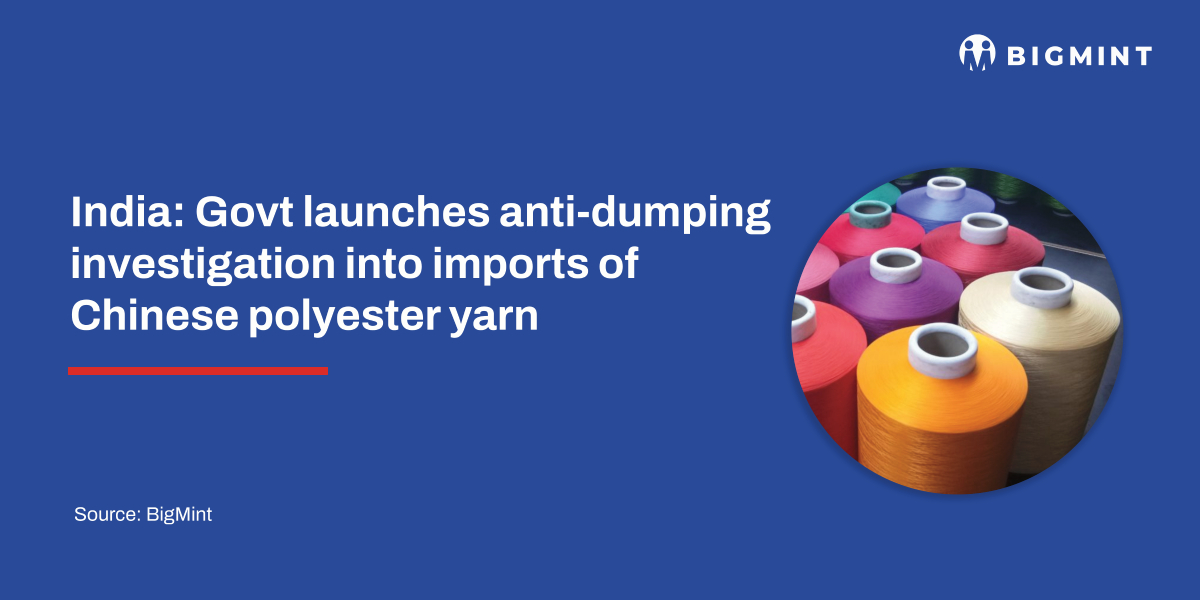
- Probe comes shortly after govt rescinded 14 QCOs for polyester
- Rising inflows of cheap MMF may pressure cotton yarn demand
India’s Directorate General of Trade Remedies (DGTR) has opened an anti-dumping investigation into imports of polyester textured yarn (PTY) from China following a complaint by domestic producers (led by Reliance and Wellknown Polyesters). The case covers imports during 1 April 2024-30 June 2025, and alleges that dumped Chinese PTY is causing material injury to Indian yarn manufacturers.
The probe comes shortly after the government rescinded 14 Quality Control Orders (QCOs) for polyester intermediates and yarn on 12 November 2025 — a move that removed mandatory BIS certification and immediately eased import rules. That regulatory rollback lowers the barrier for Chinese man-made fibre (MMF) inputs to enter India, creating the very pressure that domestic yarn makers warned about and prompting the trade remedial action.
Implications of probe
The economics are straightforward: cheaper imported PTY narrows the cost curve for downstream fabric and garment makers, but it squeezes margins and utilisation in the domestic spinning sector.
If the DGTR, after its investigation, recommends provisional or final anti-dumping duties, imports from China could tighten, supporting domestic PTY prices and helping upstream producers recover margin and volumes.
Conversely, if duties are not imposed, downstream converters, fabric mills and garment exporters will continue to benefit from lower input costs — improving competitiveness but potentially increasing dependency on imported intermediates.
The investigation timelines and outcome will be decisive: provisional measures could be imposed within months, while final determination may take longer based on injury and dumping margin calculations.
Impact on cotton value chain
This case matters more to cotton than it appears on the surface. Cheap PTY entering India after the QCO rollback increases the likelihood of MMF substitution, especially in 30-40s count blends where mills can shift 5-15% of cotton out of the mix to control costs.
If anti-dumping duties are not imposed, spinners will face competitive pressure from polyester-rich blended yarns, which could drag cotton yarn orders, particularly in power loom hubs such as Surat, Ichalkaranji and Ludhiana. This reinforces the price-sensitivity buyers already show when cotton remains costlier than MMF on a per-kg basis.
If duties are imposed and PTY prices firm up, the cotton industry benefits indirectly. Higher MMF costs would reduce substitution pressure, stabilise cotton yarn offtake, and support steady capacity utilisation at mills. Mills in southern clusters — already managing thin margins — may prefer cotton again if the price gap narrows.
For ginners and traders, stable cotton yarn demand translates into smoother offtake and more predictable buying cycles from mills. Manufacturers in fabrics and garments will also adjust blend ratios depending on duty outcomes, meaning cotton’s market share in blends could either weaken or recover based on DGTR’s final decision.
Leave a Reply