- India reassesses Russian oil imports after sanctions
- Chinese production curbs continue to tighten aluminium supply
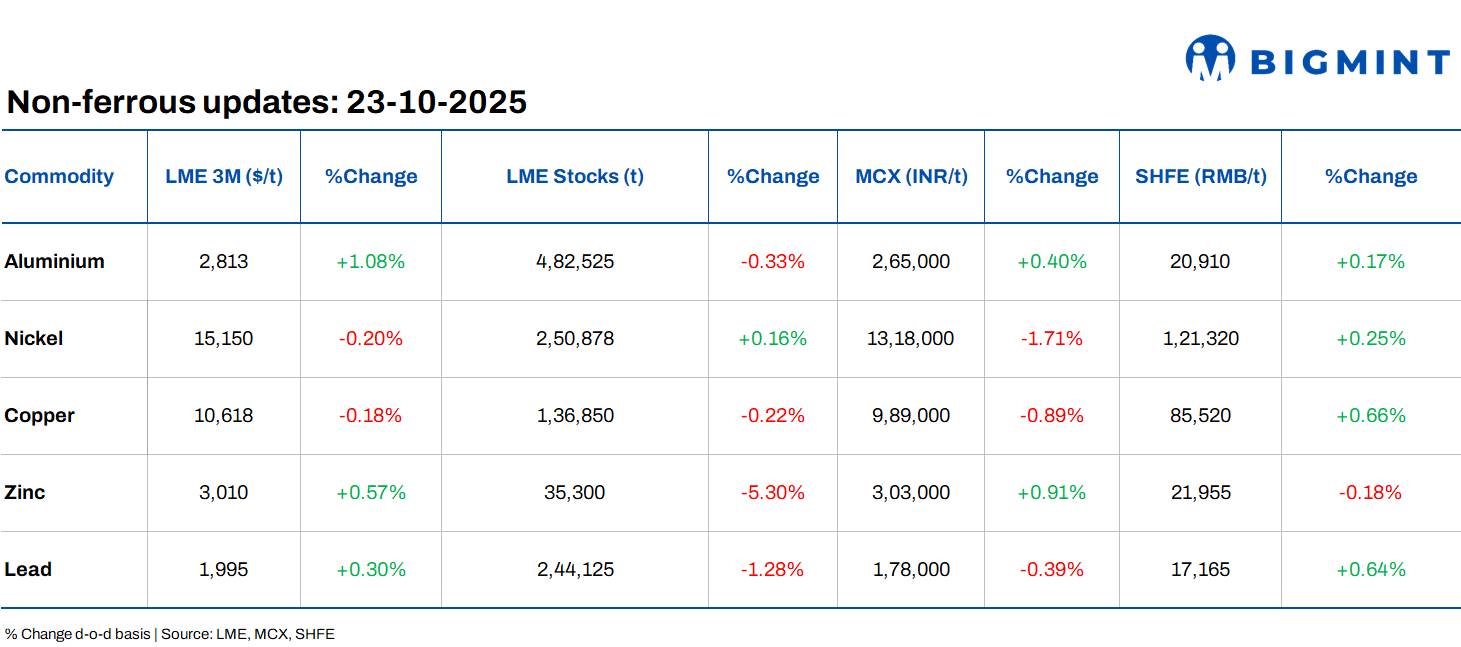
Base metals prices on the London Metal Exchange (LME) remained rangebound d-o-d, with aluminium increasing by 1.08% to $2,813/tonne (t). Meanwhile, inventories at LME-registered warehouses registered negative movements d-o-d, with zinc recording the highest decline of 5.30%.
Domestic market overview
In India’s non-ferrous metals markets, BigMint assessed copper armature scrap at INR 869,000/t ex-Delhi, stable d-o-d. Aluminium Tense scrap prices were assessed at INR 191,000/t ex-Delhi, and at INR 193,000/t ex-Chennai, stable d-o-d.

Other updates
Aluminium prices climb to highest level since Jun’22
Aluminium prices surged to their highest point in over three years on Wednesday, driven by concerns over supply shortages and optimism surrounding a potential US-China trade agreement. Three-month aluminium on the London Metal Exchange rose 0.9% to $2,805 per metric tonne after reaching $2,821 — the highest since 9 June, 2022.
Analysts noted that if prices hold above the $2,800 level, it could serve as a new base for further upward movement toward $2,950. Despite a 0.9% y-o-y rise in global primary aluminium output in September to 6.08 million tonnes, production growth remains limited due to restrictions on Chinese smelters and the absence of new start-ups in other regions.
Oil prices jump 3% as India reviews Russian crude imports
Oil prices surged over 3% on Thursday as India began reassessing its Russian crude purchases following fresh US sanctions on major Russian suppliers over the Ukraine war. The sanctions, aimed at curbing Russia’s oil revenues, prompted Indian refiners to consider reducing or halting imports of Russian crude — which had reached around 1.7 million barrels per day earlier this year.
Industry sources indicated that some private refiners may sharply scale back Russian oil intake in response to the sanctions. However, market analysts noted that despite the immediate price surge, the move might be more of a short-term reaction than a lasting structural change, as previous sanctions have done little to significantly dent Russia’s oil output or revenues.
Leave a Reply