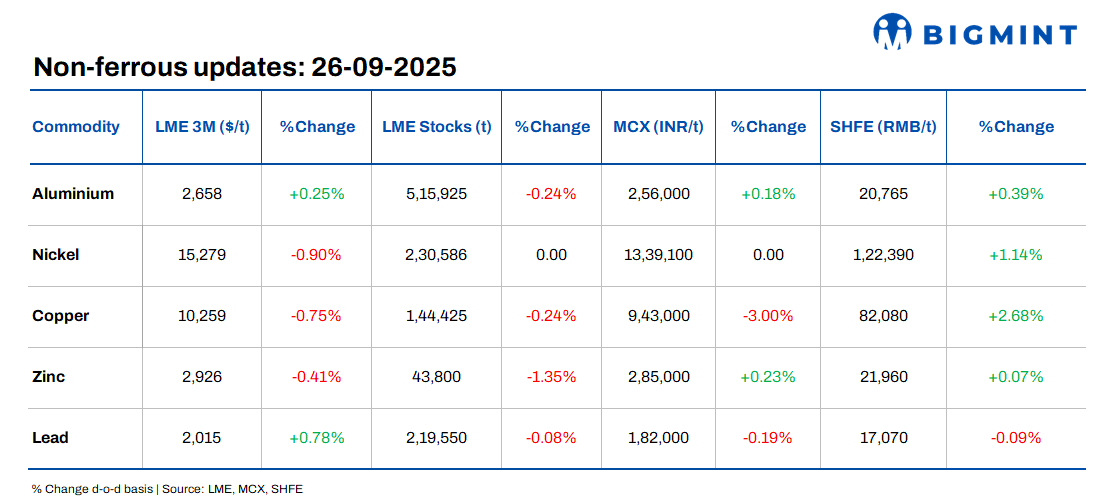
- Zinc inventories see highest outflow of 1.35%
- Domestic copper armature scrap prices rise sharply
Base metals prices on the London Metal Exchange (LME) were rangebound d-o-d, with nickel prices witnessing the highest drop of 0.9% to $15,279/tonne (t). Meanwhile, inventories at LME-registered warehouses registered outflows d-o-d, with zinc recording the highest drop in inventory of 1.35%.
Domestic market overview
In India’s non-ferrous metals markets, BigMint assessed domestic copper armature scrap at INR 861,000/t ex-Delhi, up by INR 25,000/t d-o-d. Aluminium Tense scrap prices were assessed at INR 195,000/t ex-Delhi and at INR 196,000/t ex-Chennai, both stable d-o-d.
Meanwhile, domestic SHG zinc ingot prices saw an increase of INR 6,000/t d-o-d reaching INR 295,000/t and primary and re-melted lead ingots also witnessed a rising trend in prices d-o-d amid primary player’s price hikes.

Oil prices extended their gains in Asian trading on Friday, remaining above a seven-week high and on track for a strong weekly advance. The rally was driven by heightened concerns over potential supply disruptions from Russia and an unexpected drop in U.S. crude inventories, which tightened the market outlook.
However, further gains were capped by uncertainty surrounding future interest rate cuts by the Federal Reserve and newly announced U.S. tariffs by President Donald Trump.
Other updates
Grasberg disruption adds pressure to tight copper supply
Freeport-McMoRan declared force majeure at its Grasberg mine in Indonesia after a deadly mudslide, intensifying copper supply concerns. With global demand rising due to the clean-energy and AI boom, prices surged to $10,400/t. Market sentiment is further strained by earlier disruptions in Chile, Congo, and Panama, pushing forecasts toward a deficit and potential $13,000–$15,000/t pricing.
Daikin develops recycled aluminium heat exchangers
Daikin, in partnership with Nippon Magnetic Dressing and UACJ, has developed a method to manufacture air conditioner heat exchangers using recycled aluminium through horizontal recycling. By refining copper-aluminium sorting and improving press formability, the process retains material quality and cuts CO₂ emissions by 97%. Daikin now aims for mass production using waste heat exchangers from its operations.
Leave a Reply