- Aluminium dips as China boosts Aug output
- Oil dips as Iraqi exports rise, demand worries ease
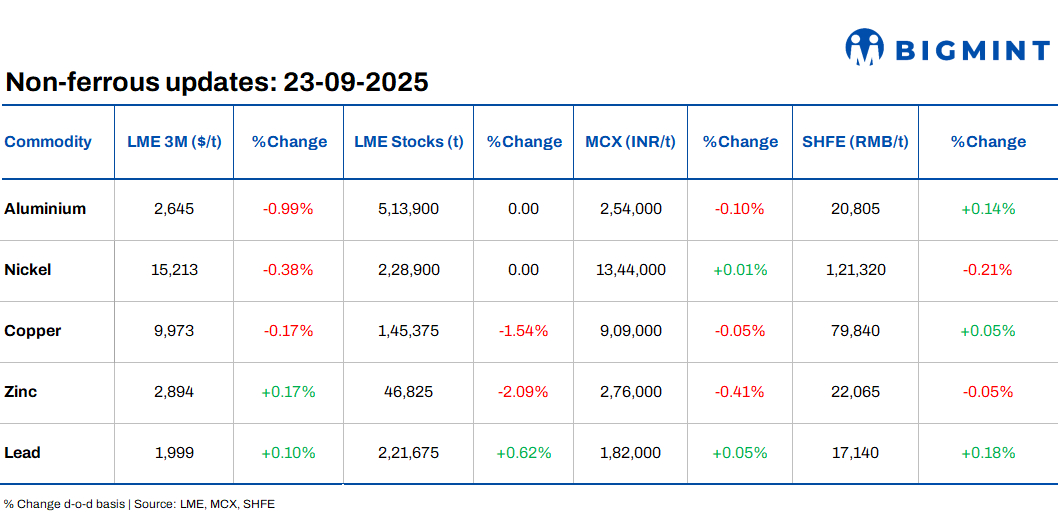
Base metals prices on the London Metal Exchange (LME) remained range-bound d-o-d, with aluminium decreasing by 0.99% to $2,645/tonne (t). Meanwhile, inventories at LME-registered warehouses registered mixed movements d-o-d, with zinc recording the highest decline of 2.09%.
Domestic market overview
In India’s non-ferrous metals markets, BigMint assessed domestic copper armature scrap at INR 832,000/t ex-Delhi, up by INR 12,000/t d-o-d. Aluminium Tense scrap prices remained stable d-o-d, assessed at INR 195,000/t ex-Delhi and INR 197,000/t ex-Chennai.

Other updates
Rupee hits record low as US visa fee hike adds pressure
The Indian rupee fell to an all-time low of 88.62 against the US dollar on Tuesday, weighed down by a hike in H-1B visa fees and existing external pressures such as steep US tariffs on Indian goods. The fee increase is expected to impact India’s IT sector, curbing equity flows and remittances. While the RBI intervened via state-run banks near 88.50 to slow the slide, it is allowing a gradual depreciation to avoid market disruption. Foreign investors have already withdrawn over $15 billion from equities in 2025, leaving the rupee lagging regional peers despite a weaker dollar index.
Aluminium eases as China output rises
Aluminium prices slipped as China’s August production rose 1.22% year-on-year and 0.33% month-on-month, adding to supply pressures. Exports of unwrought aluminium and products climbed to 542,000 t in July, while imports rose 12.9% y-o-y in August. Global supply signals remain mixed—Guinea’s loss of alumina mining licenses threatens raw material flows, even as LME inventories fell sharply by 100,000 t. Still, weaker Japanese premiums and rising regional stocks highlight soft demand, keeping the market volatile.
Oil prices dip as Iraq boosts exports amid demand worries
Oil prices edged lower on Monday as rising Iraqi exports under relaxed OPEC+ quotas added to oversupply concerns, outweighing geopolitical tensions in Russia and the Middle East. Traders focusing on the risk of weaker demand into Q4. Despite rising tensions over Estonia’s airspace violation by Russia and Western recognition of a Palestinian state, no immediate supply disruptions occurred. Analysts caution that higher OPEC+ production and softening global demand may pressure prices further unless China absorbs the surplus through stockpiling.
Leave a Reply