- Aluminium, copper castings fetch comparatively higher value
- Price volatility drives call for index to usher in transparency
The silent shift underway in India’s foundry industry is finally gaining voice. Long overshadowed by ferrous players, the non-ferrous segment — aluminium, copper and their alloys — is emerging as the new growth engine, powered by the global transition to electric vehicles (EVs), aerospace and Defence manufacturing, and the increasing appetite for lightweight materials across industries.
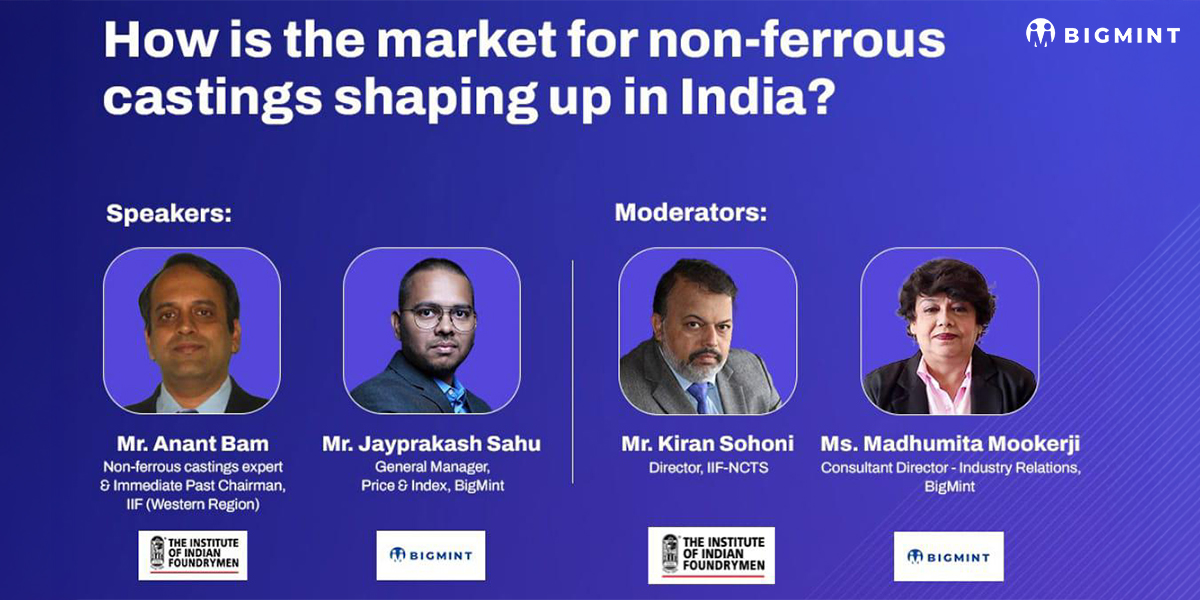
The above points and several other emerging aspects were highlighted at a recent webinar jointly hosted by the Institute of Indian Foundrymen (IIF) and BigMint.
However, this optimism comes with caveats: volatile pricing, heavy import dependence, and a fragmented domestic structure that continue to keep India far behind China in global competitiveness.
The EV factor: aluminium to replace engines
At present, nearly 30-35% of ferrous foundry capacity is locked in producing engine components. With EVs threatening to erase internal combustion engines altogether, that capacity risks turning idle. “Every ferrous foundry is now aggressively exploring aluminium as an immediate diversifier,” non-ferrous foundry industry expert Anant Bam observed during the webinar.
The numbers speak: aluminium castings command three to four times the value of ferrous castings, while copper-based castings fetch up to 15 times more, despite lower tonnage. This sharp value differential is drawing foundrymen into the non-ferrous fold.
Applications expanding beyond automobiles
The growth is not just automotive-led, Mr Bam said. Household appliances, white goods, marine equipment, aviation, railways, power transmission and even decorative items are increasingly shifting to aluminium and copper alloys.
Clusters such as Jamnagar (brass), Rajkot (investment castings), Kolhapur and Coimbatore (ferrous-cum-non-ferrous hubs) are seeing rising capacity. Multinationals including Jaguar, Kohler, and Sundaram Clayton already operate dedicated non-ferrous units, catering to both domestic and export markets.
The price puzzle: industry calls for common index
Pricing, however, remains the sector’s Achilles’ heel. While foundries purchase raw material based on spot or daily prices, buyers benchmark contracts to monthly averages – often delayed by two or three months. This mismatch leaves foundrymen bearing the brunt of volatility.
For instance, zinc shot up 3% in a single day earlier this year. Copper, governed globally by a handful of majors like Rio Tinto, can swing 10-20% within days. The industry is pushing for a common reference index, potentially spearheaded by BigMint in collaboration with industry associations, to create transparency and reduce disputes.
Sustainability, substitution and technology shifts
The sector faces parallel pressures on sustainability. Carbon footprints and environmental-social-and-governance (ESG) norms are pushing foundries to explore green energy, with some already branding “green castings.” Simultaneously, additive manufacturing and laser sintering loom as potential disruptors. Once their costs fall below labour-intensive casting processes, foundries risk redundancy.
On the positive side, input substitution is gaining momentum, particularly in energy, aerospace and Defence. Government-led initiatives and trade fairs are helping Indian foundries displace imports, with the promise that in 15-20 years, critical imports could be eliminated entirely.
Global trade headwinds: China still the benchmark
India’s exports of non-ferrous castings remain a fraction — just 10-15% of China’s volumes. Experts point to China’s unified structure versus India’s fragmented market, where internal price wars hurt margins and distort supply chains.
US tariffs on aluminium and copper (25-50%) may not directly hit India, but indirect effects are expected. Cheaper imports from Southeast Asia and China could flood the domestic market, squeezing local producers. At the same time, Indian foundries must learn to quote on landed cost (door-delivery) terms, not just ex-works pricing, to compete with Chinese suppliers abroad.
Outlook
The consensus is clear: demand for non-ferrous castings will grow at 10-12% annually, supported by EVs, aerospace, Defence, and consumer durables demand. India’s non-ferrous capacity currently stands at 2-4 million tonnes, still dwarfed by ferrous but rising rapidly.
Yet, the future of engines — whether these survive through hydrogen or hybrids, or EVs abolish them entirely — remains the biggest determinant for how aggressively ferrous capacities shift. Meanwhile, sustainability and additive manufacturing represent the next tectonic shifts for the industry.
For now, foundries are caught between opportunity and uncertainty. As one participant summed up, “Scope, growth and demand are all positive — but unless India organizes its industry, learns to manage pricing, and keeps pace with technology, China will continue to dictate the rules.”
Leave a Reply