- Most opencast mines shut since Jun following inspections
- Washed coal prices increase, but demand remains sluggish
Mysteel Global: Coking coal supply in Wuhai, a major coal-producing city in North China’s Inner Mongolia autonomous region, continues to be restrained by stringent environmental inspections by local authorities, providing support for local coking coal prices to move higher, Mysteel observes.
Coal loading operations at mining sites in Wuhai and deliveries to consumers have been slightly disrupted by the local government’s recent mandate on 2 July requiring freight vehicles to cover their loads with tarpaulins during transportation to prevent dust pollution, Mysteel has learnt.
On top of that, most opencast mines in Wuhai have remained shut since their voluntary suspension in June, when a Chinese central government team entered Inner Mongolia to inspect environmental protection measures and particularly reported severe air pollution caused by coal mining activities in Wuhai. As of last Friday, only 34% of the city’s opencast mines were in normal operation.
The persistent suspension at mines led to tighter coal supply in the city and encouraged local miners to lift their offers for raw coal, notably elevating coal processing costs, market sources disclosed.
Offers for washed fat coal with high sulphur and ash contents in Wuhai mainly stood at RMB 790-850/tonne (t) ($110-119/t) during the last week, marking rises of RMB 10-50/t w-o-w, Mysteel’s survey showed.
However, coke producers in the city – most of whom are financially strained – were reluctant to take higher-priced coking coal due to cost management, resulting in limited coal transactions in the local market, sources shared.
Wuhai has long been plagued by severe air pollution due to the agglomeration of coking industry and open-cut coal mines, and non-compliance with environmental protection standards remains prominent there, Mysteel Global notes.
According to findings from the latest round of inspections, excessive dust from coal loading and unloading operations continues to pollute city roads. The inspection team also found that since 2021, Wuhai had illegally added over 2.2 million tonnes (mnt)/year of coke production capacity without decommissioning outdated facilities as required. Furthermore, 10.3 mnt of coke capacities in Wuhai have still not completed their conversion to the cleaner dry-quenching technique or installations of de-dust, desulfurisation, and denitration facilities.
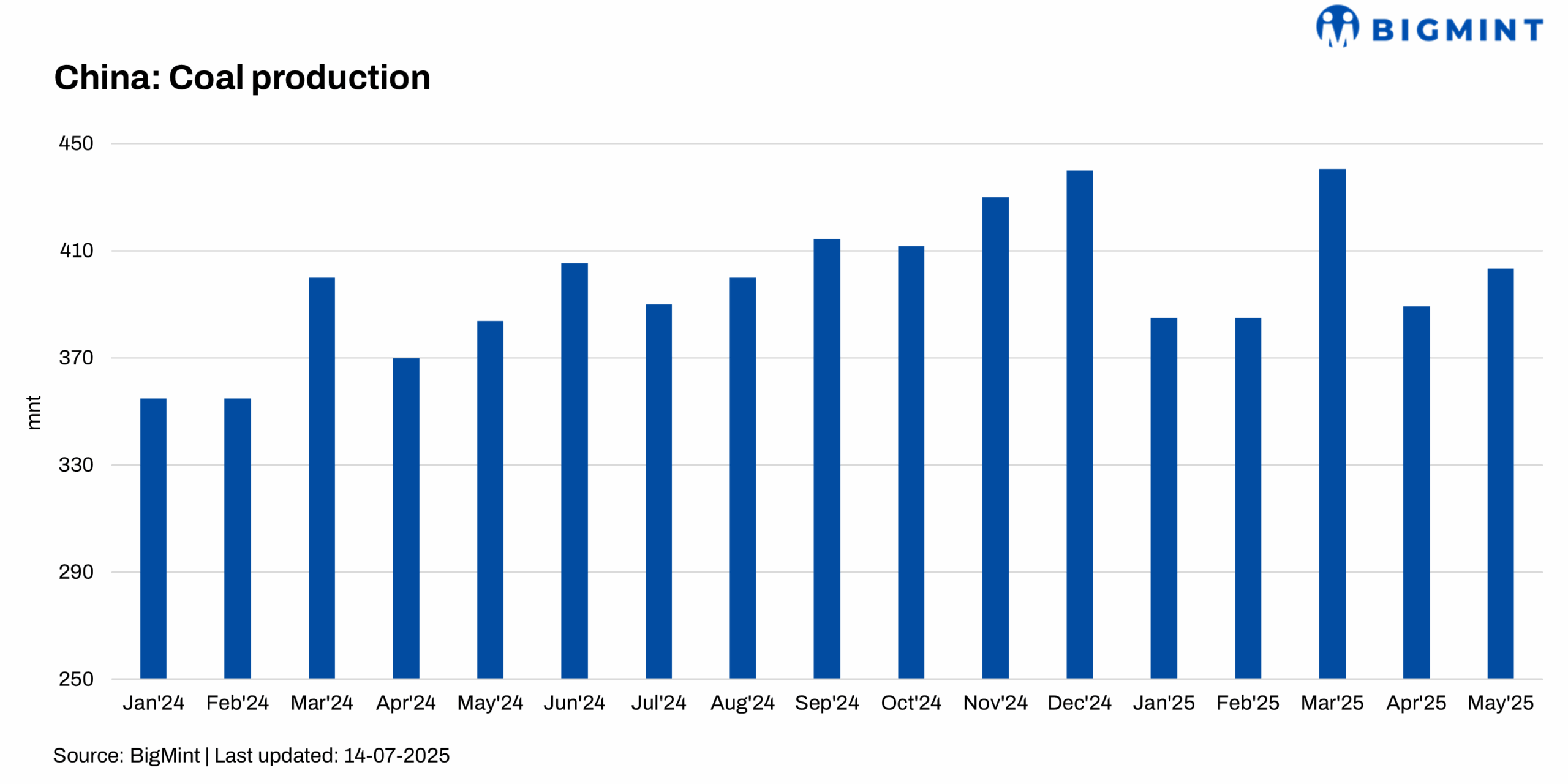
Wuhai contributed around 3.9% of raw coal production in Inner Mongolia and 33% of the autonomous region’s coke output last year, according to data from the National Bureau of Statistics and Wuhai Statistics Bureau.
Note: This article has been written in accordance with a content exchange agreement between Mysteel Global and BigMint.
Leave a Reply