- Muted steel demand caps market rebound
- Chrome ore tightness underpins market levels
CBC: The Chinese ferro chrome market remained stable w-o-w, supported by South Africa’s export controls and domestic steel bidding. Limited availability of high-grade ore from Zimbabwe has added to production costs. However, weak stainless steel demand and reduced imports due to overseas furnace shutdowns continue to weigh on market sentiment.
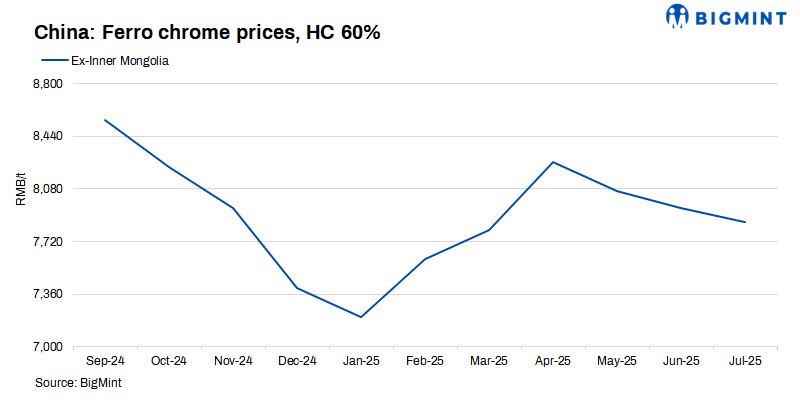
High-carbon ferro chrome prices inched up by RMB 100/t ($14/t) w-o-w at RMB 7,540-7,950/t ($1,051- $1,108/t) exw, including taxes.
However, medium-carbon ferro chrome prices remained unchanged w-o-w to RMB 12,700-12,900/t ($1,770-1,798/t) exw, including taxes.
Market recap:
Tight ore supply fuels cost concerns:Chrome ore prices remained volatile with strong forward spot offers, supported by South Africa’s export licensing approval and upcoming winter mining restrictions. However, high port inventories and reduced cost competitiveness of Turkish supply have limited transactions to need-based purchases.
Post-coke reduction, prices stabilised, while Inner Mongolia retained its cost edge due to favourable power policies, maintaining regional price differences. Additionally, tightening supply of high-grade ore from Zimbabwe could raise production costs for microcarbon ferro chrome in the near term.
Steel slowdown weighs on demand:Reduced output from major steel mills has lowered ferro chrome procurement, with strong pressure on prices.Stainless steel inventory movement remains slow due to weak real estate and infrastructure demand, and export prospects are dampened by anti-dumping actions.
Although Tsingshan’s stable July bidding price exceeded expectations, but high-price trades face resistance in retail markets.Despite improved smelting margins from lower costs, producers are cautious about expanding output amid oversupply and weak demand.
Outlook
In the near term, ferro chrome prices are expected to fluctuate within a narrow range. South Africa’s export controls and seasonal mining constraints will support costs, while subdued stainless steel demand during the off-season may cap any significant price increase.
Leave a Reply