- Copper squeeze worsens amid falling LME stocks
- Oil dips as Israel-Iran truce announced
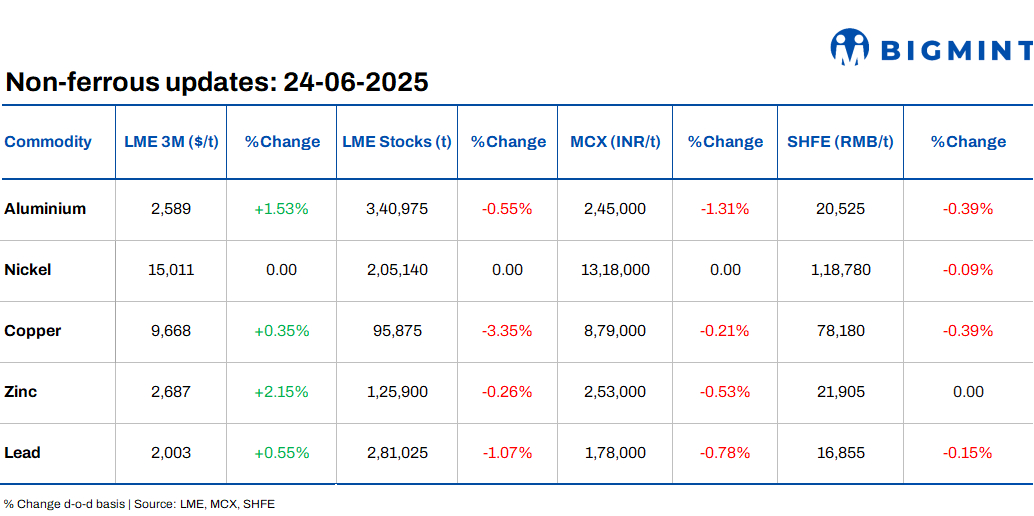
Base metals prices on the London Metal Exchange (LME) saw positive trends d-o-d, with zinc increasing by 2.15% to $2,687/tonne (t). Meanwhile, inventories at LME-registered warehouses saw negative trends d-o-d, with copper recording the highest decline of 3.35%.
Indian market overview
In India’s non-ferrous metals markets, BigMint assessed domestic copper armature scrap at INR 803,000/t ex-Delhi, stable d-o-d. Aluminium Tense scrap prices remained stable, with ex-Delhi at INR 196,000/t and ex-Chennai at INR 197,000/t.

Market updates
Copper supply squeeze tightens, LME inventories plunge
Copper markets are facing severe stress as LME stockpiles have dropped by nearly 80% in 2025, leading to a sharp backwardation where spot prices exceed longer-term contracts due to tight supply. The squeeze is driven by a rush to ship copper to the United States ahead of potential tariffs and a supply crunch at Chinese smelters where refining charges have sharply declined. Although the London Metal Exchange has introduced measures to curb price spikes, the pressure appears widespread with backwardation now extending through mid-2026.
Oil prices fall as ceasefire eases supply concerns
Oil prices dropped to their lowest level in more than a week after President Trump announced a complete ceasefire between Israel and Iran, easing fears of supply disruptions in the Middle East. The announcement reduced the risk premium that had recently pushed prices higher. The truce could lead to more stable oil flows from the region, especially from Iran, a major producer. The future movement of prices will depend on how the ceasefire holds and whether both sides continue to follow the peace agreement.
Cobalt prices surge as Congo extends export ban
Cobalt futures in China soared to mid-March highs after the DRC extended its concentrate export ban by three months. As the world’s top producer, Congo’s move could withhold over 100,000 t from global supply, disrupting electric vehicle battery production and tightening markets amid rising demand for critical minerals.
Leave a Reply