- NG-based DRI still not competitive in Europe
- Company to miss 2030 emissions reduction target
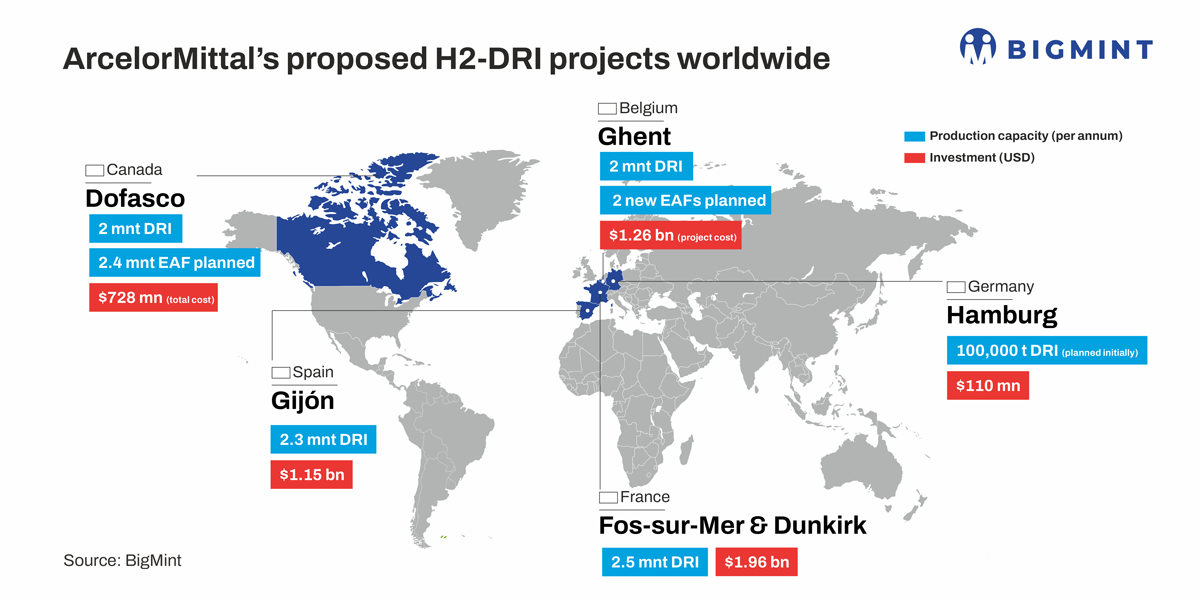
In a significant decision that may have global repercussions, steel major ArcelorMittal has announced its intention to halt work on two major hydrogen-based steelmaking projects in Bremen and Eisenhüttenstadt in Germany. The company said soaring and unstable energy prices was the key reason for pulling out, despite being offered EURO 1.3 billion in public funding support.
The projects were central to Germany’s green hydrogen strategy and industrial decarbonisation goals.
At the same time, the German government emphasised the need for predictable energy pricing and robust policy support to maintain industrial competitiveness during the energy transition. The current electricity prices in Germany are high compared both internationally and with European neighbours.
ArcelorMittal also urged the European Union to introduce import restrictions on steel. Rising decarbonisation costs are placing European producers at a disadvantage compared to global competitors, it argued.
The move to halt plans related to the construction of H2-based DRI and EAF plants at the two proposed sites underscores the growing challenge of balancing climate ambitions with economic realities.
Earlier in November 2024, ArcelorMittal had postponed work on its Gijon site in Spain citing a number of roadblocks. Among the reasons for the delay, the company cited shortcomings in the European CBAM, noting the lack of a clear domestic regulatory framework for green hydrogen and the slow development of this technology.
Company may miss 2030 target
ArcelorMittal has set a Group target to reduce CO2equivalent (e) emissions intensity by 25% by 2030. It also targets a 35% reduction in CO2e emissions intensity by 2030 for its European operations.
In a corporate briefing issued to announce the halt in plans in Germany, the steelmaker noted: “ArcelorMittal remains committed to continuing to reduce the carbon footprint of its assets, although as announced… it is increasingly unlikely to achieve its 2030 carbon emissions intensity target.”
“It is increasingly well documented that there has been slower than expected progress on all aspects of the energy transition, including green hydrogen not yet being a viable fuel source and natural gas-based DRI production not being competitive as an interim solution,” the briefing added.
High imports, energy costs
ArcelorMittal has approached the European Commission to address the following issues:
- The high level of steel imports entering the European market even amid weak demand
- The effectiveness of new instruments designed to support the transition of hard-to-abate sectors including the CBAM
- The price of electricity (switching from a blast furnace to an electric arc furnace means moving from a furnace that predominantly uses coal as its energy source to one using natural gas and electricity)
“The first new electric arc furnaces will be in countries that are able to provide visibility and certainty on low-cost electricity,” the briefing mentioned. ArcelorMittal has announced its intention to build the next EAF in Dunkirk, France.
Leave a Reply