- Decision may come in May-end or be delayed to Jul’25
- Imports, sluggish demand keeps market under pressure
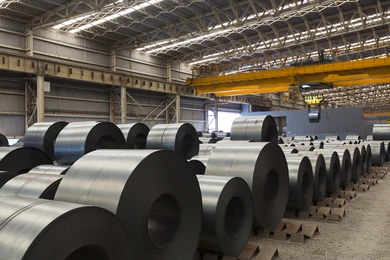
Japan Metal Daily: South Korean steel market is bracing for a significant impact, as the anti-dumping (AD) investigation into hot-rolled coils (HRCs) imported from Japan and China nears its provisional decision. Launched in March, the investigation’s outcome is much anticipated, though there are differing views on whether a decision will be made by the end of this month, ahead of the 3 June 2025 presidential election, or postponed until July.
The prevailing sentiment within Korea’s steel industry is one of heightened scrutiny on imported steel, largely driven by the poor business performance experienced by domestic major Hyundai Steel. The company, which initiated an unprecedented AD lawsuit against Japanese hot coils last December, is leading the charge, citing sluggish domestic demand, particularly in the building materials sector, which has hit Korean producers harder than their Japanese counterparts.
Trade data reveals a notable, though perhaps not acutely felt, decline in Japanese steel exports to Korea. Hot coil exports from Japan to Korea in January-March 2025 totalled 390,000 tonnes (t), a 20% drop y-o-y. Shaped steel, another product category highlighted by Hyundai Steel, also saw a 20% decline to 79,000 t during the same period. However, the significant downturn in Korean domestic demand dampened the perceived impact of these export reductions.
The ongoing investigation draws parallels to the existing AD measures on medium-thick plates. Provisional AD duties of 27.91-38.02% are currently in place for Chinese-made plates. Interestingly, the final decision on these plates has seen proposals for alternative measures such as a “minimum import price” and “quotas” that allow a certain quantity of imports without taxation. The minimum import price mechanism has previously been implemented for Chinese H-beams in South Korea and is largely considered to have been effective.
However, the efficacy of AD measures has not always been straightforward. Despite provisional AD duties on Chinese planks, market prices in South Korea have not reacted as anticipated. This is partly attributed to Korean shipbuilders, major purchasers of planks, often operating within “bonded zones,” which exempt re-exported ship-used planks from AD measures. Concerns persist that Chinese lumber continues to flood the general timber plank market, rendering the approximately 30% provisional AD tax seemingly ineffectual. Reports suggest that China has resisted the introduction of quotas and minimum import prices for planks, leading to the perception that the situation “can no longer be understood by normal economic principles.”
Against this backdrop, a crucial government-to-government steel dialogue is being held in Tokyo between Japan’s Ministry of Economy, Trade, and Industry (METI), and South Korea’s Ministry of Trade, Industry and Energy. This dialogue takes on paramount importance, as both nations confront the significant challenge posed by China’s steel overproduction and rampant exports, which directly threaten the long-standing steel trade relationship between Japan and South Korea. The outcome of this dialogue and the impending AD decision will undoubtedly shape the future landscape of the Korean steel market.
Note: This article has been written in accordance with a content exchange agreement between Japan Metal Daily and BigMint.
Leave a Reply