- Demand softens amid muted steel market, FY-end
- Buyers show preference for lumps over pellets
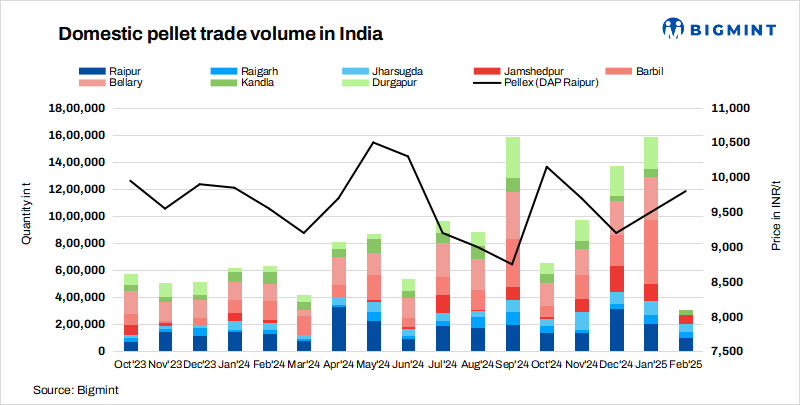
The domestic pellet market recorded a decline of 30% m-o-m in trade volumes in February 2025, according to BigMint’s data. February’s volume stood at 1.14 million tonnes (mnt) against 1.62 mnt in January. Bookings slowed down, driven primarily by reduced demand from downstream steel segments and cautious procurement towards the financial year’s end.
However, Barbil’s pellet market saw slightly higher activity, as sellers redirected supplies to local buyers amid weaker overseas demand. Realisations in the domestic market remained relatively better, discouraging exports. A decline in international demand further dampened overall trade volumes.
Factors driving pellet trades
- Slow bookings amid approaching FY-end: Buyers were conservative in their procurement, focusing on need-based purchases rather than bulk orders. The approaching financial year-end caused a slowdown, curtailing aggressive restocking and leading to a decline in transaction volumes.
- Preference given to iron ore lumps over pellets: Some steelmakers preferred iron ore lumps, as they were more cost-effective. Increased usage of iron ore lumps limited pellet purchases by steel producers. As a result, overall pellet trade activity weakened.
- Minimal coastal deals concluded: Minimal coastal deals were concluded, which significantly impacted overall market activity. Limited seaborne transactions restricted the movement of pellets to key consuming regions. Amid fewer coastal shipments, domestic sales alone could not compensate for the drop in demand.
M-o-m pellet trade comparison

BigMint’s PELLEX rises m-o-m
BigMint’s domestic pellet index (PELLEX) was assessed at INR 9,800/t in February (weighted average), a rise of INR 300/t m-o-m. However, overall market sentiment remained subdued, with buyers limiting themselves to need-based procurement. Urgent restocking activity was absent, and cautious sentiment prevailed among buyers.
Outlook
According to BigMint’s analysis, pellet prices are likely to remain under pressure in the short term due to weak export demand and continued preference for iron ore lumps among steelmakers. However, a potential revival in coastal shipments and any improvement in steel production could offer some support to pellet demand in the coming months.
Leave a Reply