- China’s crude steel output drops m-o-m
- Higher portside inventories weigh on imports
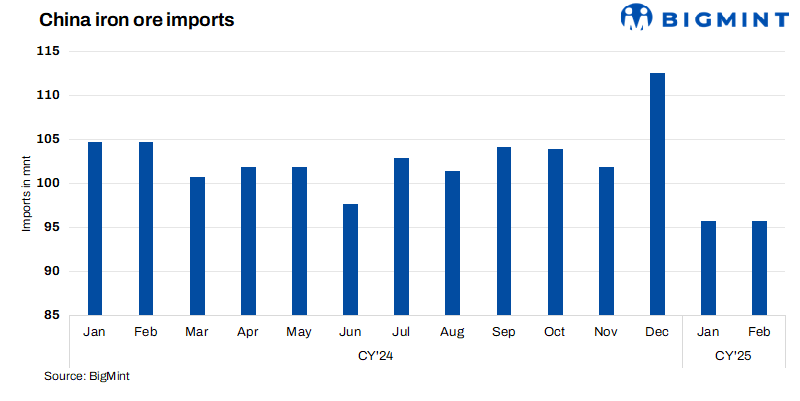
China- the world’s largest iron ore consumer and importer recorded imports of iron ore at 191.36 mnt in January-February, 2025, according to the General Administration of Customs as compared to 209.45 mnt in January-February, 2024 as steel mills in China faced declining margins, prompting them to reduce production and opted for lower-cost raw materials instead of high-grade iron ore.
Major highlights
- Weak restocking ahead of Lunar New Year holidays: The pre-holiday restocking activity appeared weaker in early 2025 than in 2024, leading to reduced demand for iron ore imports. Steel mills had already stockpiled sufficient raw materials, reducing spot market purchases in January and February 2025.
- China’s crude steel output fall y-o-y: China’s crude steel output was recorded at 81.9 mnt in January, 2025, fell by 6% y-o-y.
- Weather disruptions in Australia: Adverse weather conditions, including a cyclone in Western Australia, led to shipment delays, affecting supply flow to China. Although the supply impact was limited, delayed cargo arrivals may have contributed to lower import volumes in the early months of 2025.
- Weak macroeconomics weighs on iron ore prices: Chinese mills preferred discounted medium-grade fines; however, steel margin were low. As per reports, the upcoming US tariffs and low expectations for next week’s meetings pressured overall market sentiment.
- High Portside Inventories: Chinese ports had accumulated significant iron ore stocks by the end of 2024, reducing the need for fresh imports. Mills preferred buying from portside stocks instead of committing to seaborne shipments. Iron ore inventories rose by 8% to 145.8 mnt in Feb’25 as compared to 133.1 mnt in Feb’24.
Outlook: China’s iron ore imports in the coming months are expected to see a moderate recovery as steel mills resume operations post-holiday, driving restocking demand. However, import growth may remain limited due to weak steel margins, cautious procurement strategies, and an increased preference for portside inventories over fresh seaborne cargoes.
Leave a Reply